
🧠 Why Being Vaccinated Doesn’t Always Mean You’re Immune
 ToothOps3 min read
(And Why That Matters in Healthcare)
Vaccines save lives.They reduce suffering.And they are one of the most powerful tools in modern medicine.
But here’s something that often surprises students and patients alike:
👉 Being vaccinated doesn’t always mean you’re fully immune.
That statement isn’t meant to create fear or doubt. It’s meant to create understanding.
When we understand what vaccines are designed to do — and what some of them aren’t — clinical reasoning becomes clearer, anxiety decreases, and healthcare decisions improve.
Let’s walk through this, step by step.
🧠 What Vaccines Are Actually Designed to Do
Vaccines don’t fight germs directly.
Instead, they train your immune system ahead of time.
Think of vaccination like a practice drill:
- Your immune system is introduced to safe pieces (or weakened versions) of a pathogen
- It learns how to recognize the threat
- It builds memory so it can respond faster and more effectively later
What that response looks like depends on the vaccine.
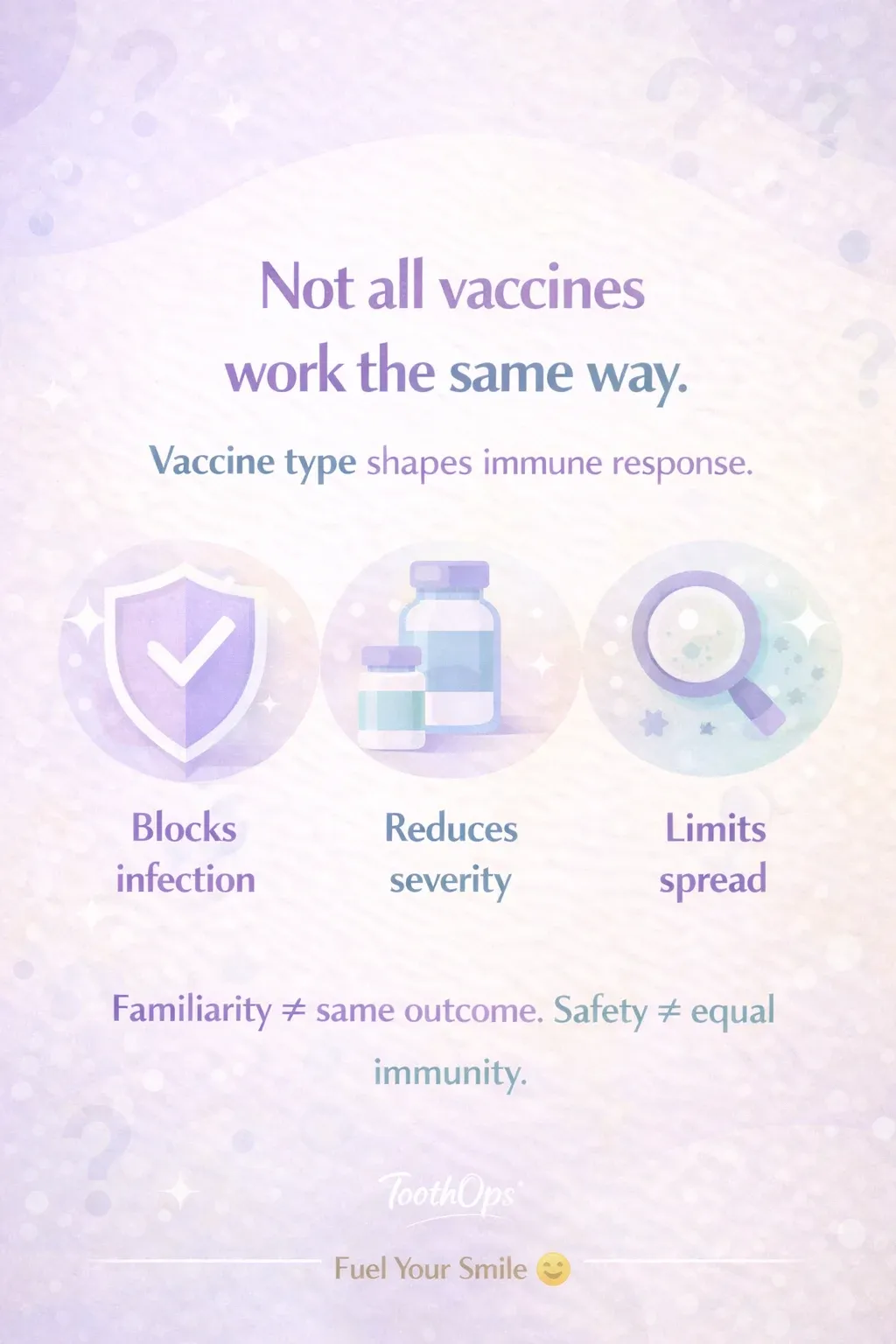
Some vaccines:
- Prevent infection almost completely
- Others reduce severity
- Others mainly limit spread inside the body
All of these are successes — just different kinds of success.
💡 A Common Misconception: “All Vaccines Work the Same Way”
One of the most common misunderstandings is thinking that the word vaccine guarantees the same type of protection every time.
It doesn’t.
Vaccines differ by:
- What they contain
- How they’re processed by the immune system
- Which immune pathways they activate
- How long protection lasts
That’s why vaccine type matters just as much as vaccine status.
🧬 A Real-World Example: The BCG Vaccine (Tuberculosis)
To see this clearly, let’s look at a real example used in healthcare education: the BCG vaccine.
What is BCG?
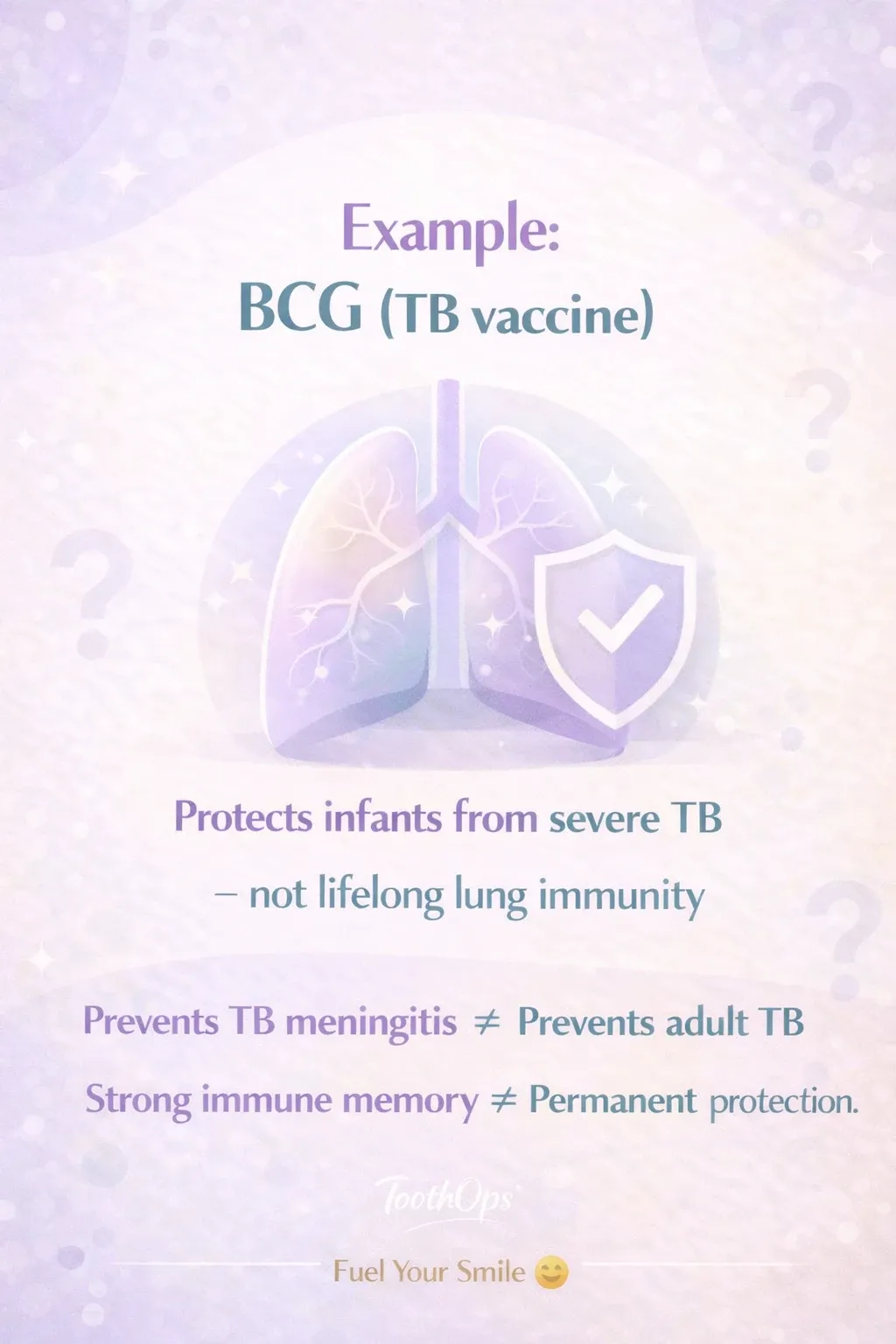
- A live attenuated vaccine
- Given in infancy in countries with high tuberculosis (TB) prevalence
- Designed to protect infants and young children from severe, life-threatening TB
What BCG Does Well
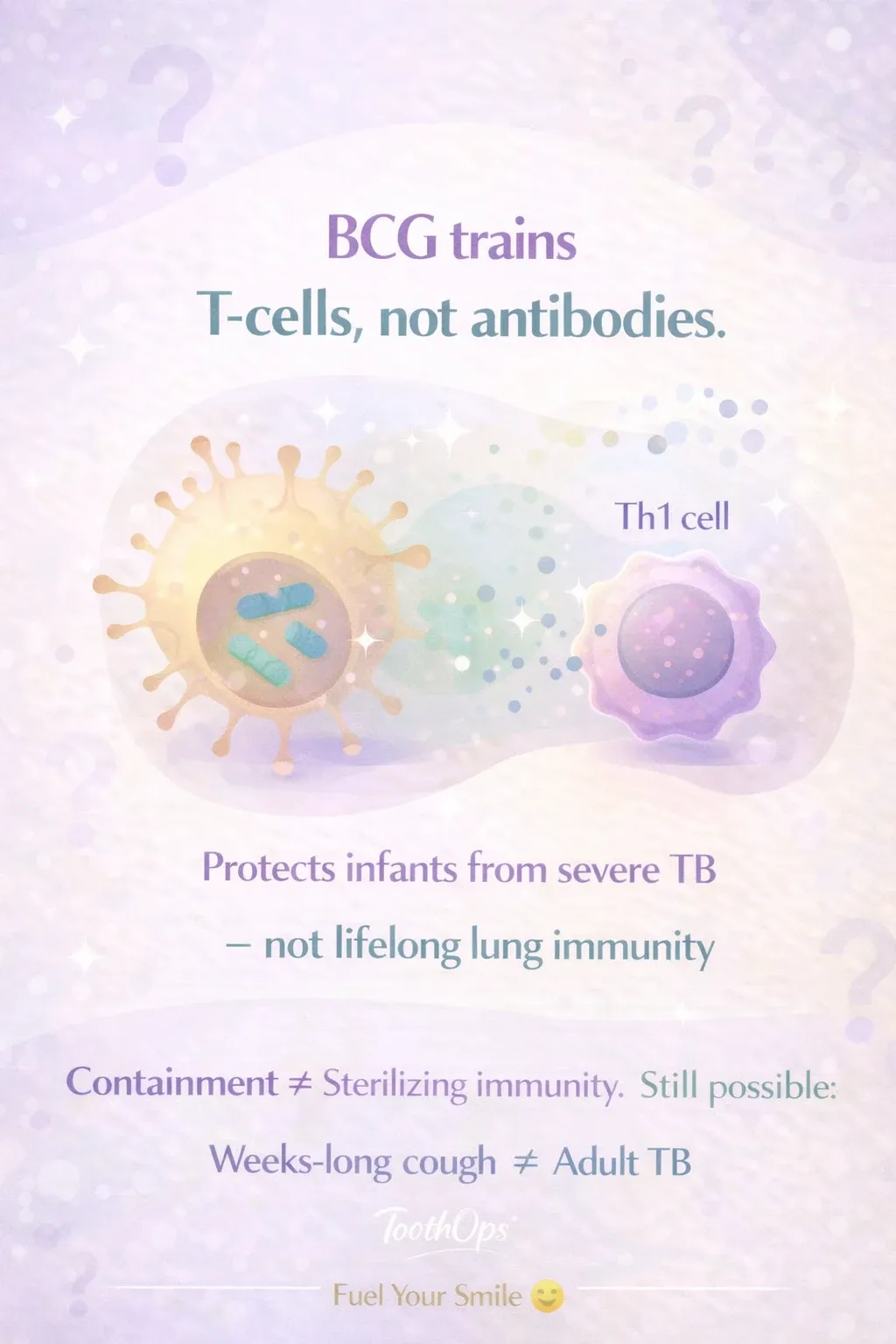
BCG trains the immune system using cell-mediated immunity, not antibodies.
Specifically, it:
- Activates T-helper (Th1) cells
- Promotes interferon-gamma release
- Activates macrophages
- Helps contain TB bacteria inside structures called granulomas
🧠 Analogy: BCG doesn’t “kick TB out of the house.” It teaches the immune system how to lock TB in one room so it can’t spread.
🚨 What BCG Does Not Do
This is the part that often gets misunderstood.
BCG:
- Does not create sterilizing immunity
- Does not reliably protect adult lungs
- Does not provide lifelong protection
- Does not prevent infection in all cases
Its protection is:
- Strongest in early childhood
- Focused on severity reduction, not infection prevention
- Time-limited, with immune memory fading over decades
That’s why adults who were vaccinated as children can still:
- Develop latent TB
- Develop active pulmonary TB
- Experience reactivation later in life
This isn’t vaccine failure — it’s vaccine design.
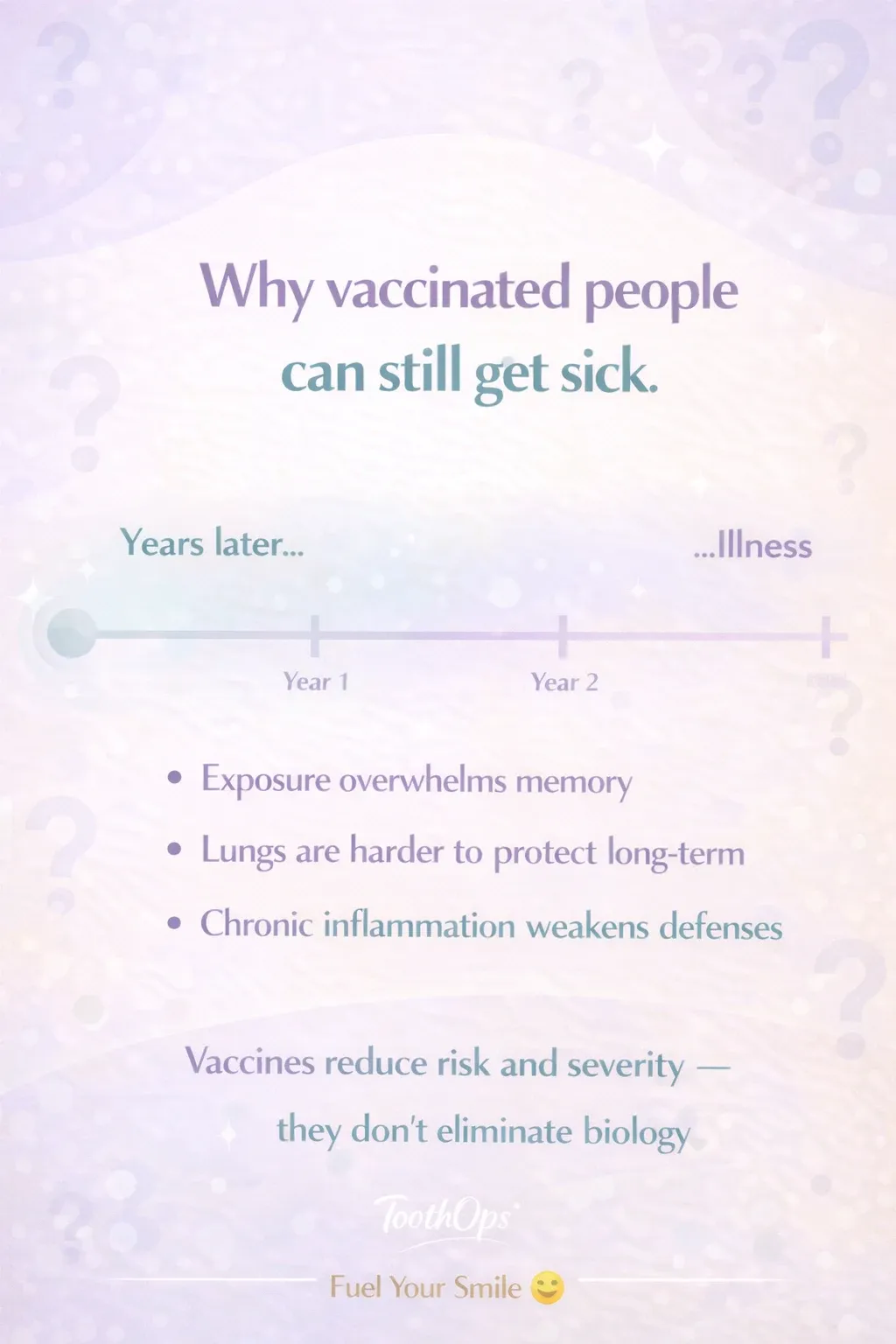
🫁 Why Vaccinated People Can Still Get Sick
This principle doesn’t apply only to TB.
Across medicine, vaccinated individuals can still develop illness because:
- Immune memory fades
- Some tissues (like the lungs) are harder to protect long-term
- High exposure levels can overwhelm containment
- Chronic inflammation can weaken defenses
💡 **Key insight:**Vaccines reduce risk and severity — they don’t eliminate biology.
🦷 Why This Matters in Healthcare (and Dentistry)
In clinical settings, this distinction is critical.
That’s why healthcare providers:
- Don’t rule out disease based on vaccination history alone
- Still ask about symptoms
- Still order appropriate tests
- Still use imaging and lab data
For example:
- A person vaccinated with BCG may still need TB testing
- Some tests behave differently depending on vaccination history
- Clinical reasoning always outweighs assumptions
🧠 Clinical truth: Vaccination history guides risk assessment — it does not end the diagnostic conversation.
🌱 The Big Takeaway
Vaccines are powerful, life-saving tools — but they are not all designed to do the same job.
Understanding how a vaccine works helps us:
- Ask better questions
- Interpret symptoms correctly
- Avoid false reassurance
- Practice safer, smarter healthcare
This isn’t about fear. It’s about clarity.
And clarity builds confidence — for students, clinicians, and patients alike.
@ToothOps | Fuel Your Smile 😊
Stay tuned for more insights and educational content in our blog.
Disclaimer: Content is for educational purposes only and not a substitute for medical or dental care.
© 2025 ToothOps | All Rights Reserved.