
🧪 What TB Tests Really Measure (And What They Don’t)
 ToothOps5 min read
A comprehensive, anatomy- and immunology-driven guide to PPD, IGRA, and clinical reasoning
By ToothOps
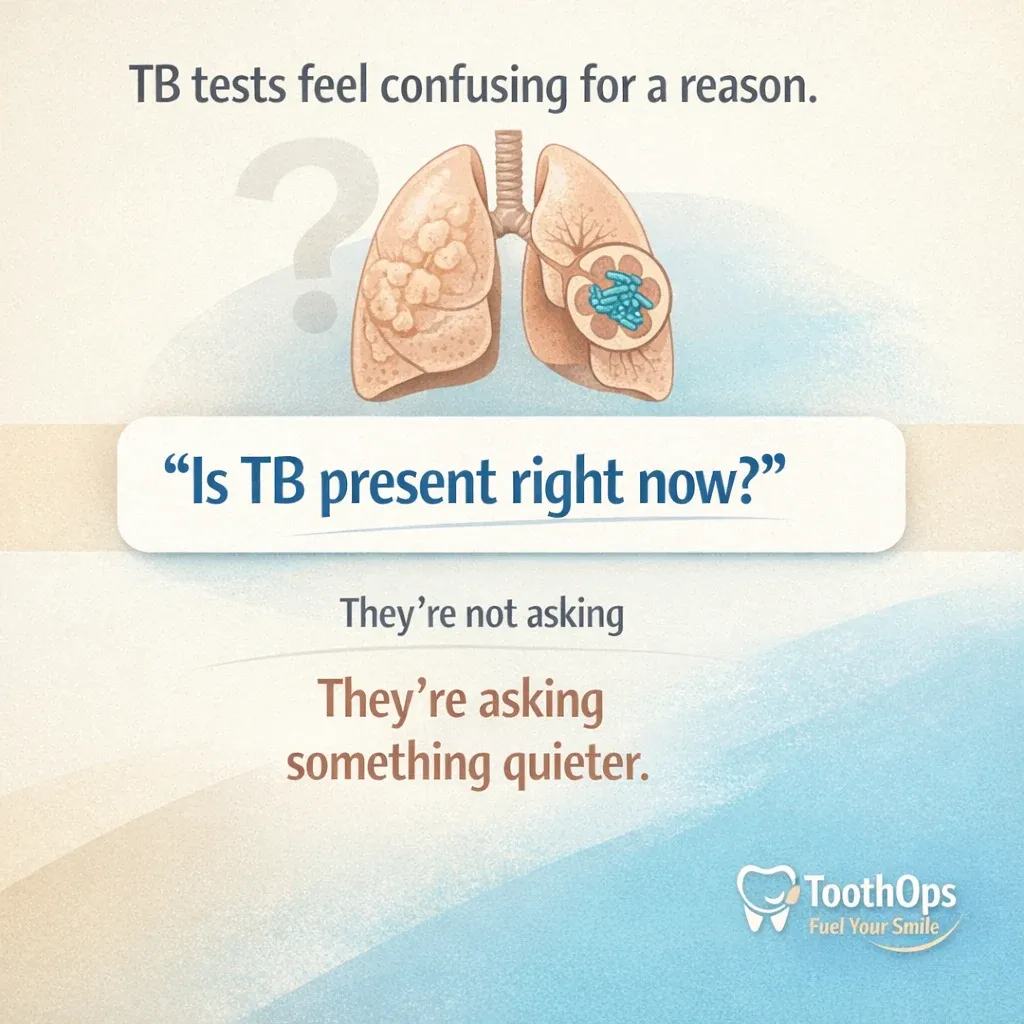
Tuberculosis testing feels confusing because it asks a biologically subtle question.
Not:
“Is TB present right now?”
But rather:
“Has the immune system been trained to recognize TB antigens — and can it still respond?”
Once you understand where TB lives, how the immune system controls it, and what tests are physically capable of detecting, TB testing stops feeling inconsistent and starts feeling precise.
1️⃣ Where TB Lives Determines How It Can Be Detected
Anatomy → Immunology → Diagnostics
Mycobacterium tuberculosis establishes infection in the alveoli, the terminal gas-exchange units of the lung.
Key alveolar features:
- No cilia (to preserve diffusion efficiency)
- Extremely thin epithelial barrier
- Constant exposure to inhaled particles
- Reliance on alveolar macrophages, not mechanical clearance
This anatomy creates three critical diagnostic consequences:
- TB is not easily expelled
- TB is not accessible to surface sampling
- TB control depends on cell-mediated immunity, not antibodies
🧠 Because TB lives intracellularly in macrophages within cilia-free alveoli, immune memory — not bacterial detection — becomes the primary diagnostic signal.
2️⃣ Alveolar Macrophages and the TH1 Axis
Why TB testing is immune-based
After inhalation:
- Macrophages phagocytose TB
- TB inhibits phagolysosomal killing
- Infected macrophages present antigen via MHC II
This activates:
- CD4⁺ TH1 cells
- IL-12 signaling
- IFN-γ release
- Further macrophage activation
This immune loop leads to:
- Granuloma formation
- Containment of organisms
- Long-term immune surveillance
📌 TB tests reflect this TH1–IFN-γ immune axis, not organism burden.
3️⃣ Granulomas: Control Without Eradication
Granulomas:
- Localize infection
- Prevent dissemination
- Preserve surrounding lung tissue
But they also:
- Maintain immune memory
- Allow organisms to persist in a dormant state
- Create lifelong immunologic imprinting
This explains why:
- TB can remain latent for decades
- Immune tests stay positive after treatment
- Reactivation occurs when immune balance shifts
4️⃣ Bronchopulmonary Segments and Silent Disease
Each lung is divided into bronchopulmonary segments, each with:
- Independent bronchus
- Independent arterial supply
- Relative functional isolation
This architecture:
- Limits spread of infection
- Allows TB to remain localized
- Minimizes systemic immune signaling
🧠 A patient can have TB exposure, immune memory, and no symptoms — all at the same time.
5️⃣ What PPD and IGRA Actually Measure
Before comparing tests, anchor the principle:
TB tests measure immune memory — not live bacteria, disease activity, or cure.
PPD (Tuberculin Skin Test)
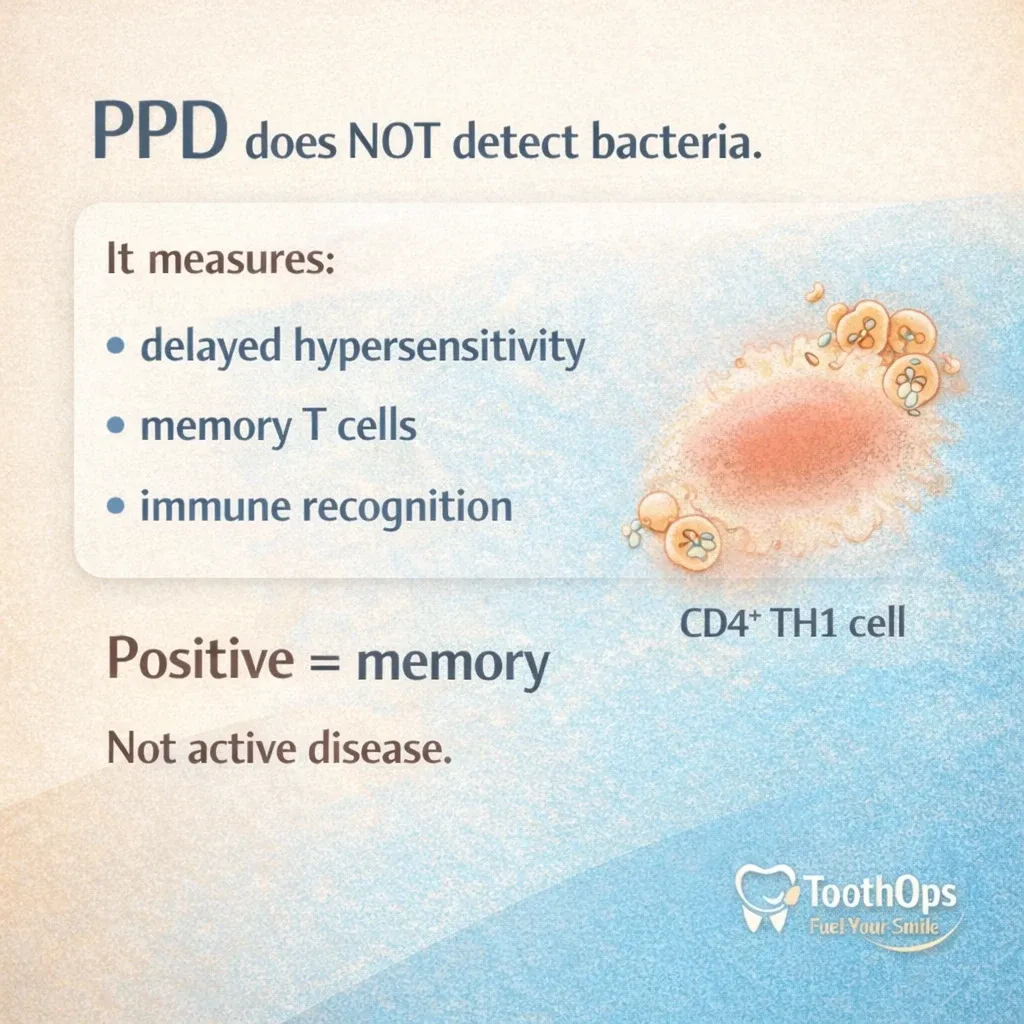
PPD measures:
- Type IV delayed hypersensitivity
- Mediated by memory CD4⁺ TH1 cells
- Local cytokine release → induration
PPD does not measure:
- Live bacteria
- Disease activity
- Infectiousness
- Treatment success
A positive PPD means:
Prior immune sensitization to TB antigens
IGRA (Interferon-Gamma Release Assay)
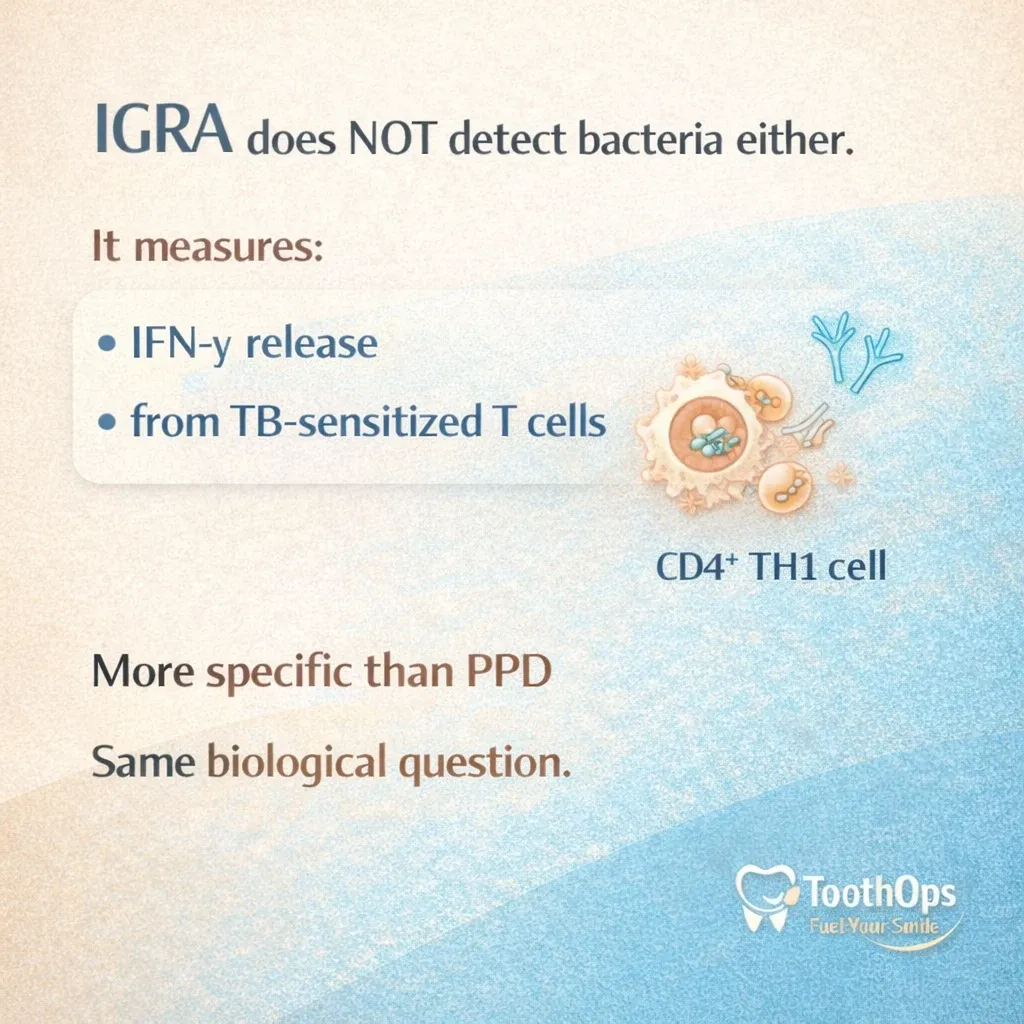
IGRA is a blood test that measures:
- IFN-γ release from TB-sensitized T cells
- After exposure to TB-specific antigens (ESAT-6, CFP-10)
Advantages:
- No reader bias
- No booster phenomenon
- Not affected by BCG vaccination
Limitations:
- Immune-dependent
- Cannot distinguish latent vs active TB
📌 PPD and IGRA ask the same biological question using different platforms.
📊 PPD vs IGRA — High-Yield Comparison Table
| Feature | PPD | IGRA |
|---|---|---|
| Sample | Skin | Blood |
| Immune signal | Delayed hypersensitivity | IFN-γ release |
| Detects bacteria | ❌ No | ❌ No |
| Affected by BCG | ✅ Yes | ❌ No |
| Distinguish latent vs active | ❌ No | ❌ No |
| Requires intact immunity | ✅ Yes | ✅ Yes |
6️⃣ Why Immune Tests Cannot Distinguish Latent vs Active TB
Latent TB:
- Viable organisms contained in granulomas
- Ongoing immune surveillance
- Minimal tissue destruction
Active TB:
- Breakdown of containment
- Increased bacterial replication
- Tissue damage and symptoms
In both states:
- Antigen recognition exists
- Memory T cells are present
- IFN-γ can be produced
🧠 Immune recognition ≠ disease activity.
7️⃣ Immunosuppression and False Negatives
Both PPD and IGRA require:
- Functional T cells
- Intact cytokine signaling
False negatives occur with:
- HIV/AIDS
- Corticosteroid use
- Malnutrition
- Advanced TB
- Extremes of age
This is anergy, not absence of infection.
📌 Clinical pearl: A negative immune test in an immunocompromised patient is less reassuring, not more.
8️⃣ Case 1: Prior BCG Vaccination
BCG vaccination:
- Contains attenuated mycobacteria
- Generates immune memory
- Produces delayed hypersensitivity
Therefore:
- PPD may be positive
- Active TB may be absent
Correct reasoning:
- PPD is detecting memory
- IGRA is preferred due to specificity
- Clinical context determines next steps
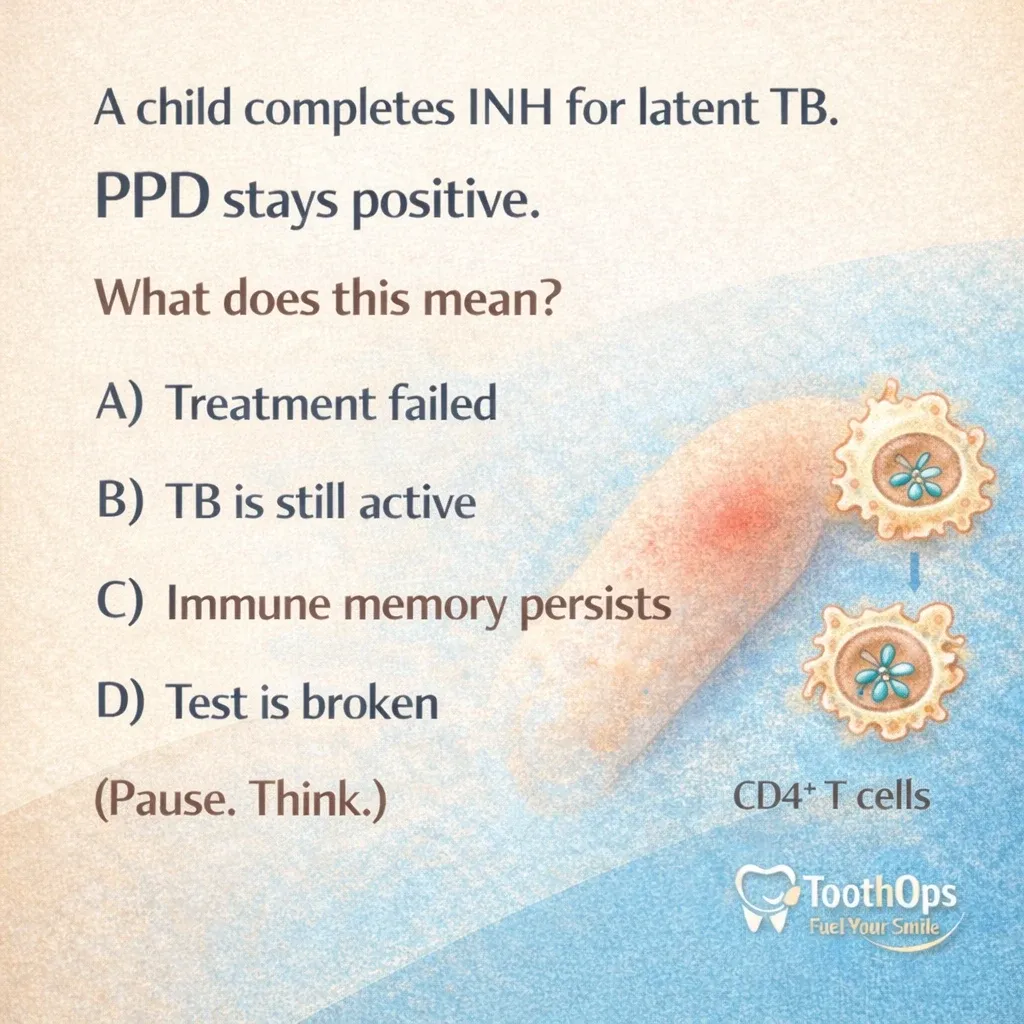
9️⃣ Case 2: Child Treated With INH for Latent TB
🧪 What Is INH (Isoniazid)?
Isoniazid (INH) is a first-line anti-tuberculosis antibiotic used to treat latent TB and as part of combination therapy for active TB.
🔬 How INH Works (Mechanism)
INH targets mycolic acid synthesis, which is essential for the cell wall of Mycobacterium tuberculosis.
🧠 INH inhibits mycolic acid production → weakens the TB cell wall → kills or suppresses the bacteria.
INH inhibits mycolic acid synthesis
INH therapy:
- Reduces viable organisms
- Does not erase immune memory
After treatment:
- PPD often remains positive for life
- Repeat PPD provides no new information
Follow-up relies on:
- Symptom assessment
- Imaging if indicated
- Risk stratification
🧠 Once immune memory exists, immune tests cannot confirm cure.
🔑 What TB Testing Is Actually Good For
TB tests are best used to:
- Identify prior exposure
- Assess risk of reactivation
- Guide preventive therapy decisions
They are not designed to:
- Diagnose active TB alone
- Monitor treatment response
- Confirm eradication
🧠The Diagnostic Framework Boards Expect
Boards test whether you understand that:
- TB is intracellular
- Defense is TH1-mediated
- Tests measure immune memory
- Anatomy limits direct detection
- Context determines interpretation
If you know that, you cannot be tricked.
The ToothOps Takeaway
TB diagnostics are not flawed.
They are precise tools asking narrow questions.
When you understand:
- Lung anatomy
- Immune containment
- Memory persistence
- Test limitations
TB testing becomes coherent, predictable, and clinically useful.
🧠 If You See This…
- Positive PPD + asymptomatic → immune memory
- Positive IGRA + normal CXR → latent TB
- Negative PPD + immunosuppressed → possible anergy
- Persistent PPD after INH → expected memory persistence
- BCG history + positive PPD → use IGRA
These are not facts — they are interpretive moves.
One final reminder
A positive test means the immune system learned.
A negative test means it may not be able to speak.
Clinical reasoning listens to both.
@ToothOps | Fuel Your Smile 😊
Stay tuned for more insights and educational content in our blog.
Disclaimer: Content is for educational purposes only and not a substitute for medical or dental care.
© 2025 ToothOps | All Rights Reserved