
🫁 TB vs Pneumonia: How to Tell the Difference (Without Panic or Guesswork)
 ToothOps3 min read
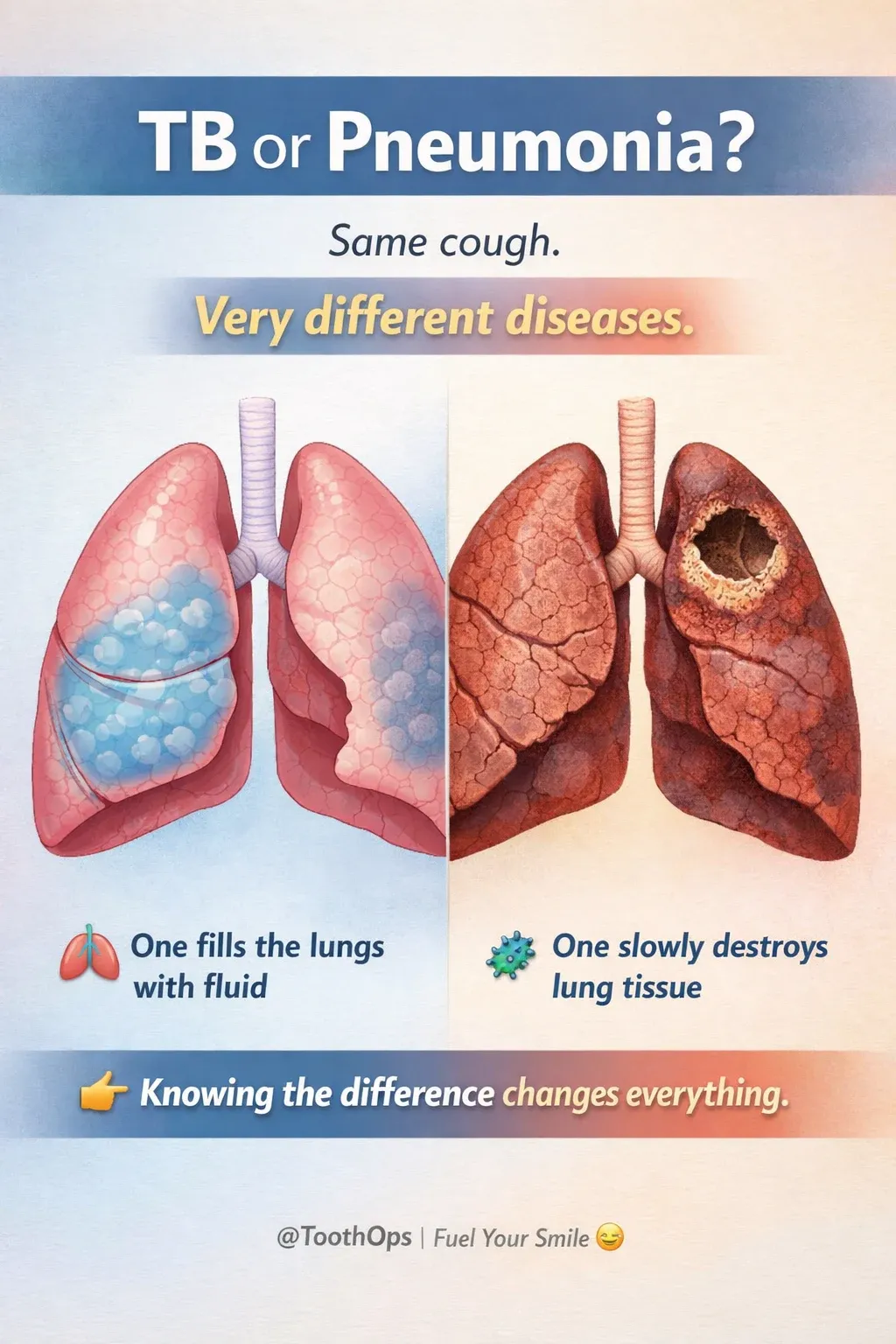
When someone has a cough, fever, or chest symptoms, two diagnoses often come up and cause confusion: tuberculosis (TB) and pneumonia.They both affect the lungs — but they behave very differently, and understanding how helps you reason clinically instead of memorizing lists.
This post breaks it down calmly, clearly, and clinically — the ToothOps way.
1️⃣ Big Picture First: What’s the Core Difference?
Pneumonia is an acute inflammatory infection of the alveoli (air sacs).Tuberculosis (TB) is a chronic infectious disease that slowly destroys lung tissue.
🧠 Analogy BoxThink of the lung like a house:
- Pneumonia = the rooms suddenly flood with water
- TB = termites slowly eating through the walls
Both are serious — but their timelines, mechanisms, and clues are different.
2️⃣ Timeline Matters More Than Any Single Symptom
| Feature | Pneumonia | TB |
|---|---|---|
| Onset | Sudden (days–1–2 weeks) | Slow (weeks–months) |
| Cough duration | Short, acute | Chronic (>3 weeks) |
| Overall course | Rapid illness | Smoldering, progressive |
💡 Pro Tip When a cough lasts over a month, TB must always be considered — even if pneumonia is still possible.
3️⃣ Why the Symptoms Look Different (Mechanism → Symptom)
🫁 Pneumonia
- Alveoli fill with fluid + inflammatory cells
- Gas exchange drops quickly
Common symptoms
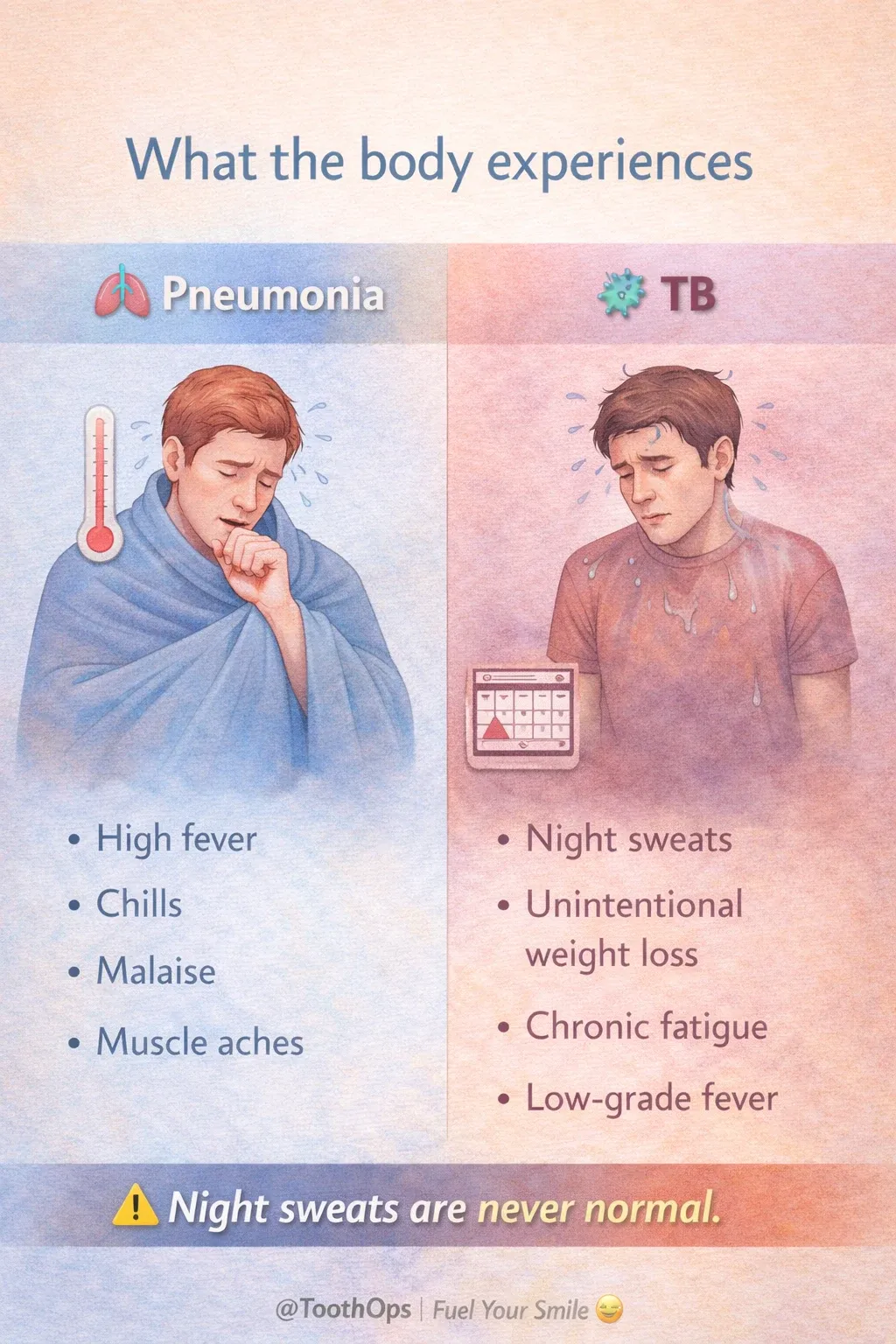
- Fever, chills
- Productive cough
- Shortness of breath
- Pleuritic chest pain (sharp, worse with breathing)
🦠 TB
- Immune system forms granulomas to contain bacteria
- Chronic inflammation leads to tissue breakdown
Common symptoms
- Chronic cough
- Night sweats
- Weight loss
- Fatigue
- Hemoptysis (coughing blood)
🧠 Key Insight TB symptoms come from long-term immune activation, not sudden inflammation.
4️⃣ Hemoptysis: Same Symptom, Different Meaning
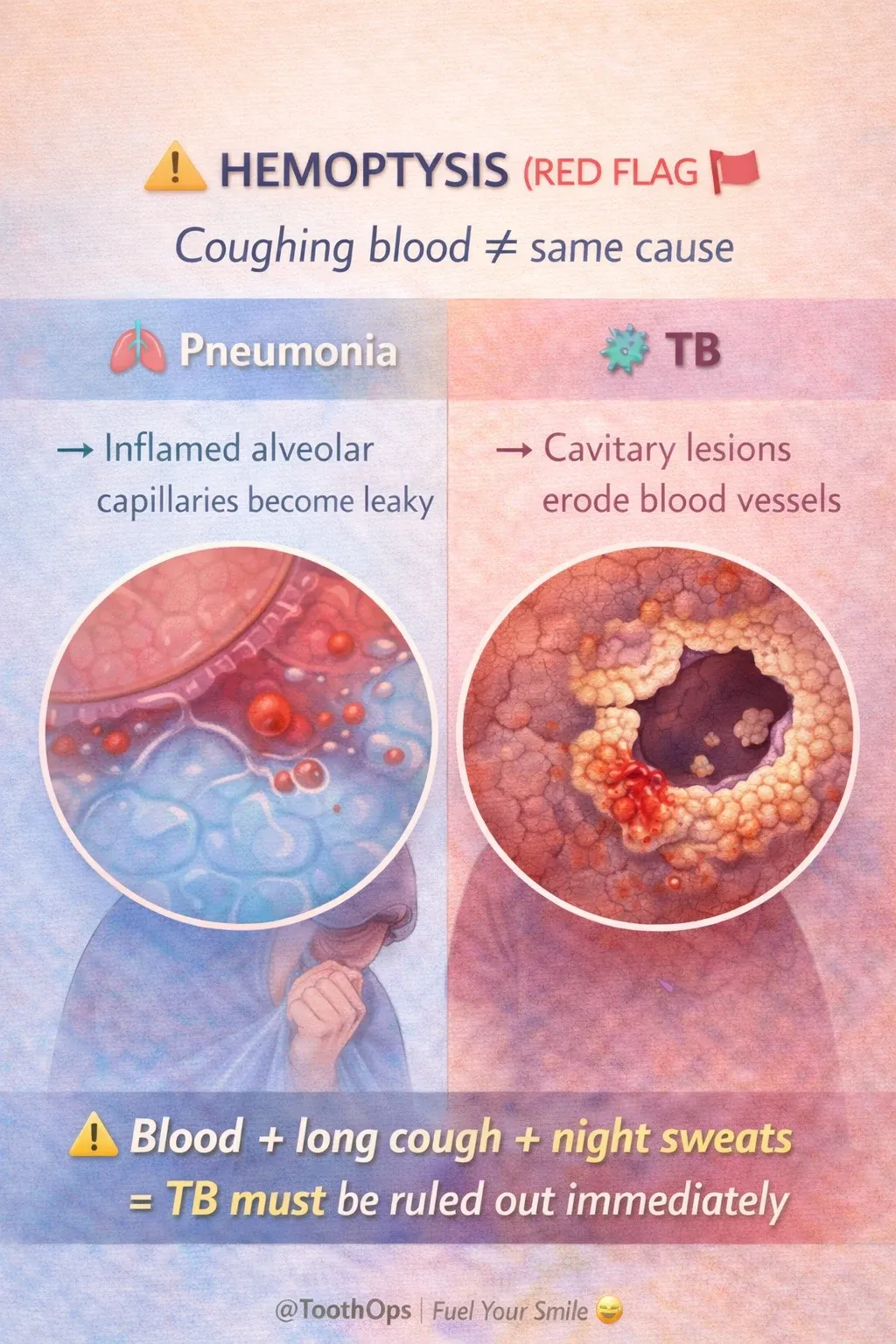
- Pneumonia: Inflammation makes alveolar capillaries leaky → small blood streaks in sputum
- TB: Lung tissue is destroyed, creating cavities that bleed
💡 Pro Tip Hemoptysis + night sweats + chronic cough = TB until proven otherwise
5️⃣ Physical Exam: What Clinicians Listen For
| Finding | Pneumonia | TB |
|---|---|---|
| Crackles | Common | Apical |
| Dull percussion | Yes | Often absent early |
| Egophony | Yes | Rare |
| Breath sounds | Bronchial | Often subtle |
Why?
- Pneumonia creates solid, fluid-filled lung
- TB creates patchy, cavitary damage
6️⃣ Chest X-Ray: The Deciding Clue
Pneumonia X-ray
- Lobar or patchy consolidation
- Air bronchograms
- Rapid improvement with treatment
TB X-ray
- Upper-lobe disease
- Cavitary lesions
- Fibrosis or volume loss in chronic cases
🧠 Analogy Box
- Pneumonia = sponge soaked with water
- TB = sponge with holes burned into it
7️⃣ Why This Matters for Dental & Healthcare Students
- Chronic cough ≠ “just a cold”
- Night sweats are never normal
- TB is still relevant — especially in:
- Immunocompromised patients
- Crowded living conditions
- Certain geographic backgrounds
Organizations like the Centers for Disease Control and Prevention and National Institutes of Health emphasize early recognition to prevent delayed diagnosis and transmission.
8️⃣ One-Glance Summary (Save This)
| Feature | Pneumonia | TB |
|---|---|---|
| Speed | Fast | Slow |
| Cough | Acute | Chronic |
| Night sweats | Rare | Common |
| Weight loss | Rare | Common |
| X-ray | Consolidation | Upper-lobe cavities |
Final Takeaway 🌱
You don’t need to panic or memorize endless lists.When you understand timeline + mechanism, the difference between TB and pneumonia becomes clear — and confidence replaces confusion.
@ToothOps | Fuel Your Smile 😊
Stay tuned for more insights and educational content in our blog.
Disclaimer: Content is for educational purposes only and not a substitute for medical or dental care.
© 2025 ToothOps | All Rights Reserved