
🫁 Coughing Up Mucus — When Is It Normal, and When Is It a Red Flag?
 ToothOps3 min read
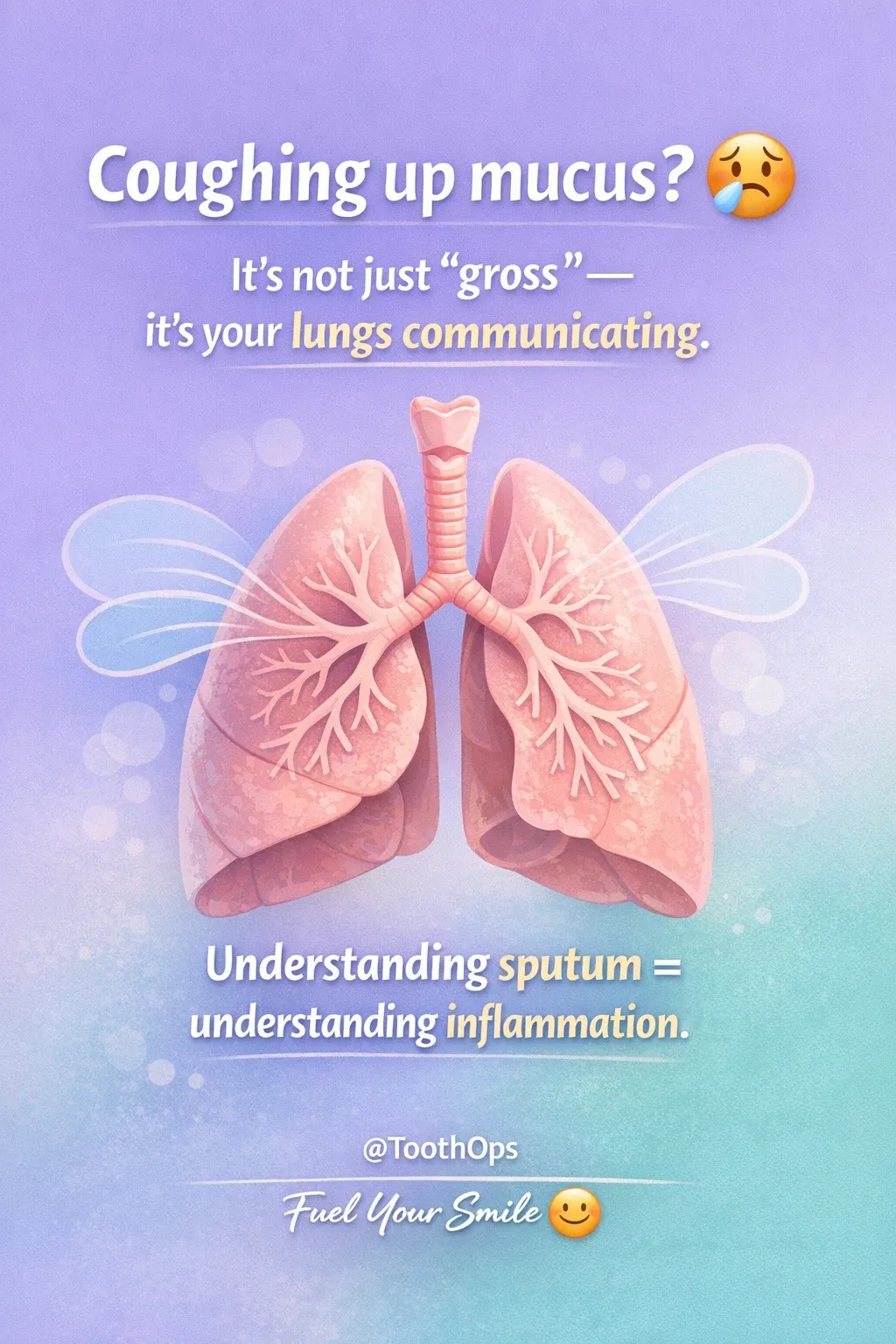
Ever coughed up mucus and wondered if you should worry?
Most people notice mucus (phlegm) when they’re sick — but very few understand what it actually means.
And when blood shows up? That’s when anxiety spikes.
Let’s slow this down and break it apart — calmly, clearly, and without panic.
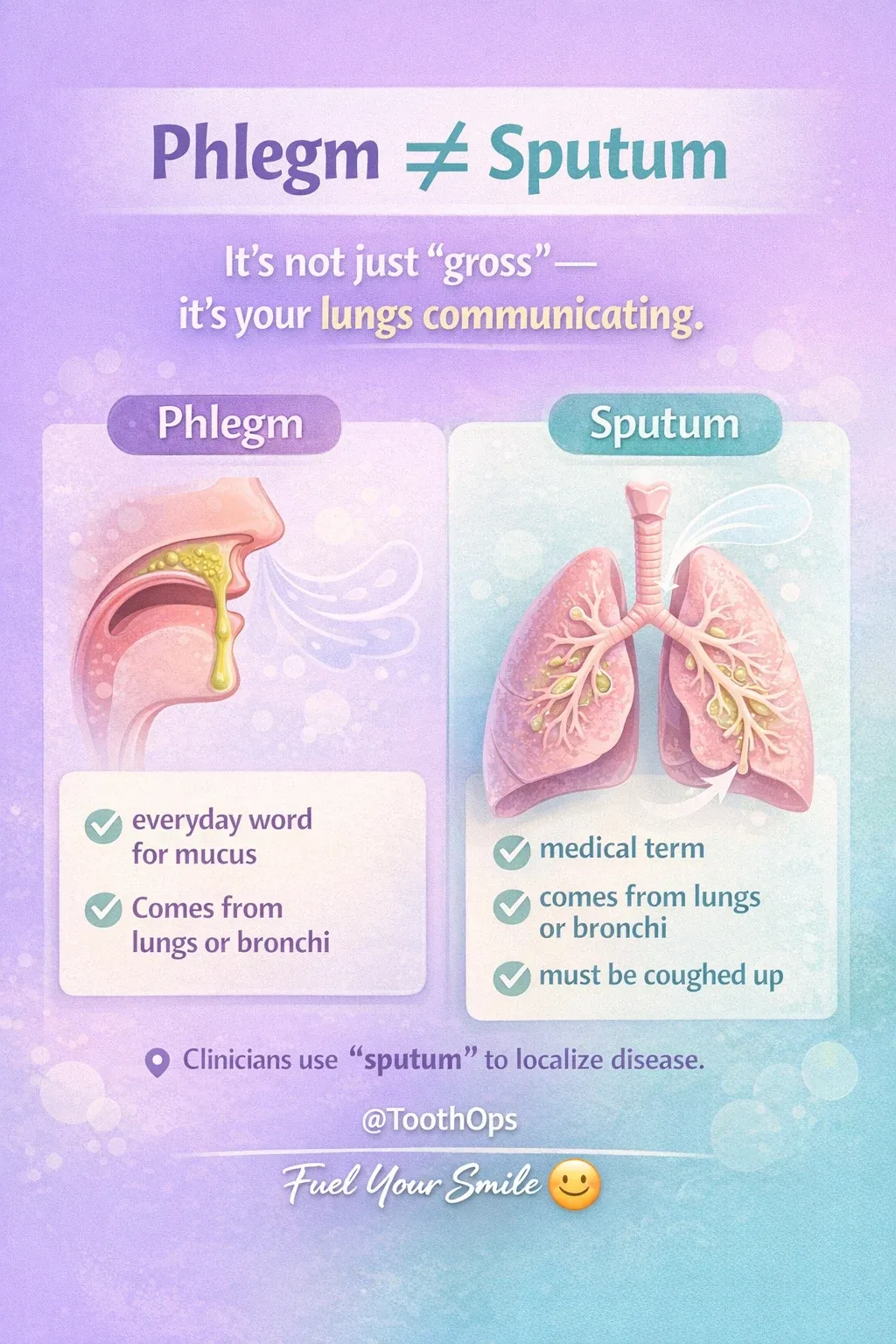
First: What’s the difference between phlegm and sputum?
Phlegm is a casual term people use for any thick mucus felt in the throat or airways.
Sputum is the medical term for mucus that:
- Comes from the lungs or bronchi
- Is coughed up, not swallowed
- Reflects lower respiratory tract inflammation
🧠 Key takeaway:
All sputum is phlegm — but not all phlegm is sputum.
This distinction matters because sputum tells clinicians where the problem is.
Why does the body make sputum?
Under healthy conditions:
- Airway cells make thin mucus
- Tiny cilia move it upward quietly
- You swallow it without noticing
During infection or irritation:
- The immune system releases inflammatory signals
- Mucus-producing cells multiply
- Mucus thickens and slows down
When that clearance system fails → the body coughs it out
💡 Sputum is not the problem — it’s the body’s response to one.
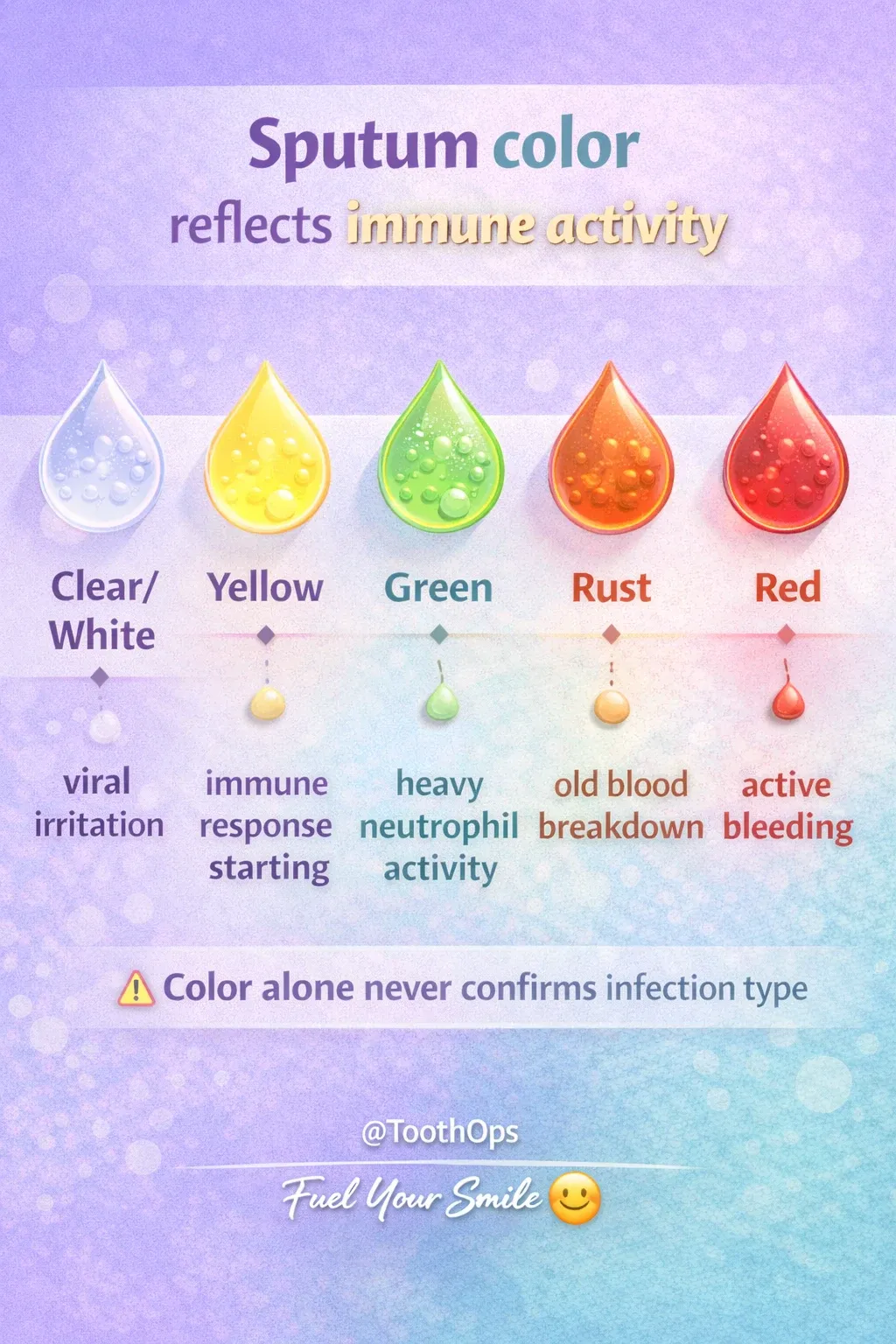
What sputum color can (and can’t) tell us
| Color | What it usually reflects |
|---|---|
| Clear / white | Viral irritation, early inflammation |
| Yellow | Immune cells responding (often neutrophils) |
| Green | Heavier, prolonged inflammation |
| Rust-colored | Old blood breaking down in the lungs |
| Bright red | Fresh bleeding from inflamed airways |
⚠️ Important: Color alone does not diagnose infection type. It reflects immune activity, not the exact cause.
What does blood in sputum mean?
Seeing blood in sputum is called hemoptysis.
It usually means:
- The lower airways are inflamed
- Blood vessels have become fragile
- Repeated coughing causes small vessel injury
This can happen with:
- Pneumonia
- Tuberculosis
- Chronic bronchitis
- Severe or prolonged coughing
🧠 Key truth:
Small blood streaks don’t automatically mean something catastrophic — but they do mean the lungs deserve attention.
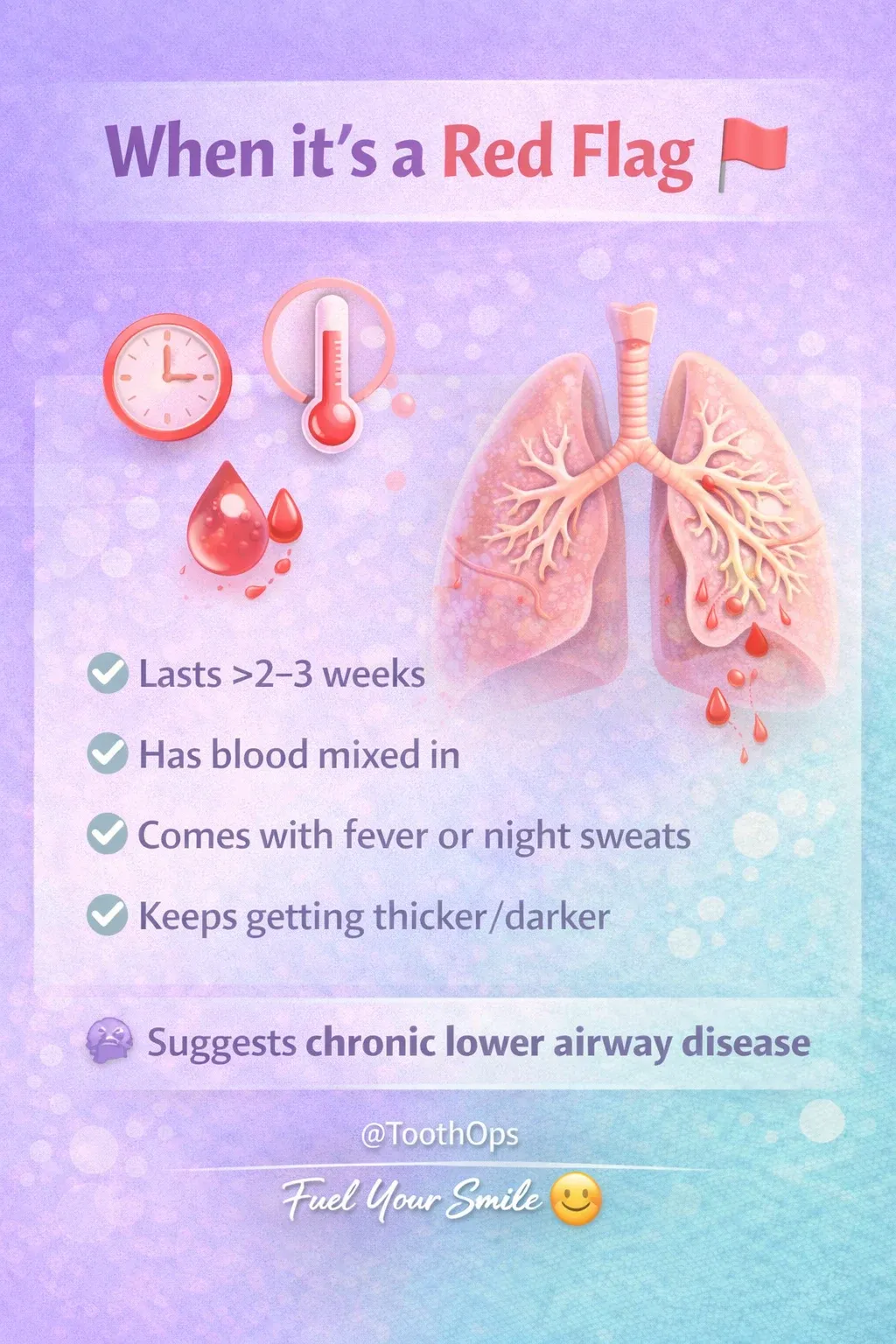
When sputum becomes a red flag 🚩
Pay closer attention when sputum is:
- Present longer than 2–3 weeks
- Associated with fever, night sweats, fatigue
- Mixed with blood
- Getting thicker or darker over time
These patterns suggest the body is dealing with ongoing lower respiratory inflammation, not a short-lived cold.
How clinicians use sputum (without guessing)
Sputum can be tested to:
- Identify bacteria or viruses
- Detect tuberculosis
- Guide antibiotic choice
- Rule out malignancy
It’s not about jumping to conclusions — it’s about matching symptoms with evidence.
The big lesson (for students and patients)
🧠 Sputum doesn’t tell us everything — but it tells us something important.
It answers:
- Where inflammation is happening
- How long it’s been active
- Whether the lungs are involved
And that’s often the difference between reassurance and action.
Save this if:
✔ You’ve ever worried about coughing up mucus
✔ You want to understand your body without fear
✔ You’re a student learning to think clinically, not emotionally
@ToothOps | Fuel Your Smile 😊
Stay tuned for more insights and educational content in our blog.
Disclaimer: Content is for educational purposes only and not a substitute for medical or dental care.© 2025 ToothOps | All Rights Reserved.