
🦷 Why Two Identical Cavities Don’t Get the Same Treatment
 ToothOps3 min read
(Mechanism → Risk → Clinical Decision)
🔍 Introduction
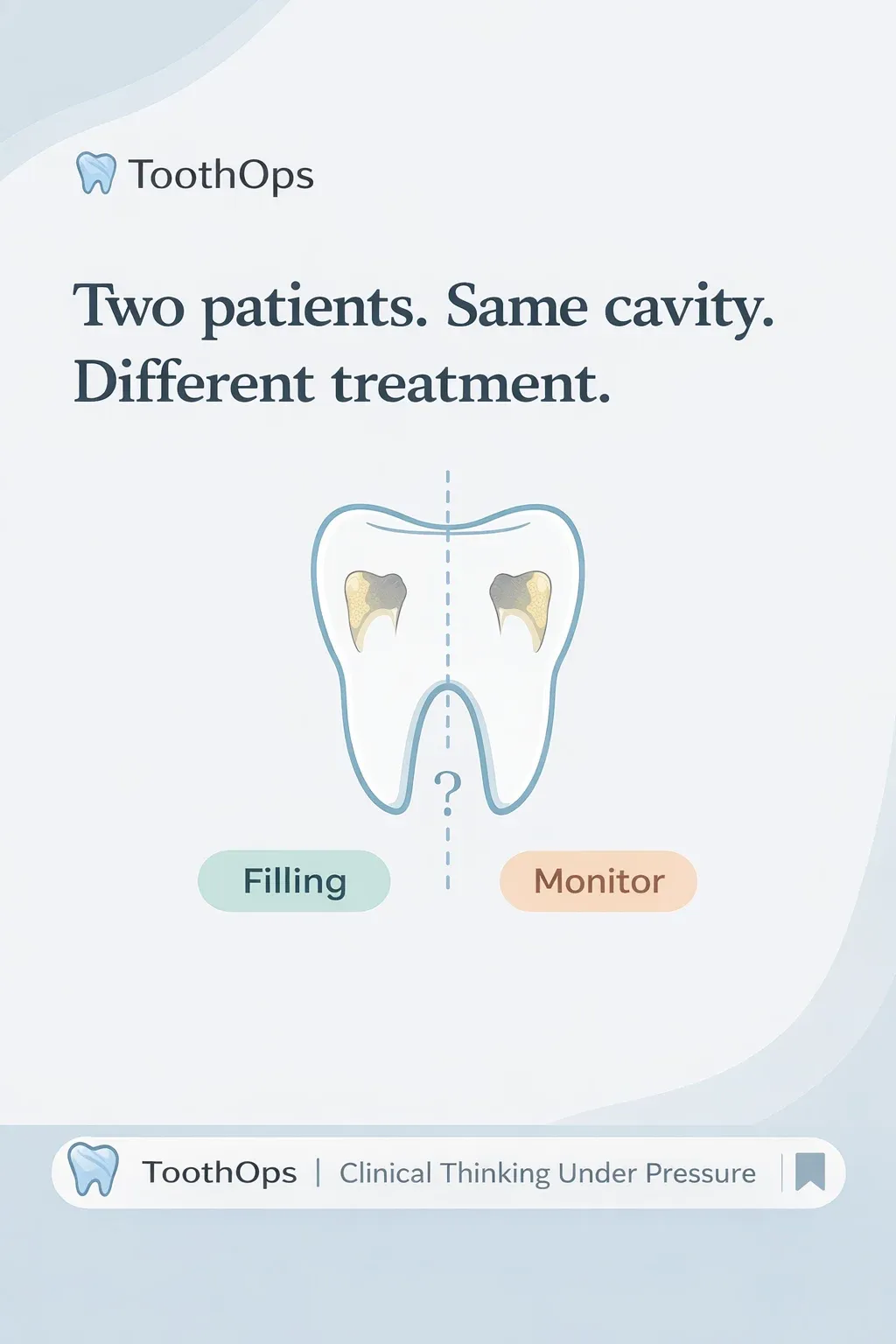
Two patients walk into the clinic.
Same tooth.Same radiograph.Same size lesion.
One gets a filling.The other is told to monitor.
At first, this feels inconsistent.
But it’s not.
👉 It’s risk-based, biologically informed dentistry.
🧠 The Common Misunderstanding
Most people assume:
“The worse the cavity looks, the more aggressive the treatment.”
So decisions appear to depend on:
- size
- depth
- radiographic appearance
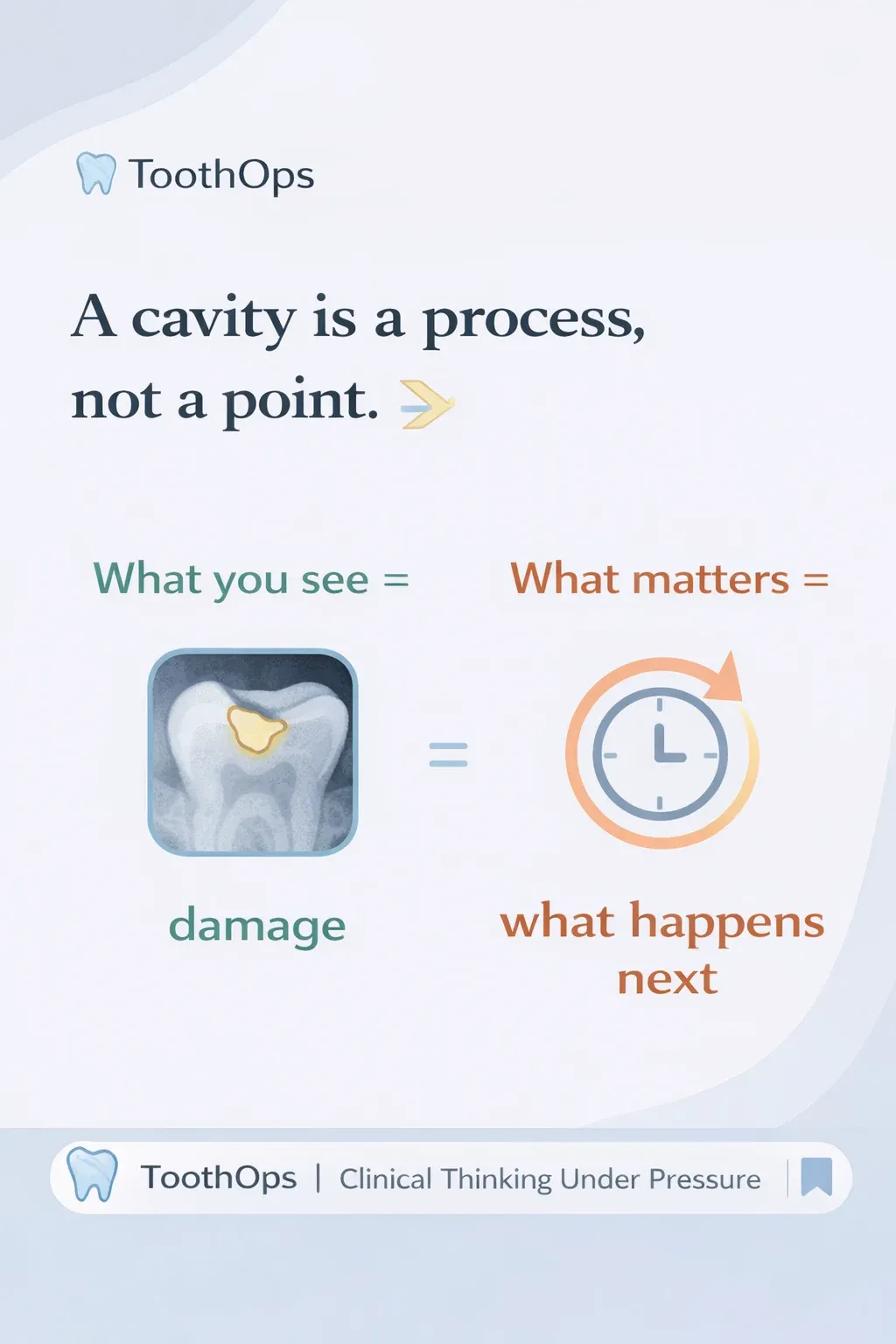
But these are static snapshots.
👉 Caries is not static.
⚙️ The Mechanism (What’s Actually Happening)
Dental caries is a biofilm-mediated, pH-driven disease process—not simply a structural defect.
At the enamel surface, there is a constant balance between:
🟢 Remineralization
- deposition of calcium and phosphate ions
- supported by saliva buffering and fluoride
🔴 Demineralization
- acid production by cariogenic bacteria (e.g., Streptococcus mutans)
- occurs when pH drops below the critical threshold (~5.5 for enamel)
🧠 What tips the balance?
The frequency and duration of acid challenges.
Not just how much sugar—but how often the pH drops and how long it stays low.
🧩 The Real Driver: The Oral Environment
The same lesion behaves differently because each patient has a different oral ecosystem.
Key determinants:
1. Saliva (your primary defense)
- buffering capacity (neutralizes acid)
- flow rate (clears sugars and acids)
- mineral content (supports repair)
2. Biofilm activity
- composition of microbial community
- ability to produce and tolerate acid
- structural maturity of plaque
3. Dietary pattern
- frequency of fermentable carbohydrate exposure
- repeated pH drops prevent recovery
4. Behavior
- oral hygiene consistency
- fluoride exposure
- adherence to preventive care
👉 Caries progression is not just about what’s present👉 It’s about how the environment behaves over time
🧩 Why the Same Lesion Gets Different Treatment
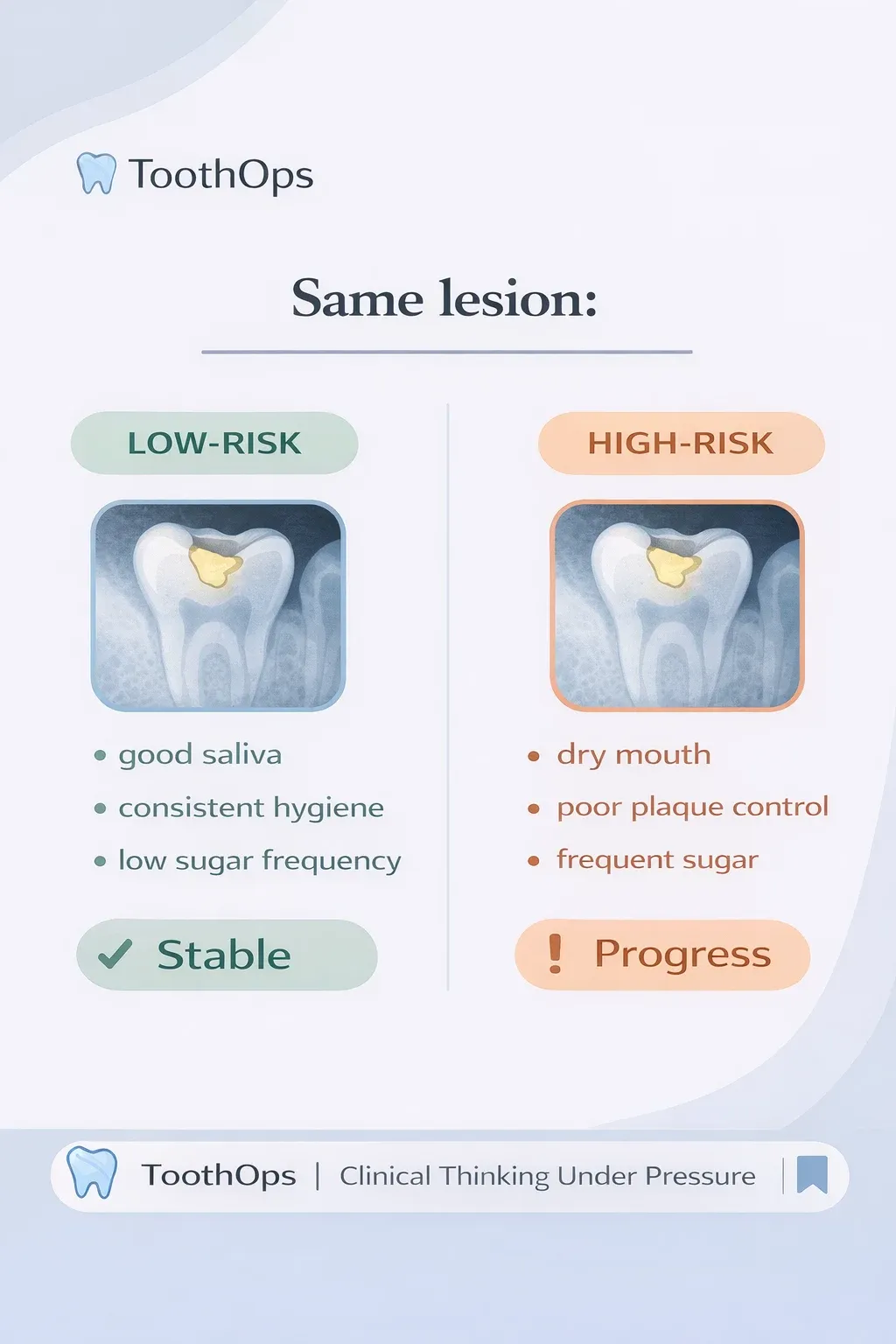
🟢 Low-risk patient
- adequate saliva flow
- infrequent sugar exposure
- controlled biofilm
- consistent hygiene
→ pH recovers quickly→ remineralization can occur→ lesion may remain stable or regress
🔴 High-risk patient
- xerostomia (dry mouth)
- frequent snacking/sugary drinks
- high biofilm activity
- inconsistent hygiene
→ prolonged acidic environment→ repeated demineralization→ lesion likely to progress into dentin
Same lesion.
👉 Completely different biological trajectory.
🧭 Clinical Decision Shift
Instead of asking:
👉 “How bad is the cavity?”
Start asking:
👉 “What is this lesion likely to do next in THIS patient?”
This changes your approach:
- Low-risk → monitor, remineralize, modify behavior
- Moderate-risk → non-invasive or minimally invasive strategies
- High-risk → earlier intervention to prevent rapid breakdown
👉 Treatment is not based on appearance alone.
👉 It’s based on predicted progression.
💡 What This Means for You
For patients:
- Not every cavity needs drilling immediately
- Daily habits directly influence disease progression
For students:
- Caries is a dynamic equilibrium problem, not a binary diagnosis
- Learn to evaluate risk + time, not just structure
For clinicians:
- Incorporate risk assessment (e.g., CAMBRA) into decisions
- Track changes longitudinally—not just at a single visit
🧠 A cavity is like a crack in a wall.
In a stable environment, it may never spread.
In a high-stress environment, it expands quickly.
The crack matters.
👉 But the forces acting on it over time matter more.
🏁 Final Thought
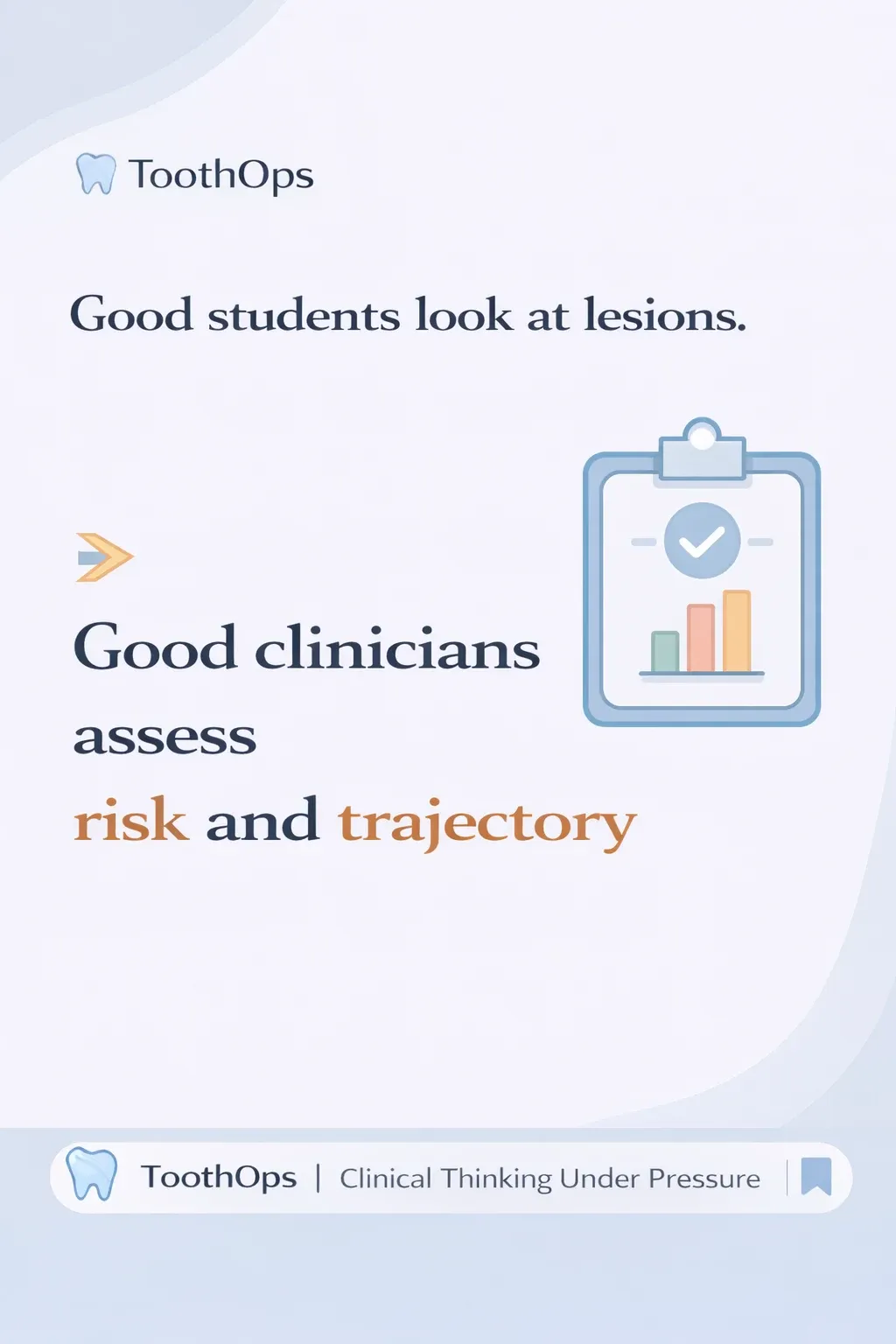
Dentistry is not just diagnosing what’s there.
👉 It’s predicting what will happen next.
And that requires understanding:
- biology
- behavior
- environment
👉 Diagnose the patient, not just the cavity.
@ToothOps | Fuel Your Smile 😊
Stay tuned for more insights and educational content in our blog.
Disclaimer: Content is for educational purposes only and not a substitute for medical or dental care.
© 2025 ToothOps | All Rights Reserved.