
🦷 Why Clots Sometimes Form in the Wrong PlaceThrombosis — When Protection Becomes Harm
 ToothOps7 min read
🧠 Start Here: The Real Question
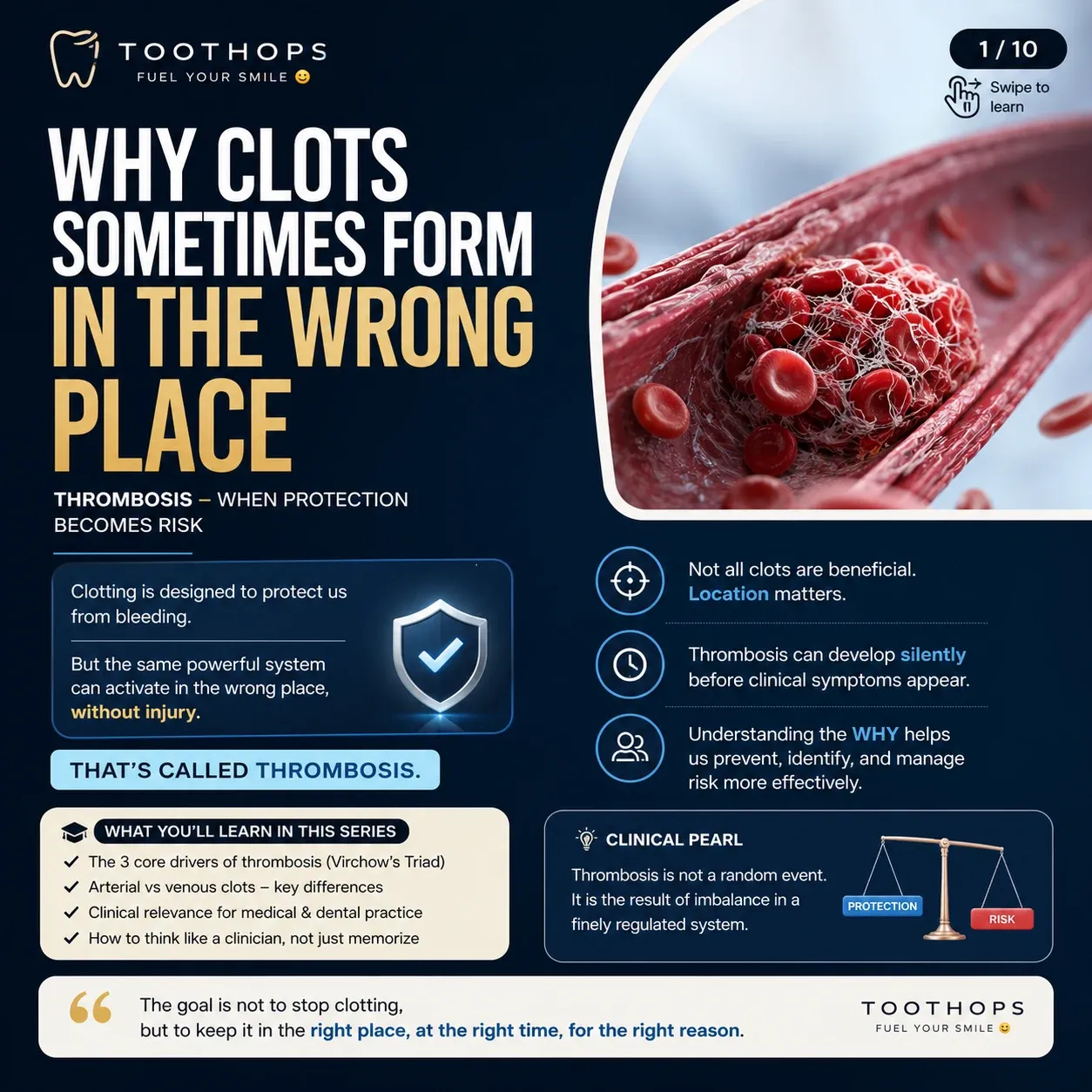
Most people think blood clots are automatically dangerous.
But biologically, clotting is not the enemy.
In fact, clotting is one of the body’s most important survival systems.
Without it:
- small injuries could become life-threatening
- tissues could not heal properly
- blood vessels could not maintain structural integrity after damage
The real problem is not clotting itself.
The real problem is:
- clotting in the wrong place
- clotting at the wrong time
- clotting with the wrong intensity
That process is called:
⚠️ Thrombosis
Understanding thrombosis changes how we think about:
- inflammation
- circulation
- healing
- surgery
- vascular biology
- and patient safety
🧠 Big Picture: The Body Walks a Tightrope
Your body constantly balances two competing goals:
| Goal | Why It Matters |
|---|---|
| Prevent bleeding | Preserve blood volume and tissue integrity |
| Prevent unnecessary clotting | Maintain blood flow and oxygen delivery |
Healthy physiology depends on maintaining balance between these systems.
Too little clotting:👉 bleeding risk
Too much clotting:👉 thrombosis risk
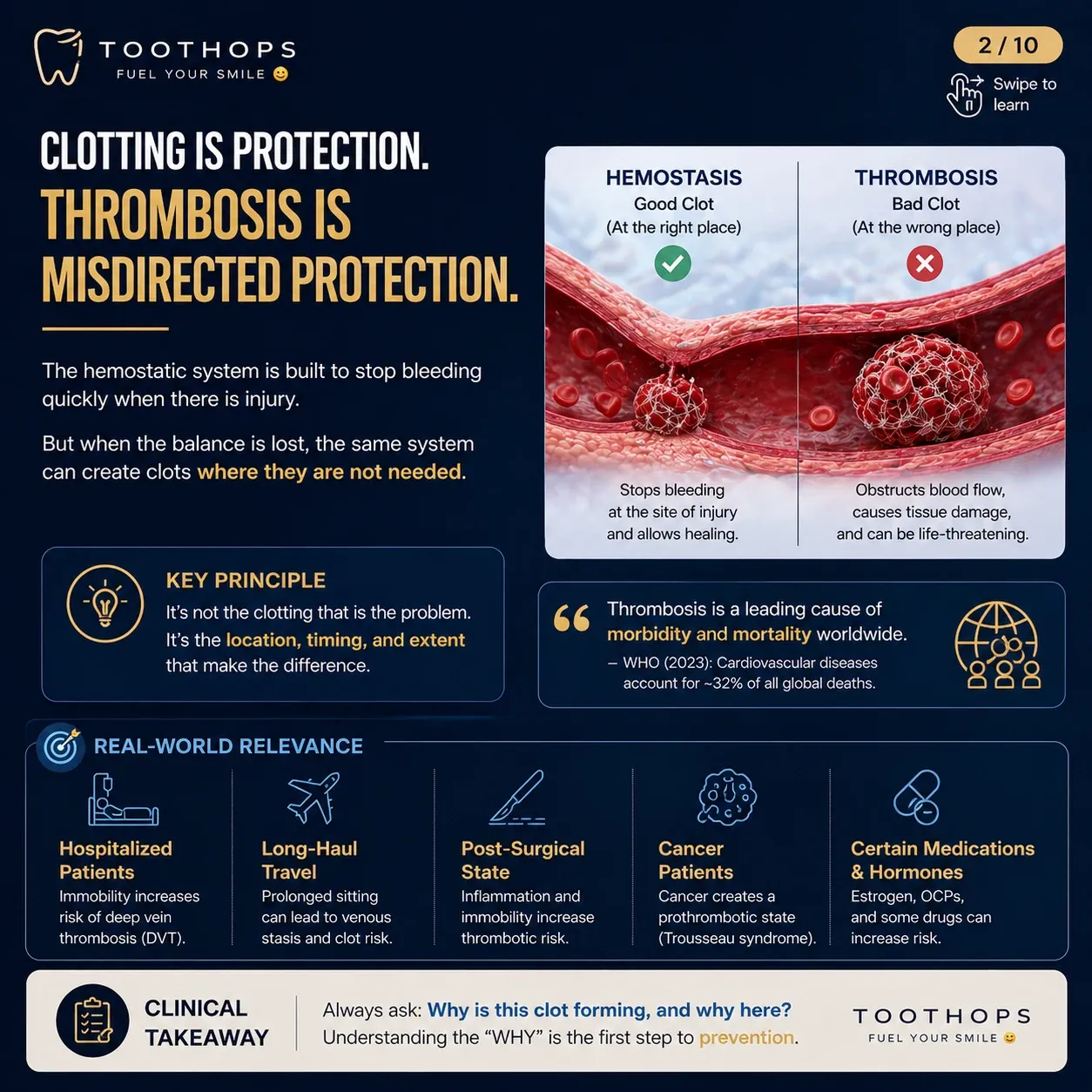
⚙️ Hemostasis vs Thrombosis
The body uses the SAME biologic machinery for both protection and disease.
The difference is regulation.
| Hemostasis | Thrombosis |
|---|---|
| Controlled clot formation | Pathologic clot formation |
| Occurs at injury site | Occurs without appropriate injury |
| Supports healing | Obstructs blood flow |
| Localized and temporary | Excessive or persistent |
| Protective | Potentially harmful |
🧠 ToothOps Insight
Clotting is not inherently dangerous.Uncontrolled clotting is.
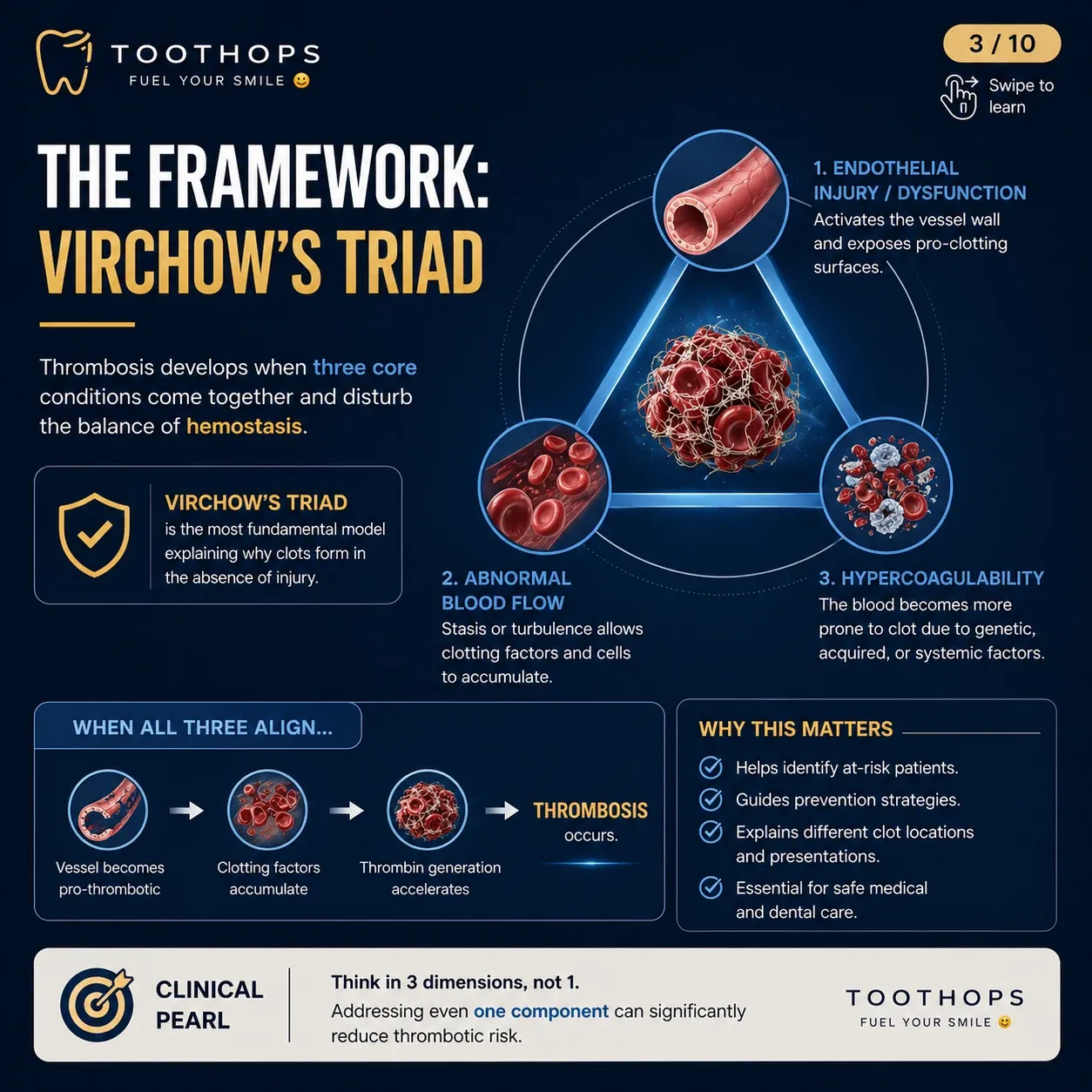
🔬 The Foundation: Virchow’s Triad
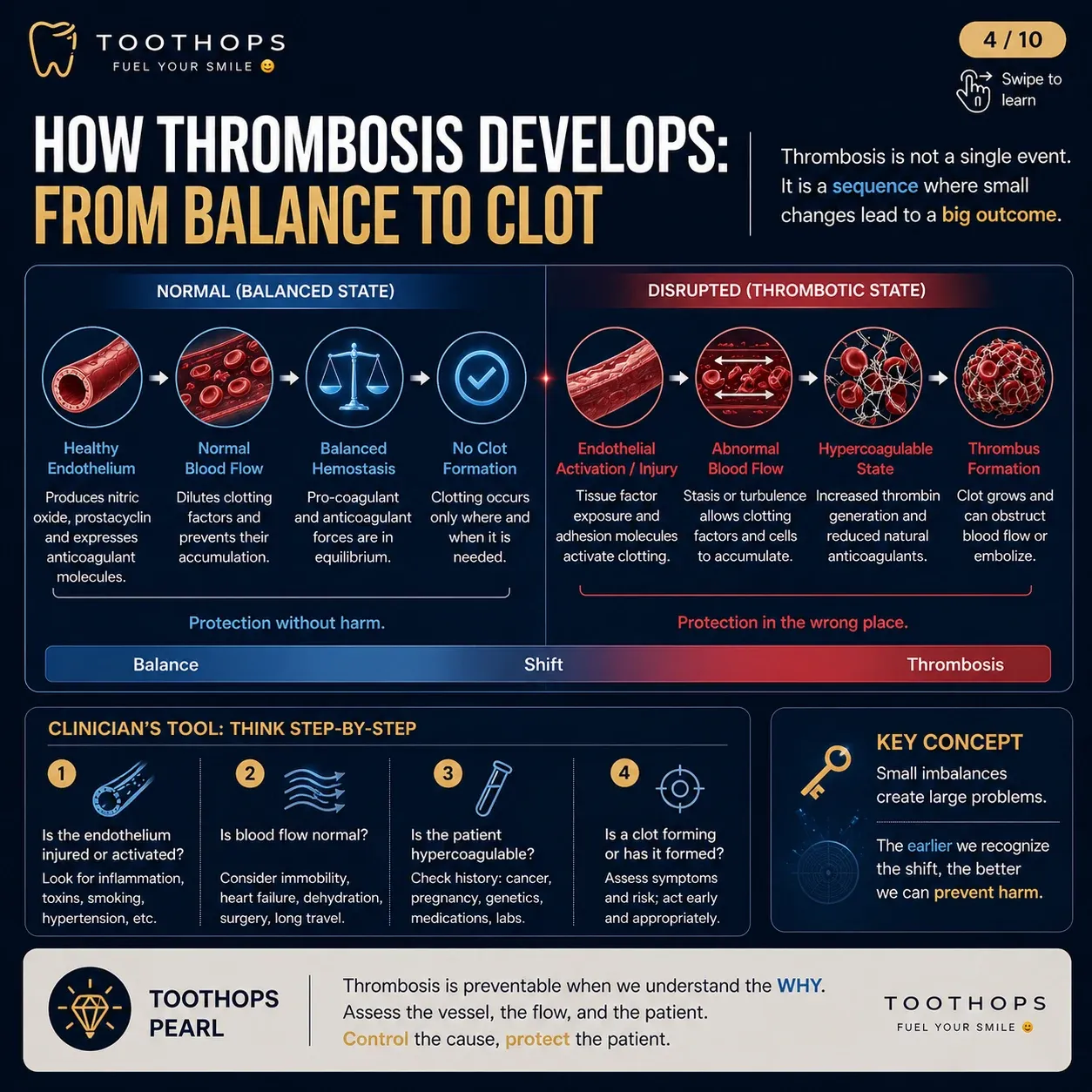
One of the most important frameworks in medicine explains thrombosis through disturbances in three interconnected systems.
This model is called:
⚠️ Virchow’s Triad
The 3 Conditions That Promote Thrombosis
| Component | What Changes | Why It Matters |
|---|---|---|
| Endothelial injury/dysfunction | Vessel lining becomes pro-thrombotic | Clot initiation increases |
| Abnormal blood flow | Stasis or turbulence develops | Clotting factors accumulate |
| Hypercoagulability | Clotting tendency increases | Thrombin amplification increases |
🧠 Critical Concept
These factors rarely act alone.
Most thromboses occur when:
- endothelial dysfunction
- abnormal flow
- hypercoagulability
begin reinforcing one another.
👉 Small biologic shifts can eventually produce major clinical consequences.
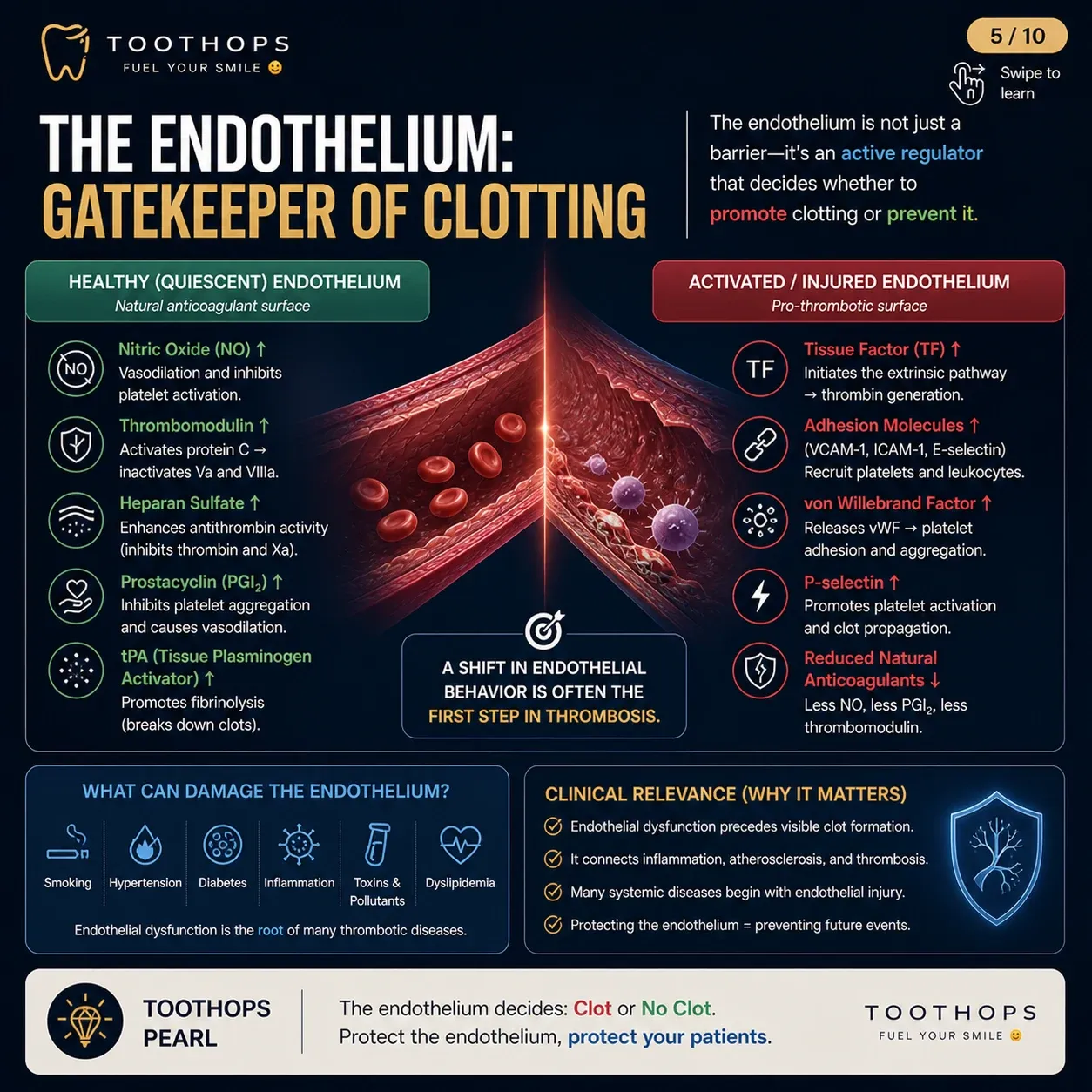
🛡️ The Endothelium: The Hidden Organ Most People Never Learn About
The endothelium is the thin layer of cells lining every blood vessel.
Although often overlooked, it behaves like a highly active biologic organ.
Healthy endothelial cells continuously regulate:
- coagulation
- platelet behavior
- inflammation
- vascular tone
- fibrinolysis
- immune signaling
Under healthy conditions, the endothelium actively PREVENTS unnecessary clotting.
✅ Healthy Endothelium Is Naturally Anti-Thrombotic
Healthy endothelial cells release molecules that suppress coagulation and maintain smooth blood flow.
Important Anti-Thrombotic Mediators
| Molecule | Major Function |
|---|---|
| Nitric Oxide (NO) | Inhibits platelet activation and promotes vasodilation |
| Prostacyclin (PGI₂) | Reduces platelet aggregation |
| Thrombomodulin | Activates anticoagulant protein C pathway |
| Heparan Sulfate | Enhances antithrombin activity |
| tPA | Supports fibrinolysis |
Together, these create a vascular surface that is:
- anticoagulant
- anti-inflammatory
- smooth
- resistant to thrombosis
⚠️ What Happens During Injury or Inflammation?
When endothelial cells become damaged or inflamed, their behavior changes dramatically.
Instead of suppressing clotting, they begin promoting it.
Activated endothelial cells may:
- express Tissue Factor (TF)
- release von Willebrand factor
- recruit platelets and leukocytes
- increase adhesion molecule expression
- reduce natural anticoagulants
The vessel surface shifts from:
👉 anti-thrombotic
to
👉 pro-thrombotic
This transition is one reason why:
- smoking
- hypertension
- diabetes
- chronic inflammation
- infection
- and vascular injury
increase thrombotic risk.
🌊 Blood Flow: The Underrated Driver of Clot Formation
Blood flow is not simply movement.
Flow determines:
- whether thrombin accumulates
- how long clotting factors remain together
- how platelets interact with vessel walls
- whether amplification loops persist
✅ Normal Flow Is Protective
Healthy flowing blood:
- dilutes activated clotting factors
- washes away thrombin
- limits platelet-vessel interaction
- reduces unnecessary coagulation
Fast laminar flow naturally protects against thrombosis.
⚠️ Stasis Changes the Entire Environment
When blood flow slows:
- activated factors accumulate
- thrombin concentration increases
- platelets remain near vessel walls longer
- fibrin formation becomes more likely
This creates a pro-thrombotic environment.
🧠 Clinical Relevance
Venous thrombosis commonly develops during:
- prolonged immobility
- hospitalization
- long-distance travel
- post-surgical recovery
- heart failure
because blood flow becomes stagnant.
🧠 ToothOps Insight
Clotting factors need both time and proximity to amplify effectively.Stasis provides both.
🩸 Hypercoagulability: When the System Is Primed to Clot
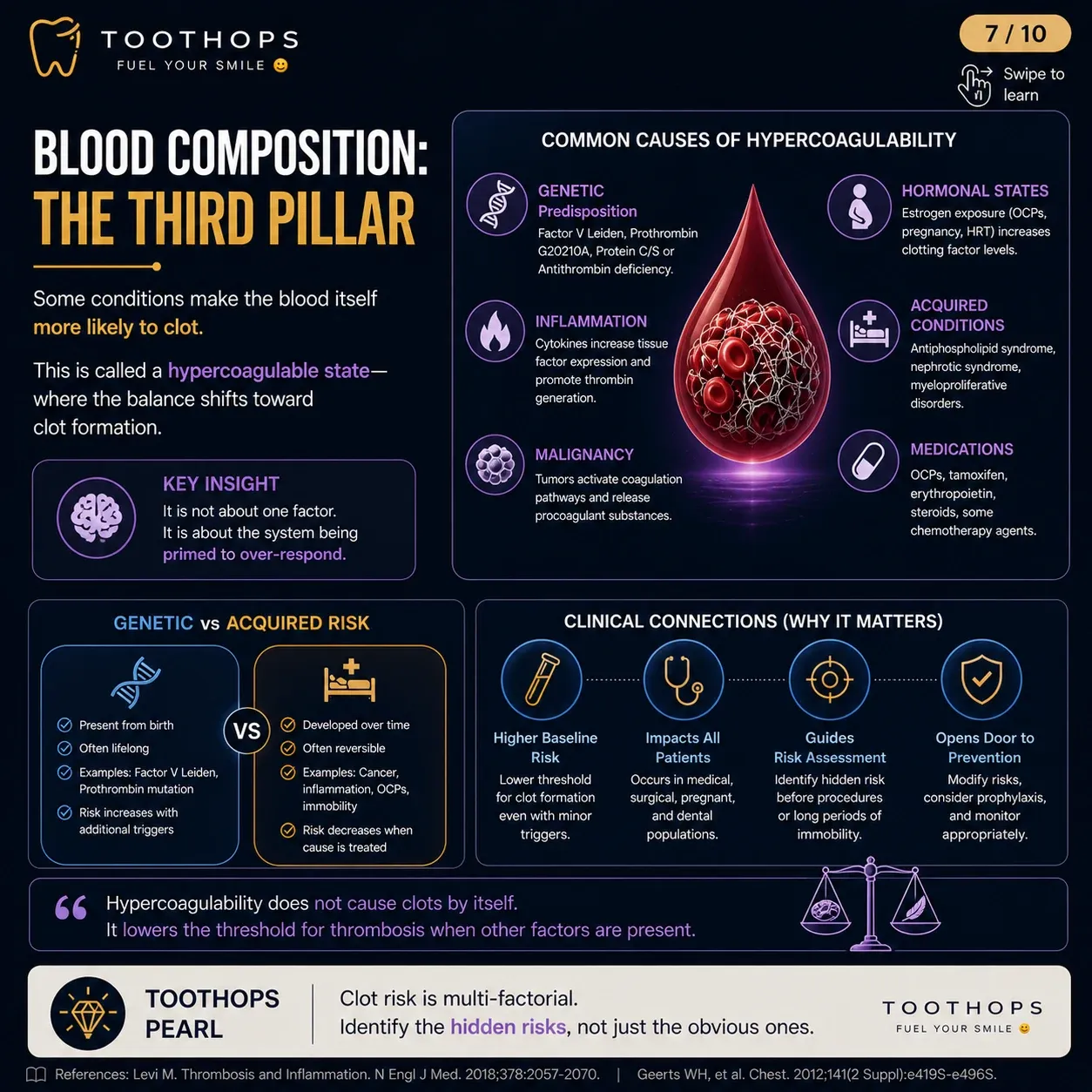
Hypercoagulability refers to an increased tendency toward clot formation.
This does NOT necessarily mean a clot is already present.
Instead, it means the biologic threshold for thrombosis has become lower.
🔬 Genetic Hypercoagulability
Inherited causes include:
- Factor V Leiden mutation
- Prothrombin gene mutation
- Protein C deficiency
- Protein S deficiency
- Antithrombin deficiency
These conditions alter:
- thrombin regulation
- anticoagulant pathways
- factor degradation
🔥 Acquired Hypercoagulability
Acquired causes include:
- malignancy
- obesity
- pregnancy
- systemic inflammation
- antiphospholipid syndrome
- estrogen-containing medications
- smoking
Many of these conditions increase:
- Tissue Factor expression
- cytokine signaling
- endothelial activation
- thrombin generation
⚖️ Arterial vs Venous Thrombosis
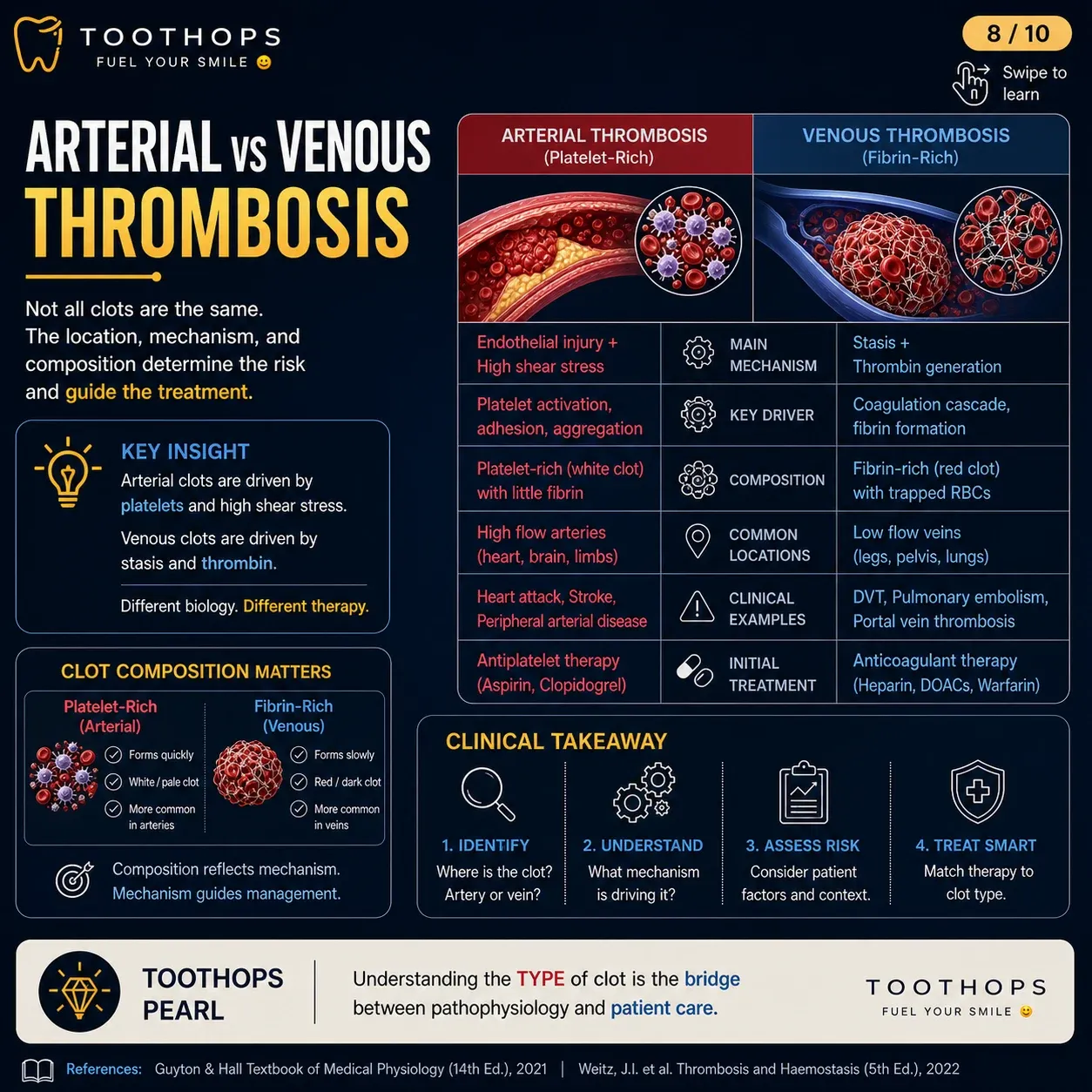
Not all clots are biologically identical.
Their composition reflects the environment in which they form.
❤️ Arterial Thrombosis
Usually associated with:
- endothelial injury
- atherosclerosis
- platelet activation
- high shear stress
Composition
👉 Platelet-rich (“white clots”)
Examples
- myocardial infarction
- ischemic stroke
- peripheral arterial thrombosis
Treatment Emphasis
👉 Antiplatelet therapy
🫀 Venous Thrombosis
Usually associated with:
- stasis
- thrombin generation
- coagulation cascade amplification
Composition
👉 Fibrin-rich (“red clots”)
Examples
- deep vein thrombosis (DVT)
- pulmonary embolism (PE)
Treatment Emphasis
👉 Anticoagulants
🧠 Why This Distinction Matters
The biology determines:
- clot structure
- location
- clinical behavior
- treatment strategy
Different mechanisms require different therapies.
That is why understanding pathophysiology matters clinically.
🔥 Thrombosis and Inflammation Are Deeply Connected
Inflammation and thrombosis continuously influence one another.
Inflammatory cytokines:
- activate endothelial cells
- increase Tissue Factor expression
- recruit leukocytes
- amplify coagulation pathways
Meanwhile, thrombin itself can:
- activate inflammatory signaling
- recruit immune cells
- alter endothelial behavior
This interconnected process is sometimes called:
👉 Immunothrombosis
Under controlled conditions, immunothrombosis helps contain injury and infection.
But excessive activation can:
- impair perfusion
- damage tissue
- worsen disease progression
🦷 Why This Matters in Dentistry
Clotting biology directly affects:
- surgical healing
- tissue perfusion
- post-operative stability
- medically complex patients
- inflammatory oral disease
Patients at increased thrombotic risk may include:
- cancer patients
- hospitalized patients
- patients with cardiovascular disease
- patients on hormone therapy
- patients with chronic inflammatory conditions
Understanding thrombosis improves:
- risk assessment
- interdisciplinary communication
- procedural planning
- patient education
🧠 Clinical Thinking: How Experts Approach Thrombosis
Experienced clinicians rarely ask only:
❌ “Is there a clot?”
Instead, they ask:
- Why did this clot form?
- Where is it forming?
- What changed in the vessel?
- Is blood flow impaired?
- Is inflammation involved?
- Is the patient hypercoagulable?
- What mechanism is dominant?
This is not memorization.
This is systems-based reasoning.
⚠️ Red Flags That Require Urgent Evaluation
Potential signs of thrombosis may include:
- unilateral leg swelling
- calf pain or warmth
- sudden shortness of breath
- pleuritic chest pain
- sudden neurologic deficits
- unexplained discoloration or ischemic pain
👉 Early recognition can be life-saving.
💬 Chairside Translation
“Your body uses clotting to protect you and help tissues heal. But sometimes the system becomes overactive or activates in the wrong place. Our goal is to reduce those risks while still supporting healthy healing.”
🧠 ToothOps Insight
The body does not form clots randomly.
Thrombosis reflects:
- changes in vessel behavior
- changes in blood flow
- changes in biologic balance
Understanding those interactions changes the question from:
❌ “Is there a clot?”
to:
✅ “Why did this clot form in this patient, at this location, and at this moment?”
That is the beginning of true clinical reasoning.
✨ Final Takeaway
Clotting is one of the body’s most powerful protective systems.
But protection without regulation can become harmful.
👉 Hemostasis protects.
👉 Thrombosis is protection in the wrong place.
@ToothOps | Fuel Your Smile 😊
Stay tuned for more insights and educational content in our blog.
Disclaimer: Content is for educational purposes only and not a substitute for medical or dental care.
© 2025 ToothOps | All Rights Reserved.