
🦷 Why Some Genetic Diseases Affect the Entire Body
 ToothOps7 min read
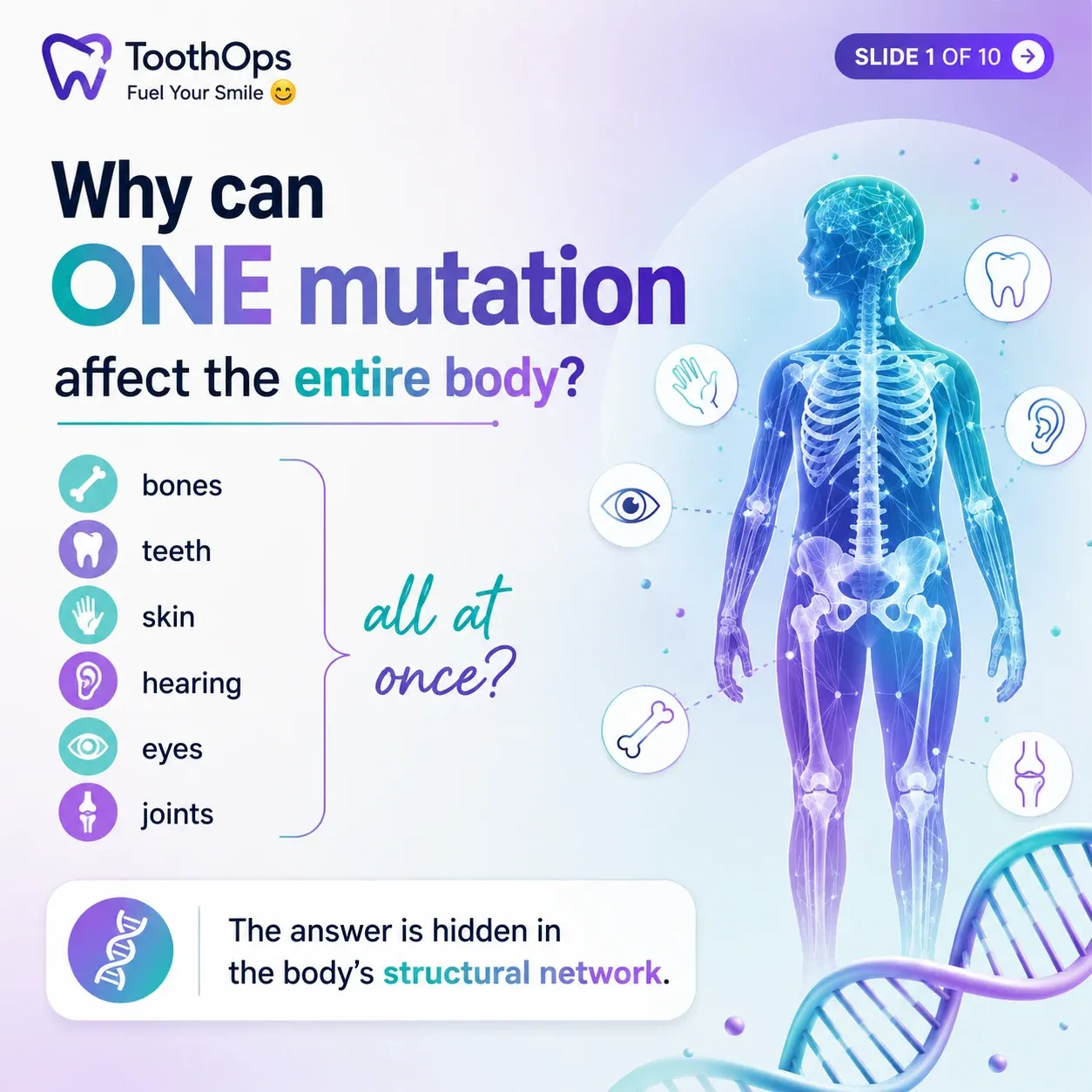
The Extracellular Matrix, Collagen, and the Hidden Structural Network Connecting Human Tissues
When people hear the term:
“genetic disease”
they often imagine a problem isolated to:
- one organ
- one symptom
- or one body system.
But some genetic disorders behave very differently.
A single mutation may simultaneously affect:
- bones
- teeth
- skin
- hearing
- blood vessels
- joints
- growth
- and wound healing.
At first glance, these findings can seem unrelated.
But biologically, many of them originate from damage to the same hidden system:👉 the extracellular matrix.
This is one of the most important concepts in systems biology and connective tissue medicine.
Because the body is not simply made of individual organs.
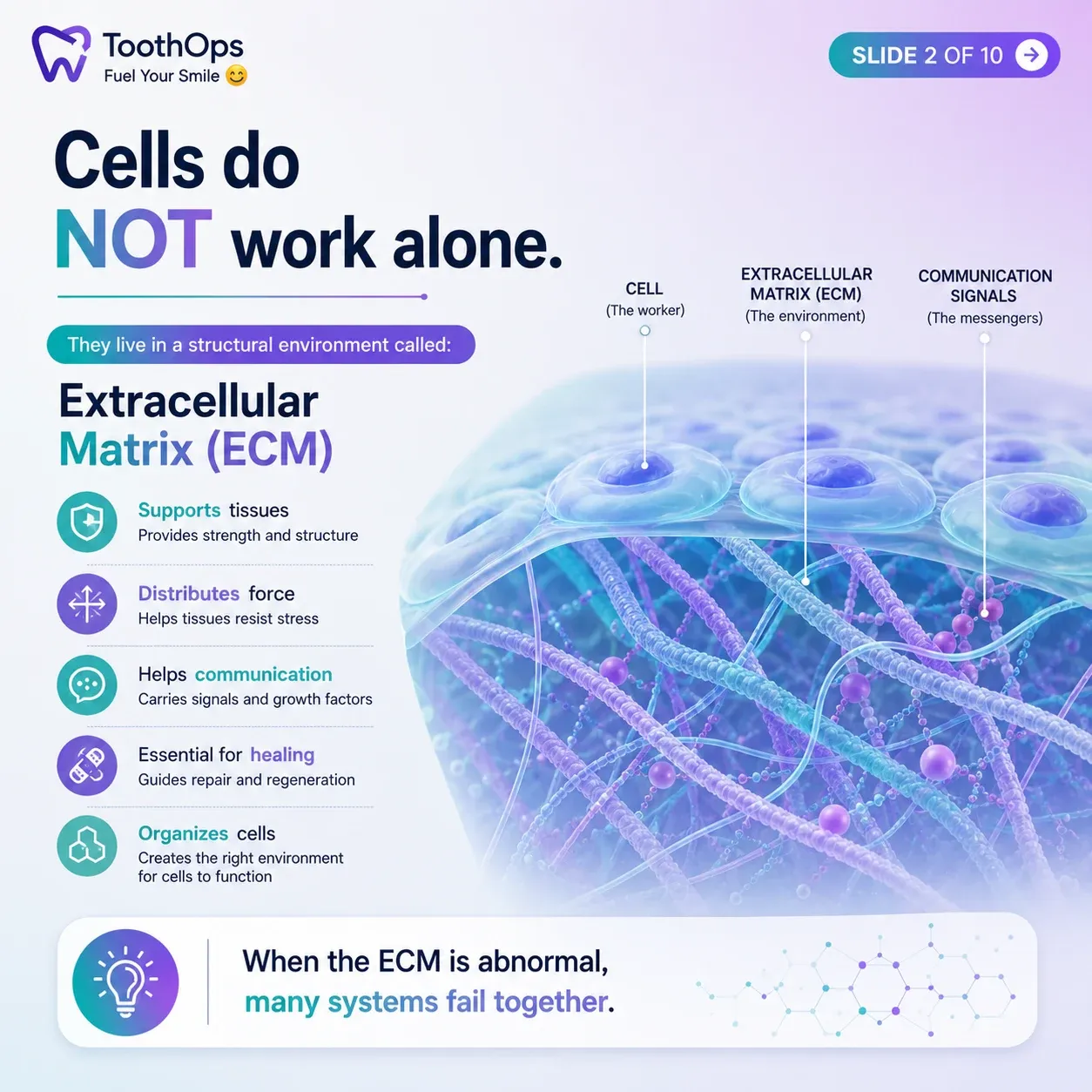
It is built upon a shared structural network that organizes how tissues:
- hold together
- transmit force
- communicate
- heal
- and function mechanically.
Understanding that changes how clinicians think about:
- Osteogenesis Imperfecta (OI)
- Ehlers-Danlos syndrome (EDS)
- Marfan syndrome
- wound healing disorders
- periodontal disease
- craniofacial development
- and even normal aging.
Because sometimes the problem is not isolated to one tissue.
👉 The problem is the framework supporting all tissues.
🧠 The Big Picture: Cells Do Not Function Alone
Most people learn biology by focusing on cells:
- osteoblasts
- fibroblasts
- neurons
- immune cells
But cells do not exist in empty space.
Every cell is embedded within a surrounding environment called:👉 the extracellular matrix (ECM).
The ECM is far more than “support material.”
It is:
- structural
- biochemical
- mechanical
- and communicative.
🧠 Critical Insight
The extracellular matrix is not passive support tissue.It is a living structural communication system.
🔬 What Is the Extracellular Matrix?
The extracellular matrix is a complex network composed of:
- collagen
- elastin
- glycoproteins
- proteoglycans
- signaling molecules
- water-binding components
Together, these materials create:
- tissue architecture
- force distribution
- elasticity
- hydration
- mechanical stability
without which organs could not function normally.
🔬 Collagen: The Structural Backbone of the ECM
Collagen is the most abundant protein in the human body.
Different collagen types specialize in different tissues.
| Collagen Type | Major Locations | Main Function |
|---|---|---|
| Type I | Bone, dentin, tendon, sclera | Tensile strength |
| Type II | Cartilage | Compression resistance |
| Type III | Blood vessels, skin | Flexible structural support |
| Type IV | Basement membranes | Filtration/support |
🧠 Why Collagen Matters So Much
Collagen acts as:👉 the body’s structural scaffold.
It allows tissues to:
- resist tearing
- tolerate tension
- distribute force
- maintain organization
Without collagen integrity:
- tissues weaken mechanically
- healing becomes inefficient
- organs lose structural stability
🔬 The Triple Helix: Why Tiny Mutations Matter
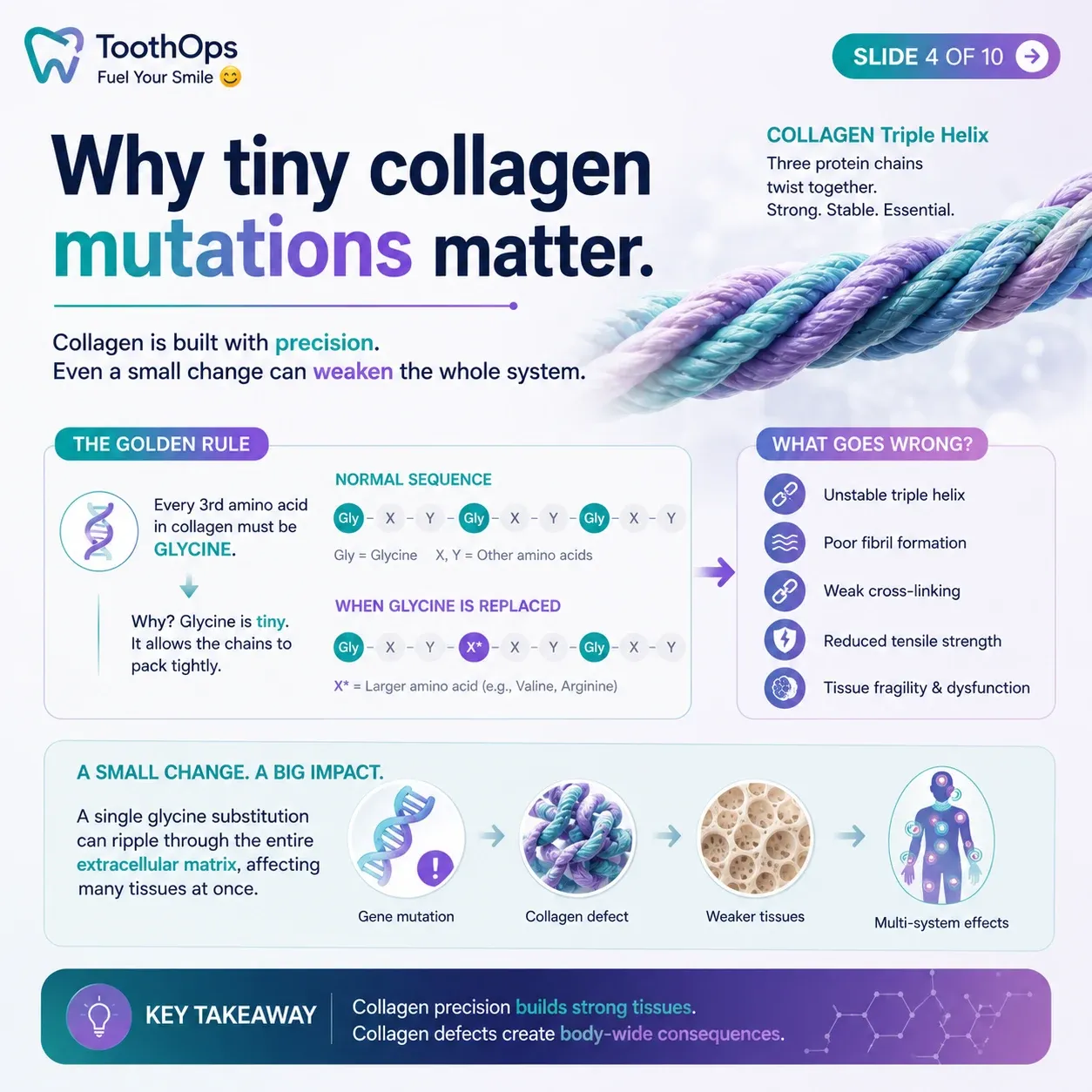
Collagen molecules form a:👉 triple helix structure.
Every third amino acid is:👉 glycine
because glycine is small enough to allow tight packing of the helix.
When glycine is replaced by a larger amino acid:
- helix formation destabilizes
- fibrils organize poorly
- tissue strength decreases
This explains why a seemingly tiny mutation can produce:
- fractures
- blue sclera
- dentin abnormalities
- hearing loss
- ligament laxity
all simultaneously.
🧠 Aha Moment
One mutation can damage multiple organs because many tissues share the same structural proteins.
🔬 Why the ECM Is More Than Structural Support
The ECM does not simply “hold tissues together.”
It also:
- regulates cell signaling
- guides migration
- influences differentiation
- stores growth factors
- affects inflammation
- controls wound healing
Cells constantly interact with the ECM mechanically and chemically.
This means ECM dysfunction alters:
- structure
- communication
- adaptation
- and repair
at the same time.
🔬 Mechanotransduction: How Cells Feel Force
One of the most advanced concepts in modern biology is:👉 mechanotransduction
This refers to how cells sense:
- tension
- pressure
- stiffness
- vibration
- mechanical load
through the extracellular matrix.
The ECM therefore functions like:👉 a biologic information network.
🧠 Important Insight
Tissues do not only respond to chemistry.They respond to physical force.
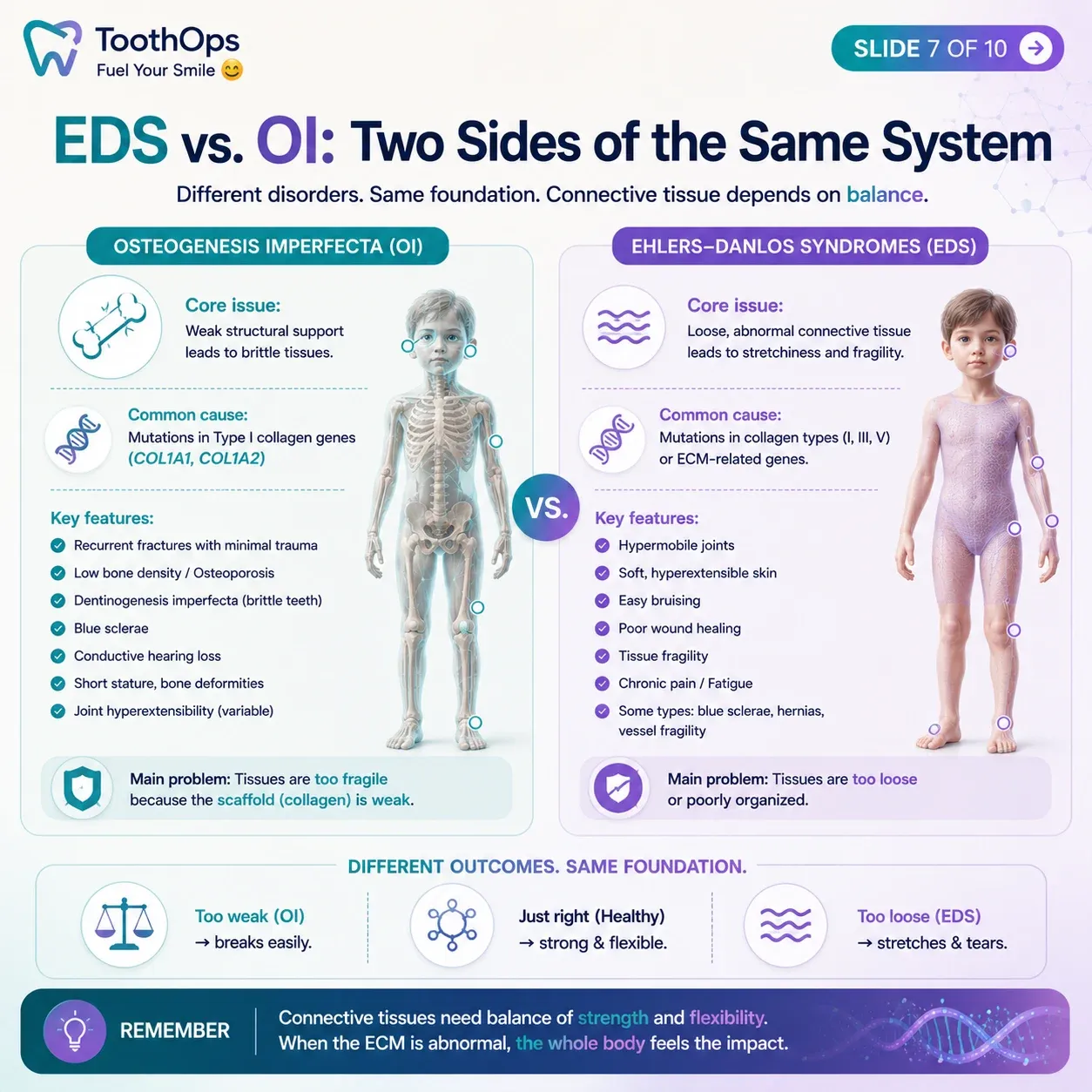
🔬 Osteogenesis Imperfecta: A Systems Disease
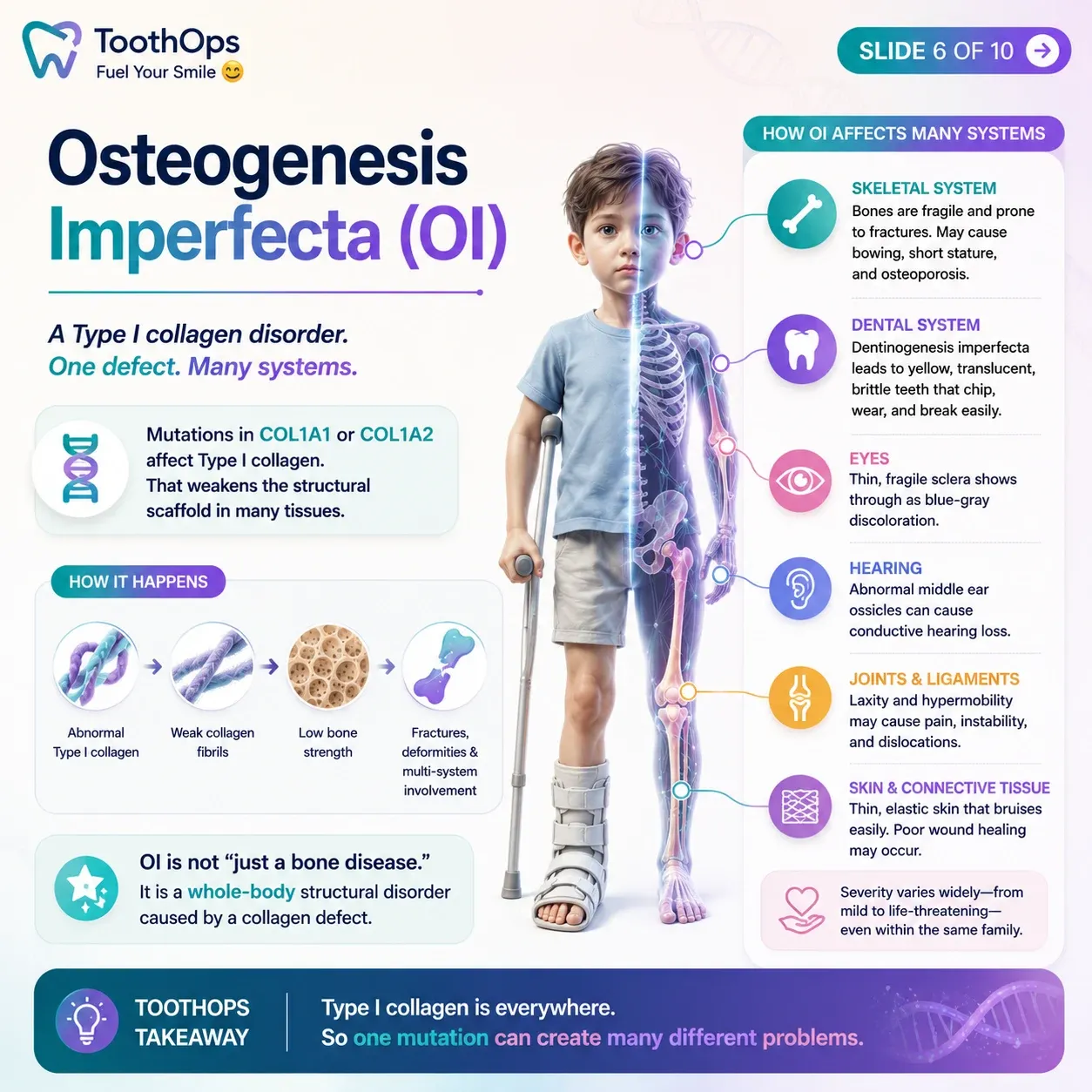
In Osteogenesis Imperfecta:
- Type I collagen becomes abnormal
- bone structure weakens
- dentin organization changes
- sclera thins
- ossicle mechanics may become impaired
This is why OI affects:
- skeleton
- teeth
- hearing
- eyes
- growth
simultaneously.
The disease appears “multi-system,” but mechanistically:👉 the same structural defect is present everywhere.
📊 OI Systems Pattern Recognition
| Tissue | ECM/Collagen Role | Clinical Finding |
|---|---|---|
| Bone | Tensile scaffold | Fractures |
| Dentin | Structural matrix | Dentinogenesis imperfecta |
| Sclera | Connective support | Blue sclera |
| Middle ear | Ossicle integrity | Conductive hearing loss |
| Ligaments | Force stability | Joint laxity |
🔬 Ehlers-Danlos Syndrome (EDS): When Flexibility Becomes Instability
Ehlers-Danlos syndrome demonstrates another form of ECM dysfunction.
In EDS:
- collagen organization becomes abnormal
- connective tissues become excessively elastic
This may produce:
- hypermobile joints
- skin hyperextensibility
- poor wound healing
- tissue fragility
At first glance, flexibility may seem beneficial.
But mechanically:👉 excessive elasticity reduces stability.
🧠 Clinical Insight
Tissues require balance—not maximum flexibility or maximum stiffness.
🔬 Marfan Syndrome: When Elastic Tissue Fails
Marfan syndrome primarily affects:👉 fibrillin
a major ECM-associated protein important for elastic fiber organization.
This may affect:
- aorta
- ligaments
- eyes
- skeletal proportions
Again, the pattern appears multi-system.
But the deeper issue is:👉 extracellular matrix dysfunction affecting mechanical integrity throughout the body.
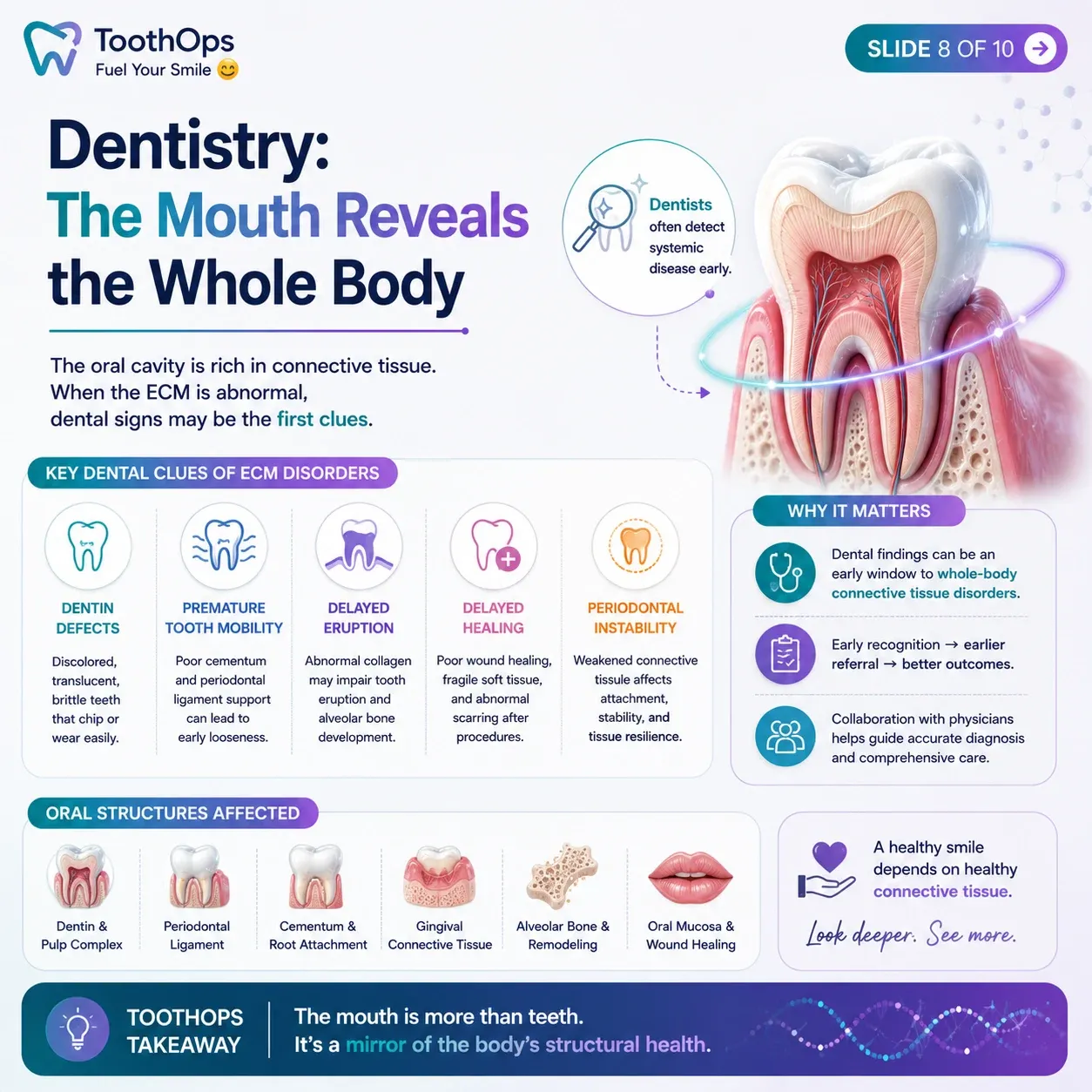
🔬 Why Dentistry Is Deeply Connected to the ECM
Dentistry constantly interacts with ECM biology because oral tissues depend heavily on:
- collagen
- mineralized matrix
- connective tissue remodeling
- force distribution
This affects:
- dentin formation
- periodontal attachment
- wound healing
- implant integration
- occlusion
- orthodontic movement
🧠 ToothOps Clinical Insight
The mouth is one of the most mechanically active connective tissue environments in the body.
🔬 Wound Healing and the ECM
Normal healing depends on:
- collagen deposition
- matrix remodeling
- angiogenesis
- mechanical stabilization
If ECM biology becomes abnormal:
- wounds heal poorly
- scars weaken
- tissue integrity declines
This becomes clinically important after:
- extractions
- surgery
- periodontal therapy
- trauma
🔬 Aging: ECM Breakdown Over Time
One reason tissues age is gradual extracellular matrix change.
Over time:
- collagen cross-linking changes
- elastin degrades
- hydration decreases
- remodeling slows
This contributes to:
- skin wrinkling
- reduced tissue resilience
- slower healing
- altered biomechanics
The ECM therefore influences not only disease, but normal aging itself.
🧠 Bigger Biological Principle
The extracellular matrix teaches one of the most important lessons in medicine:
Structure and communication are inseparable.
The body does not function through isolated organs alone.
It functions through integrated structural systems.
💬 Chairside Translation
When patients ask:
“How can one condition affect so many different parts of the body?”
A useful explanation is:
“Many tissues in the body rely on the same structural proteins and support systems. When those support systems don’t form normally, multiple organs can be affected at the same time.”
This explanation:
- simplifies systems biology
- preserves accuracy
- improves understanding
🧠 ToothOps Takeaway
The extracellular matrix is not simply “material between cells.”
It is:
- structural framework
- mechanical support
- communication network
- repair system
- and biologic architecture
all at once.
When that framework fails, entire systems begin to change together.
📦 If You Only Remember One Thing
👉 Many “multi-system diseases” are actually disorders of one shared structural network: the extracellular matrix.
✨ Final Takeaway
The body is not built from isolated organs.
It is built from interconnected structural systems that allow tissues to:
- communicate
- adapt
- heal
- and tolerate force.
Understanding the extracellular matrix changes how we understand disease itself.
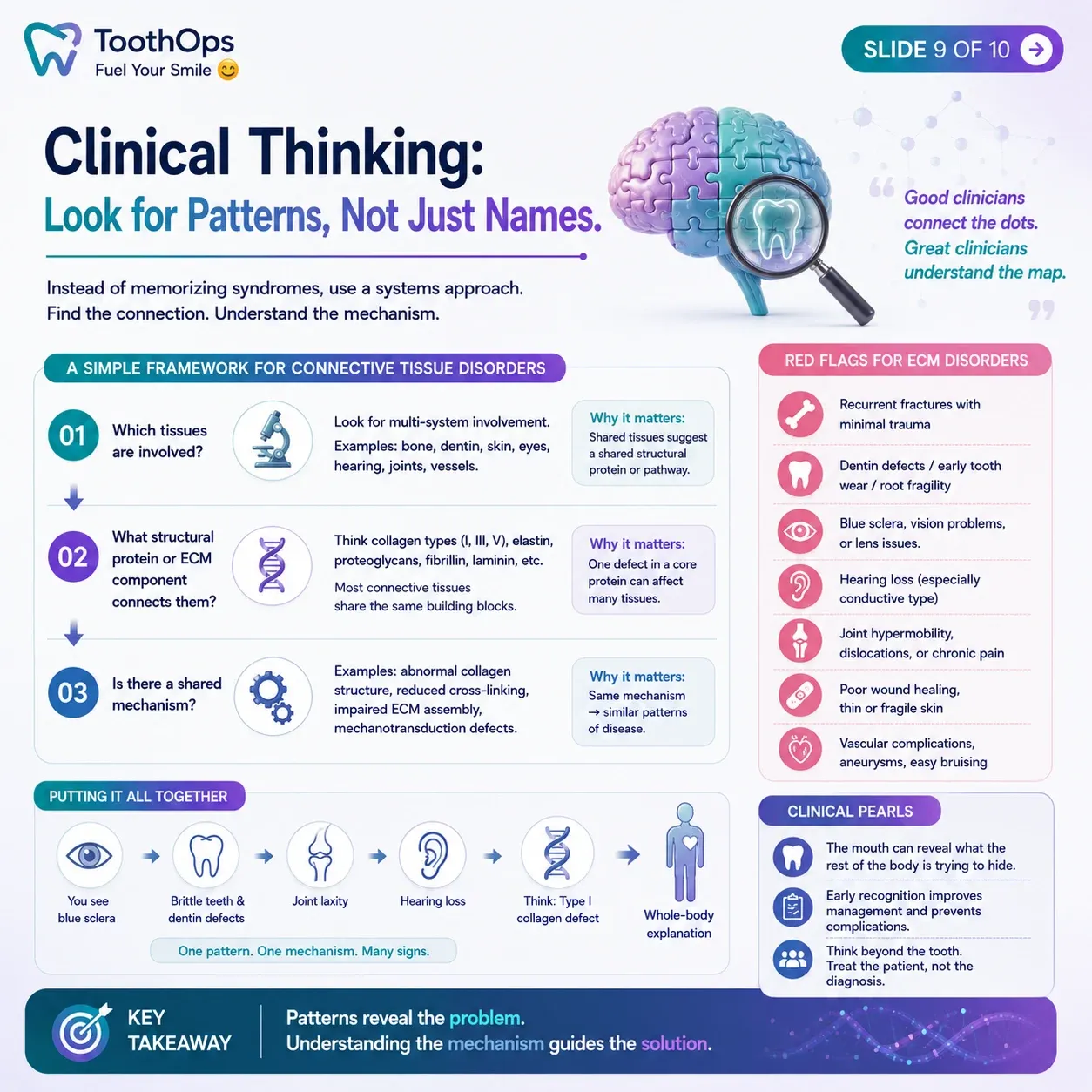
🧠 PBL-Style Question
A patient presents with:
- recurrent fractures
- dentin abnormalities
- blue sclera
- hearing loss
Which concept best explains why these findings occur together?
A. Multiple unrelated organ diseases
B. Isolated calcium deficiency
C. Shared extracellular matrix dysfunction affecting multiple tissues
D. Excess immune activation
✅ Correct Answer: C
Type I collagen is widely distributed throughout the body.
When collagen becomes abnormal:
- bone weakens
- dentin structure changes
- sclera thins
- ossicle mechanics may become impaired
The findings appear unrelated clinically, but mechanistically arise from the same extracellular matrix dysfunction.
🧠 High-Yield Insight
One molecular defect can create multiple system failures when tissues share the same structural framework.
@ToothOps | Fuel Your Smile 😊
Stay tuned for more insights and educational content in our blog.
Disclaimer: Content is for educational purposes only and not a substitute for medical or dental care.
© 2025 ToothOps | All Rights Reserved.