
🦷 Why Mouth Breathing Changes Oral Health
 ToothOps4 min read
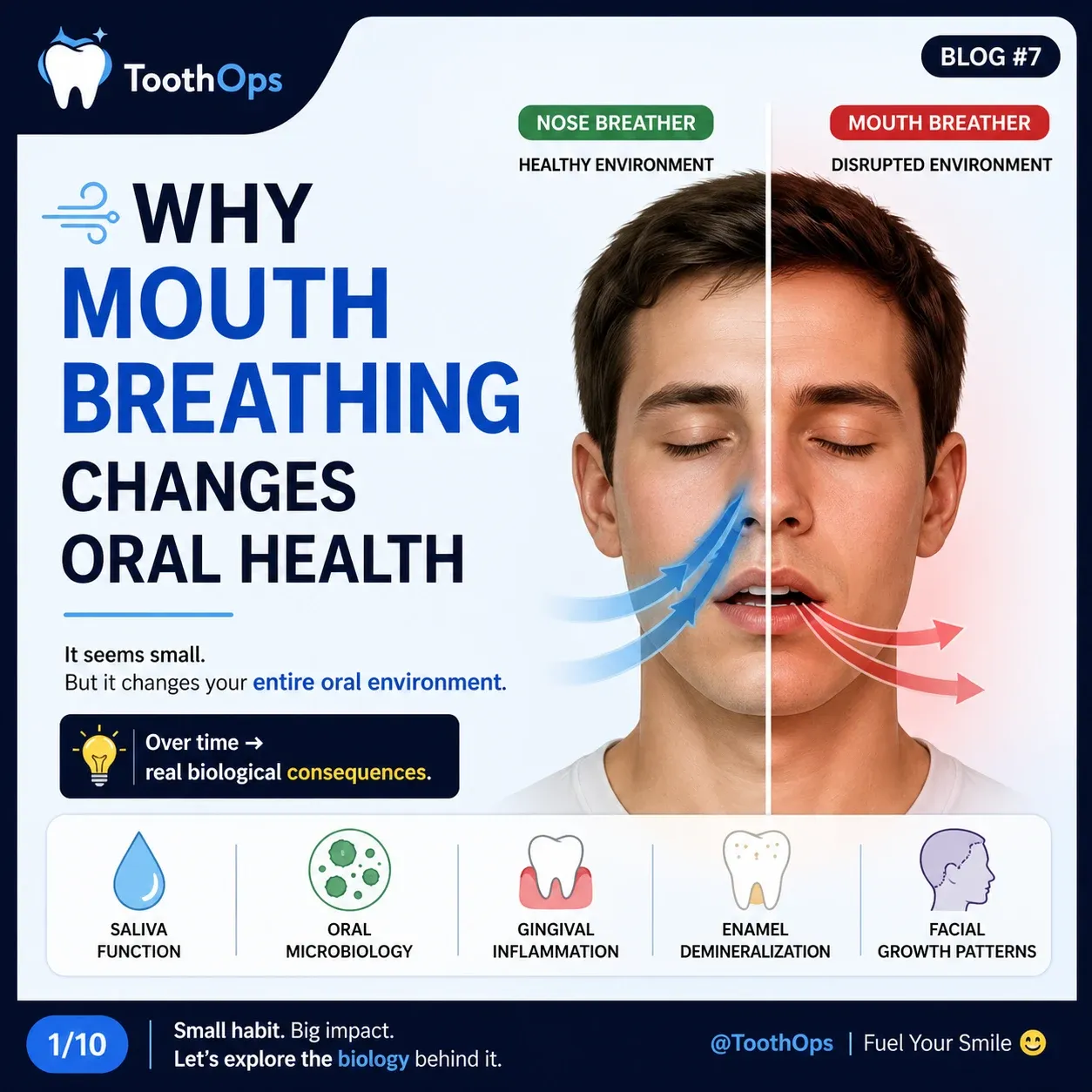
Most people don’t think much about how they breathe.
Yet the difference between breathing through the nose vs the mouth quietly changes the entire environment of the oral cavity.
Over time, mouth breathing can influence:
• saliva function
• oral microbiology
• gingival inflammation
• enamel demineralization
• facial growth patterns
Understanding the biology behind this helps explain why dentists often pay attention to breathing patterns during exams.
🌬️ The Nose Is Designed for Breathing
The respiratory system is built primarily for nasal breathing.
Before air reaches the lungs, the nose performs several protective steps.
Key functions of the nasal airway
| Function | Biological Benefit |
|---|---|
| Filtration | Nasal hairs and mucus trap dust, bacteria, and allergens |
| Humidification | Moistens incoming air to protect tissues |
| Temperature regulation | Warms cold air before it enters the airway |
| Nitric oxide production | Improves oxygen uptake and antimicrobial defense |
When breathing occurs through the mouth instead, these processes are bypassed.
The oral cavity becomes the primary airway, even though it evolved mainly for speech, chewing, and digestion.
💧 Saliva: The Mouth’s Protective System
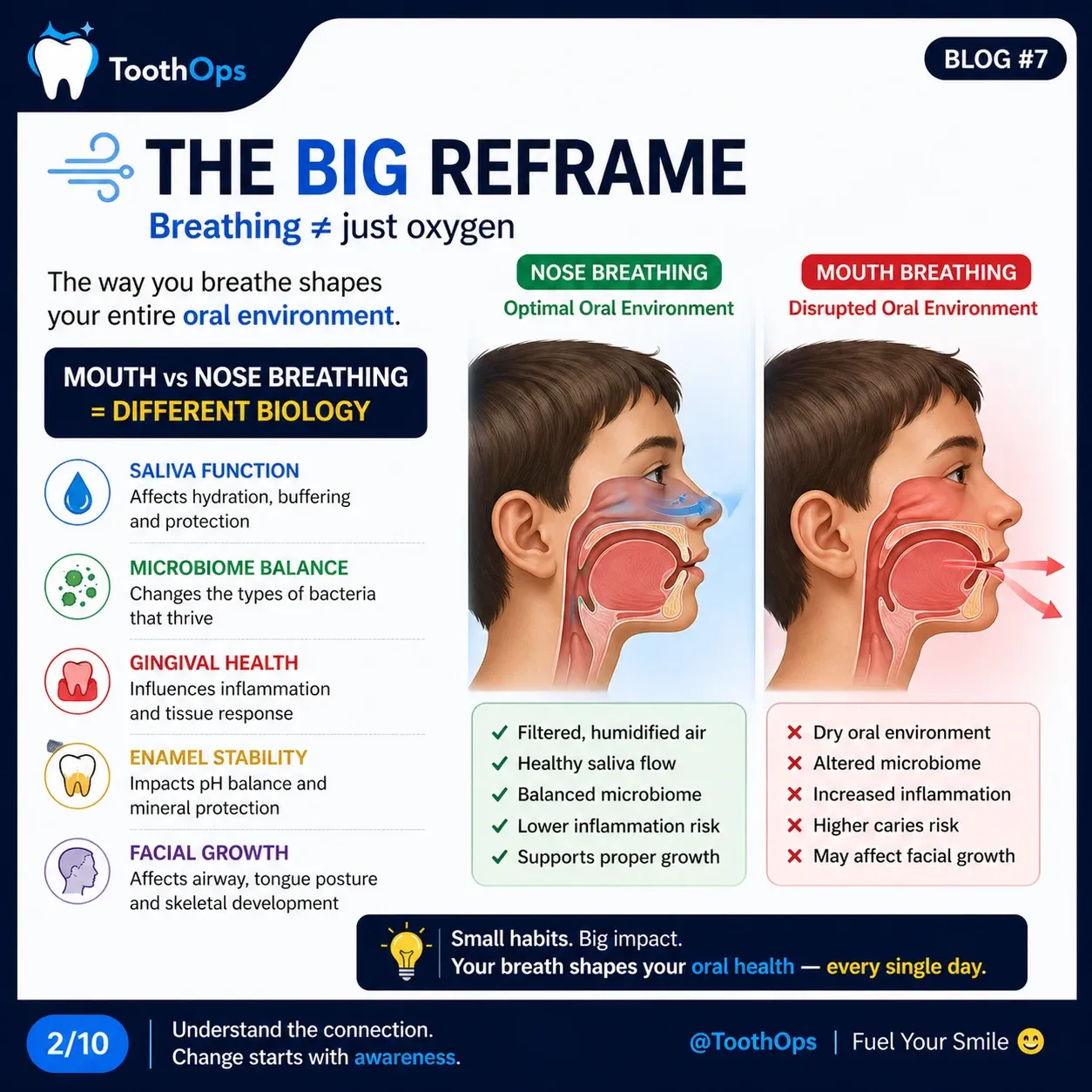
Saliva is one of the most important protective systems in oral health.
It constantly regulates the environment around teeth and gums.
Major functions of saliva
| Function | Mechanism |
|---|---|
| Acid buffering | Bicarbonate neutralizes bacterial acids |
| Remineralization | Calcium and phosphate repair enamel |
| Lubrication | Protects oral tissues from mechanical damage |
| Antimicrobial activity | Enzymes and antibodies control bacterial growth |
Healthy saliva keeps the mouth in dynamic balance.
But mouth breathing disrupts this balance.
🌡️ What Happens When the Mouth Dries
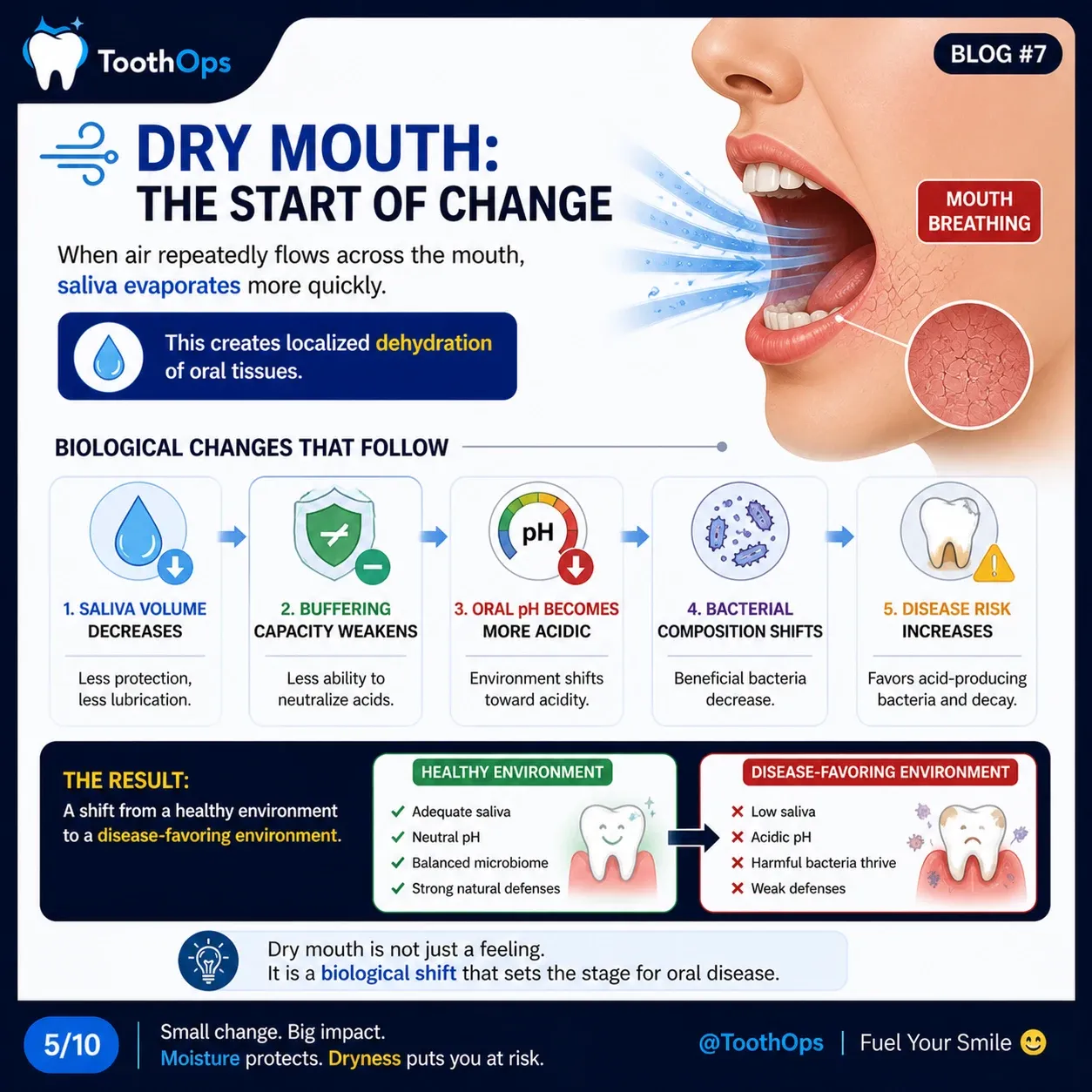
When air repeatedly flows across the mouth, saliva evaporates more quickly.
This creates localized dehydration of oral tissues.
Biologically, several things begin to change:
• saliva volume decreases
• buffering capacity weakens
• oral pH becomes more acidic
• bacterial composition shifts
These changes create an environment that favors acid-producing bacteria involved in tooth decay.
🦠 How Mouth Breathing Affects the Oral Microbiome
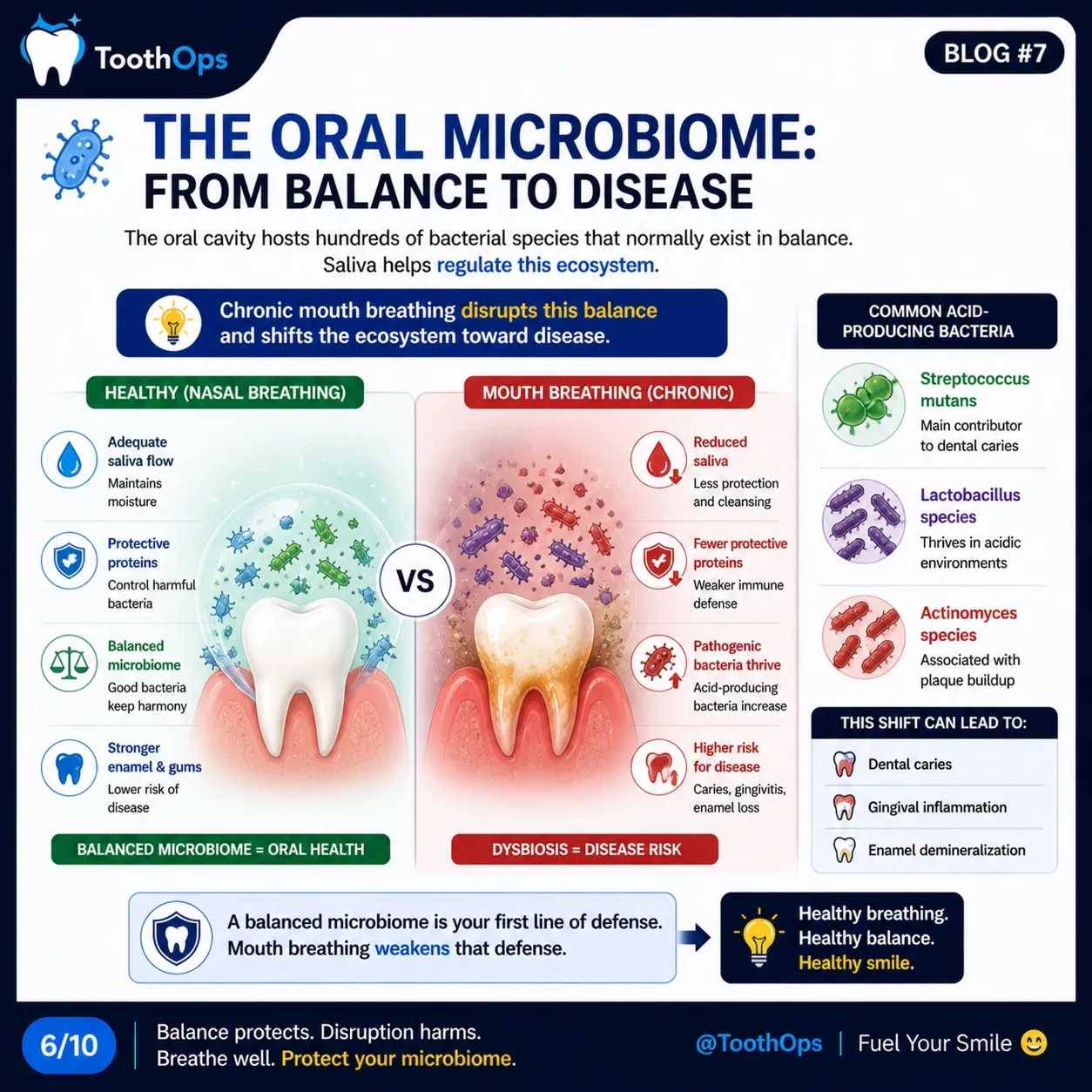
The oral cavity contains hundreds of bacterial species that normally exist in balance.
Saliva helps regulate this ecosystem.
With chronic mouth breathing:
• protective salivary proteins decrease
• plaque accumulates more easily
• acidogenic bacteria thrive
This increases risk for:
🦷 dental caries
🦷 gingival inflammation
🦷 enamel demineralization
The result is a shift from a balanced microbiome toward a disease-favoring environment.
🔬 Why Gums Become Inflamed
Dentists often notice a distinctive pattern in mouth breathers:
inflamed gingiva around the upper front teeth.
Several biological mechanisms contribute.
Mechanisms behind mouth-breathing gingivitis
| Mechanism | Result |
|---|---|
| Tissue dehydration | Gingiva becomes more vulnerable |
| Reduced salivary protection | Increased bacterial colonization |
| Increased plaque retention | Local inflammation |
The tissue becomes red, swollen, and easily irritated, even when brushing habits are reasonable.
🧠 Mouth Breathing and Facial Development
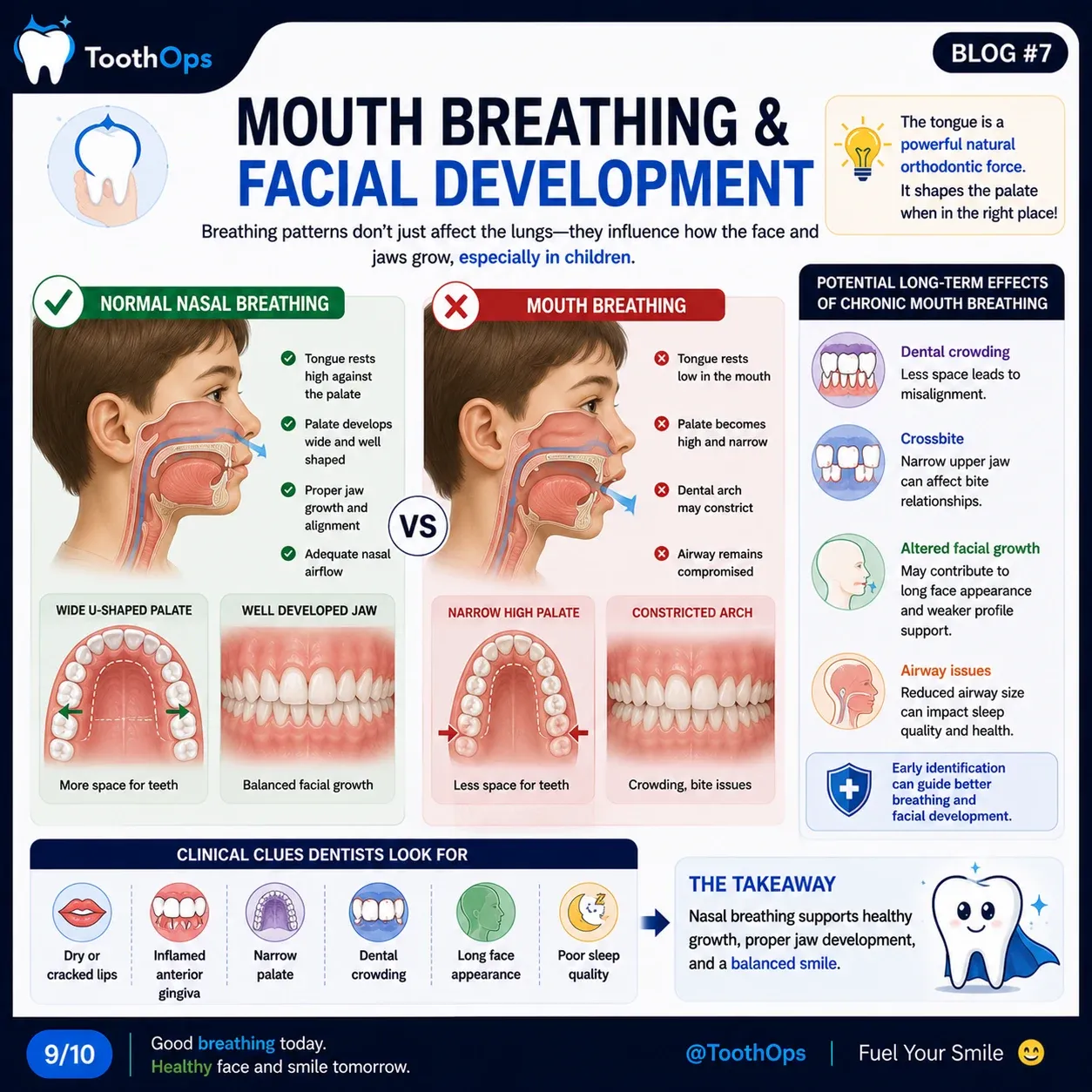
In children, breathing patterns can influence craniofacial growth.
Normal nasal breathing supports proper positioning of the tongue against the palate.
This helps guide the development of the upper jaw.
When a child breathes through the mouth:
• the tongue rests low in the mouth
• the palate may become high and narrow
• the dental arch may constrict
Over time, this may contribute to:
• dental crowding
• crossbite
• altered facial growth patterns
Because of this, dentists and orthodontists often evaluate airway health during growth and development.
🛌 Why Mouth Breathing Often Happens During Sleep
Many people do not mouth breathe during the day but do so at night.
This often occurs when the nasal airway is partially obstructed.
Common causes include:
• nasal congestion
• enlarged tonsils or adenoids
• deviated septum
• allergies
During sleep:
• saliva production decreases naturally
• mouth opening increases evaporation
• tissues remain dry for several hours
This creates a high-risk environment for caries development overnight.
🦷 Signs Dentists Often Notice
Mouth breathing can sometimes be identified through subtle clinical findings.
Common observations
| Sign | What It May Suggest |
|---|---|
| Dry or cracked lips | Chronic oral airflow |
| Inflamed anterior gingiva | Tissue dehydration |
| Plaque accumulation | Reduced salivary cleansing |
| Narrow palate | Long-term airway adaptation |
| Cervical caries risk | Dry tooth surfaces |
These findings can prompt further evaluation of breathing patterns.
🌿 The Bigger Picture
Breathing is not only about oxygen exchange.
It also influences the microenvironment of the mouth.
Because the oral cavity interacts constantly with:
• saliva
• bacteria
• immune responses
• tooth mineral balance
small changes in airflow can have meaningful effects on oral health.
🪥 ToothOps Takeaway
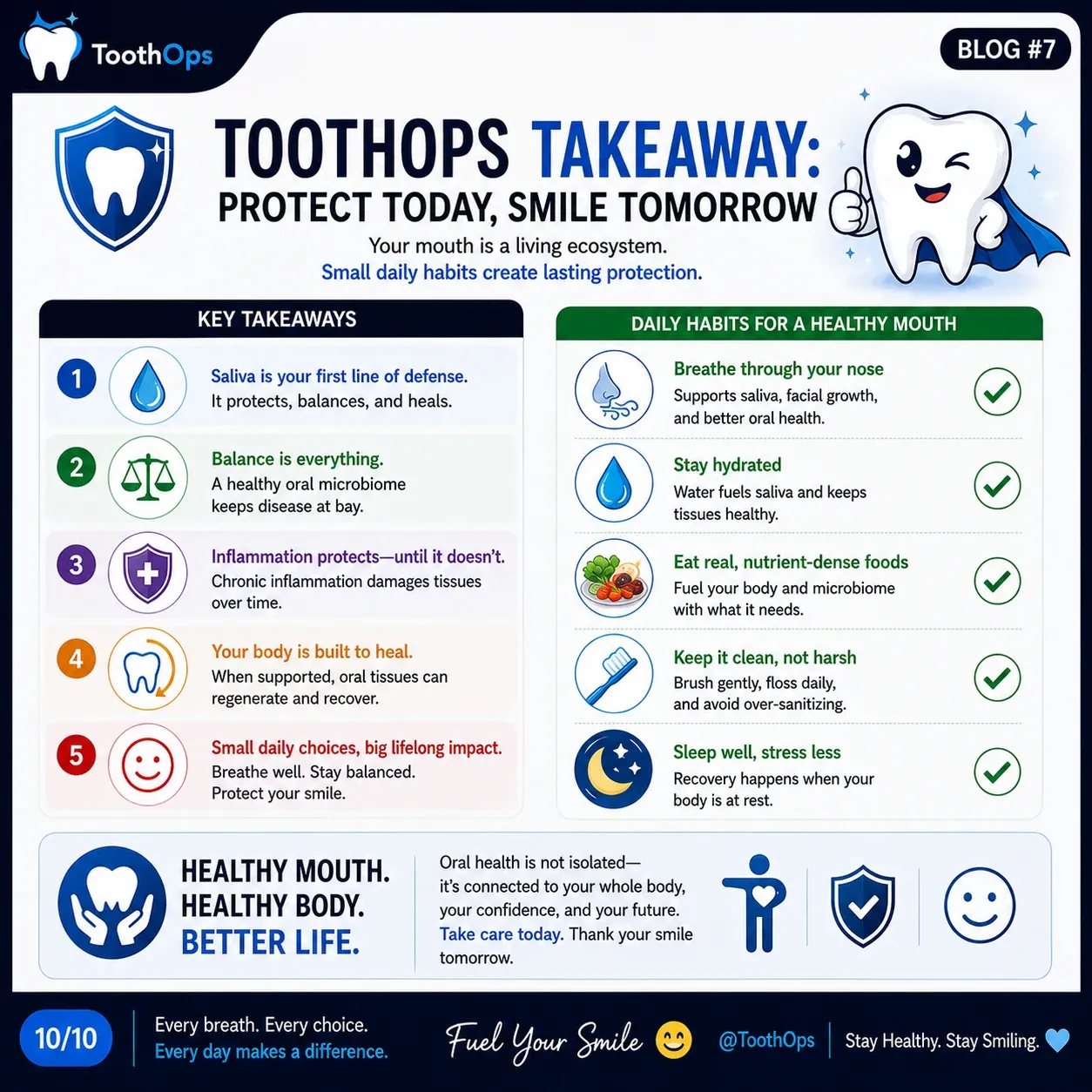
🌬️ The nose filters, humidifies, and regulates inhaled air.
💧 Saliva protects teeth through buffering and remineralization.
🦠 Mouth breathing reduces saliva and alters the oral microbiome.
🦷 This increases risk for gingivitis and dental caries.
🧠 In children, chronic mouth breathing may influence facial development.
Sometimes the smallest habits — even how we breathe — can shape long-term oral health.
💭 Reflection Question
If saliva is one of the mouth’s strongest protective systems…
how might breathing patterns quietly influence oral health over many years?
@ToothOps | Fuel Your Smile 😊
Stay tuned for more insights and educational content in our blog.
Disclaimer: Content is for educational purposes only and not a substitute for medical or dental care.
© 2025 ToothOps | All Rights Reserved.