
🦠 Tuberculosis, BCG, and Vaccines: What Protection Really Means
 ToothOps3 min read
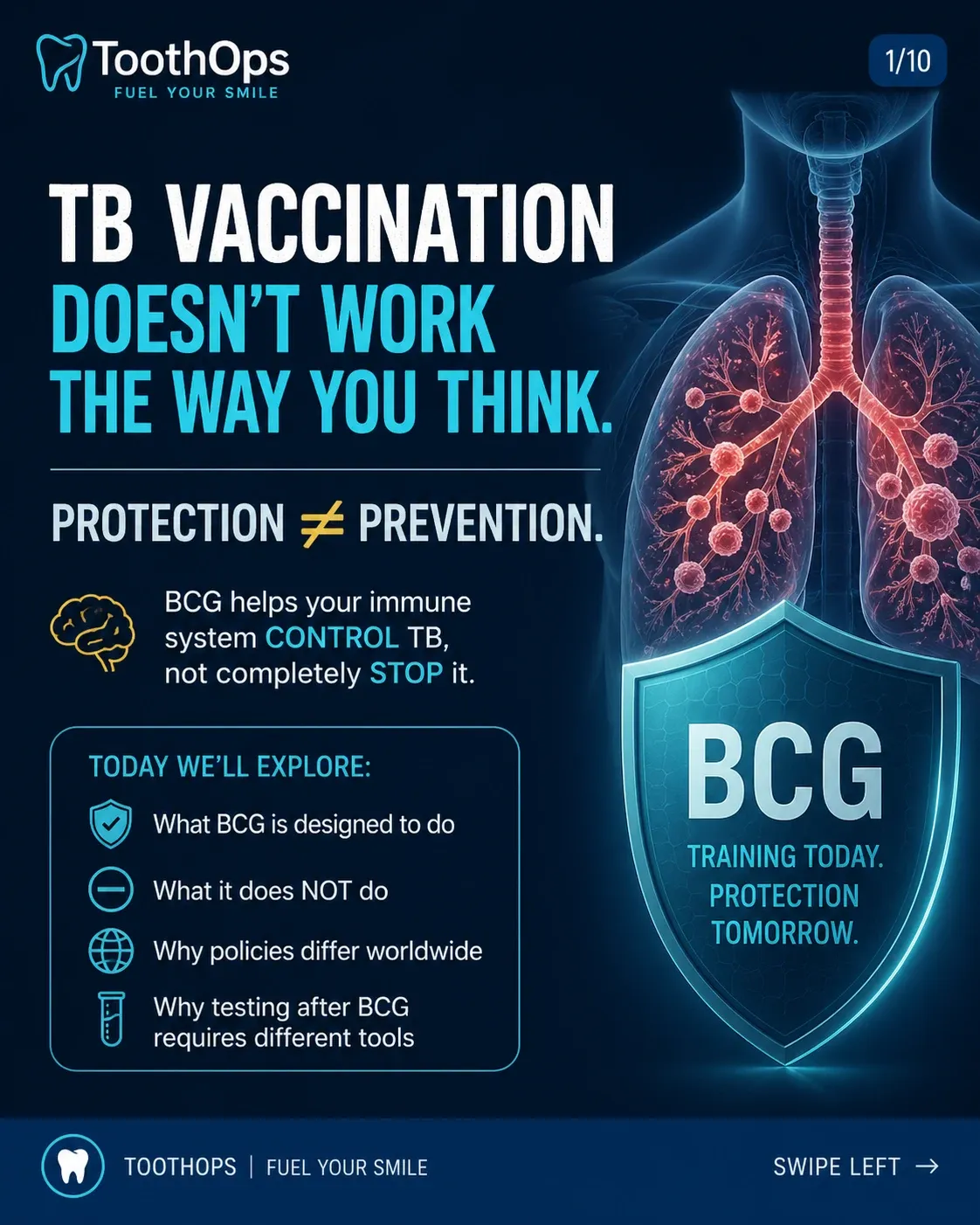
Most people hear “tuberculosis” and think of something old — a disease from history books, black-and-white photos, or global health lectures far away from daily life.
But TB is still here.And the way we vaccinate against it is very different from how most people understand vaccines.
If you’ve ever wondered:
- Why TB can still happen after vaccination
- Why some countries vaccinate at birth while others don’t
- Why doctors still test vaccinated patients
This post is for you.
🧠 First, What Makes Tuberculosis Different?
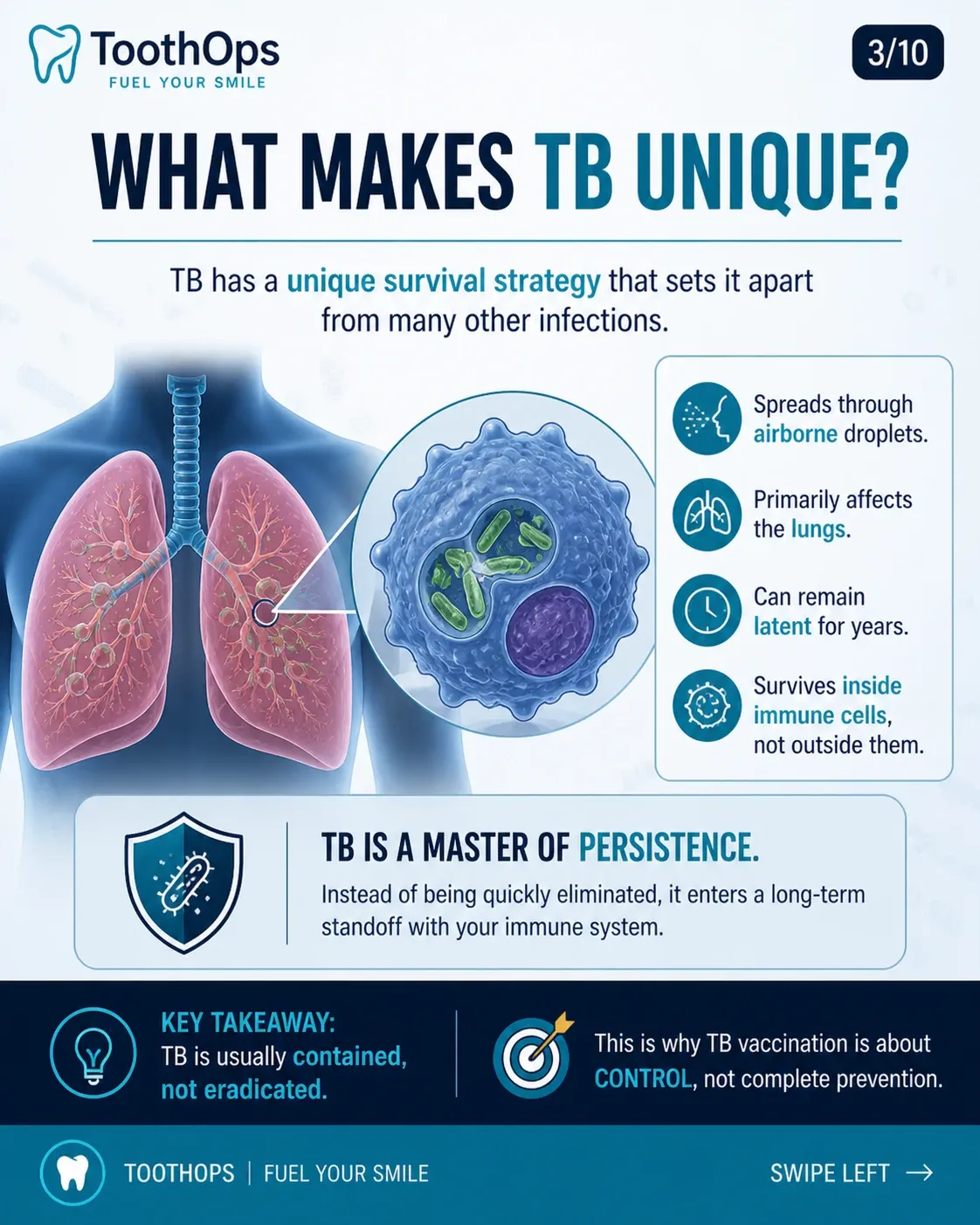
Tuberculosis is caused by Mycobacterium tuberculosis, a slow-growing bacterium with a unique survival strategy.
Unlike many infections:
- TB spreads through airborne droplets
- It primarily affects the lungs
- It can remain latent for years
- It survives inside immune cells, not outside them
Instead of being quickly eliminated, TB often enters a long-term standoff with the immune system.
This single fact explains almost everything about TB vaccination.
🧬 How the Immune System Handles TB
Because TB lives inside macrophages, antibodies alone are not enough.
The immune system responds by:
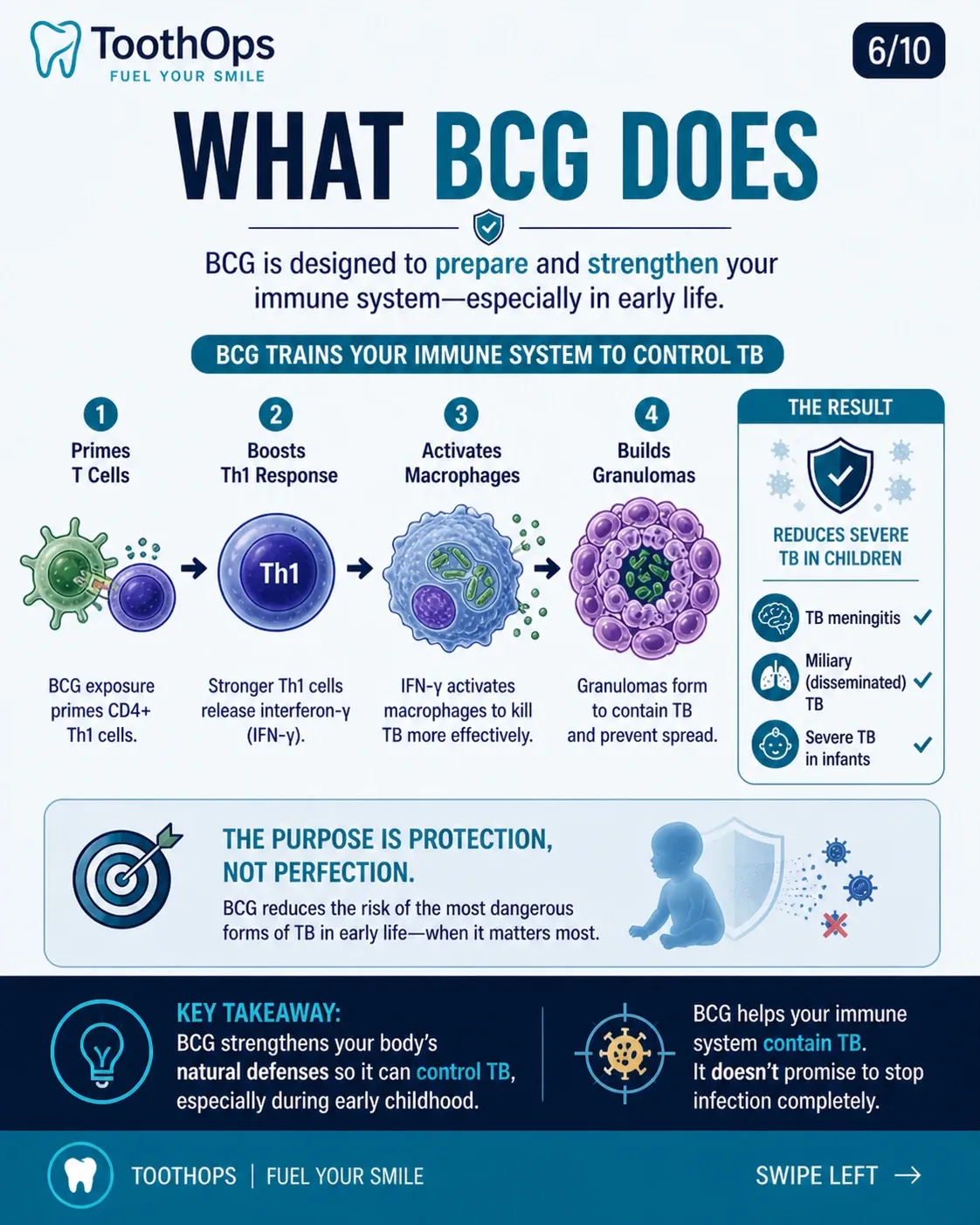
- Activating CD4⁺ Th1 T cells
- Releasing interferon-γ
- Strengthening macrophage killing
- Building granulomas to contain the bacteria
🧠 Key concept: TB is usually contained, not eradicated.
Vaccination against TB is therefore about control, not complete prevention.
💉 What Is the BCG Vaccine?
The Bacille Calmette–Guérin (BCG) vaccine is:
- A live attenuated vaccine
- Derived from Mycobacterium bovis
- Over 100 years old
- One of the most widely used vaccines in the world
Despite its long history, BCG is often misunderstood because people expect it to behave like other childhood vaccines.
It doesn’t.
🛡️ What BCG Is Designed to Do (This Is Crucial)
BCG’s purpose is not to stop TB infection entirely.
Instead, BCG:
- Primes cell-mediated immunity
- Enhances macrophage activation
- Reduces severe disseminated TB in infants and young children
This includes protection against:
- TB meningitis
- Miliary (widespread) TB
In early life, this protection is life-saving.
BCG is a disease-modifying vaccine, not a disease-preventing vaccine.
🚫 What BCG Does Not Reliably Do
BCG does not:
- Provide sterilizing immunity
- Guarantee lifelong protection
- Reliably protect adult lungs
- Prevent latent infection
Its protection:
- Is strongest in early childhood
- Wanes over time
- Is limited at the pulmonary mucosal level
This is why vaccinated individuals can still:
- Acquire TB
- Develop latent TB
- Experience reactivation decades later
This is not vaccine failure.It reflects vaccine design matched to a difficult pathogen.
🌍 Why BCG Vaccination Schedules Differ Worldwide
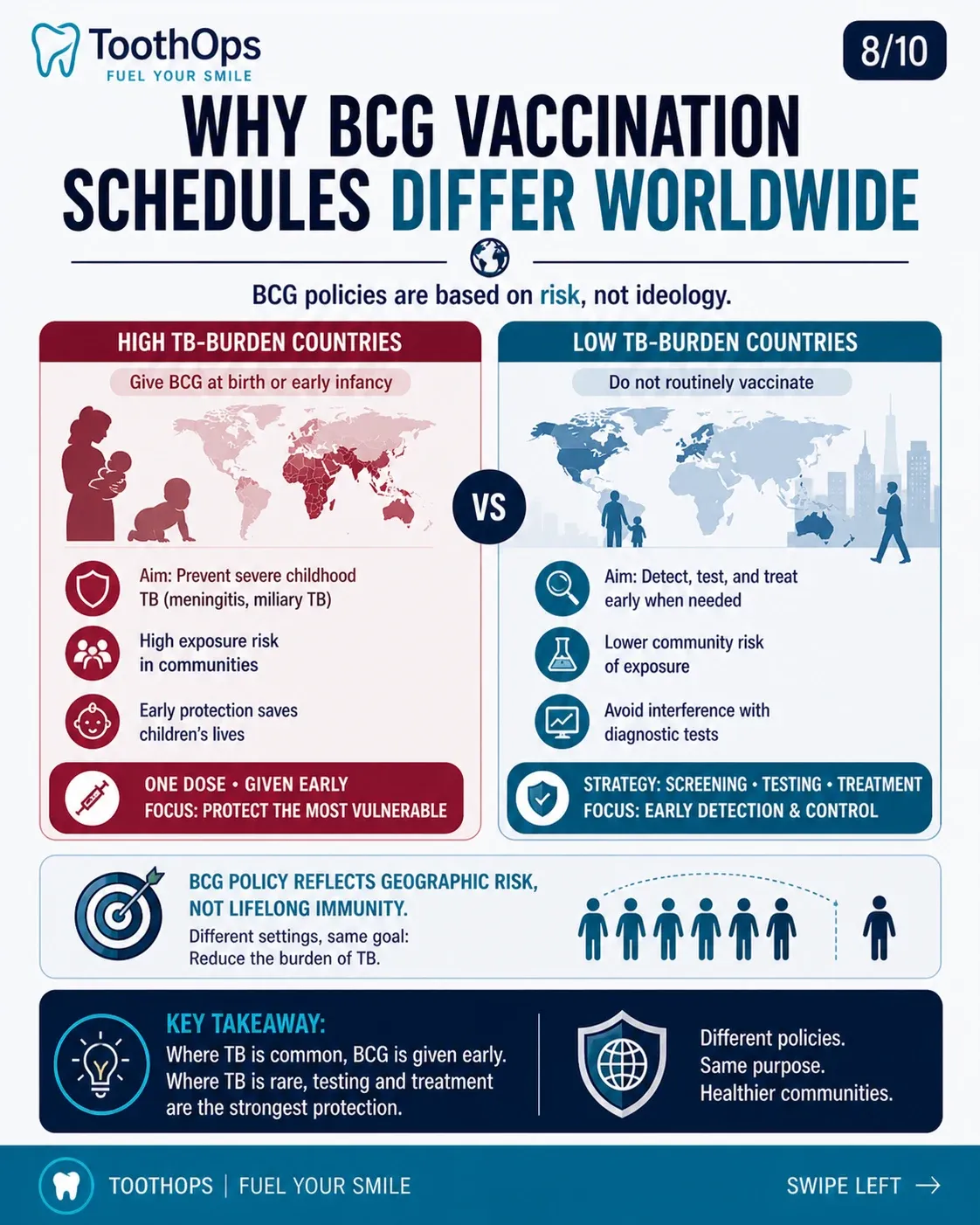
BCG policies are based on risk, not ideology.
High TB-burden countries:
- Give BCG at birth or early infancy
- Aim to prevent severe childhood disease
- Accept variable adult protection
Low TB-burden countries (e.g., United States):
- Do not routinely vaccinate
- Rely on screening, testing, and treatment
- Avoid interference with diagnostic tests
🧠 Important takeaway: BCG history reflects geographic exposure risk, not lifelong immunity.
📅 BCG Vaccination Schedule (High-Yield)
In most high-burden settings:
- Single intradermal dose
- Given at birth or within the first year
- No routine boosters
Some countries historically used boosters, but evidence did not show consistent improvement in adult pulmonary TB protection.
In short: BCG is given early, given once, and designed for childhood protection — not lifelong immunity.
🧪 TB Testing After BCG Vaccination
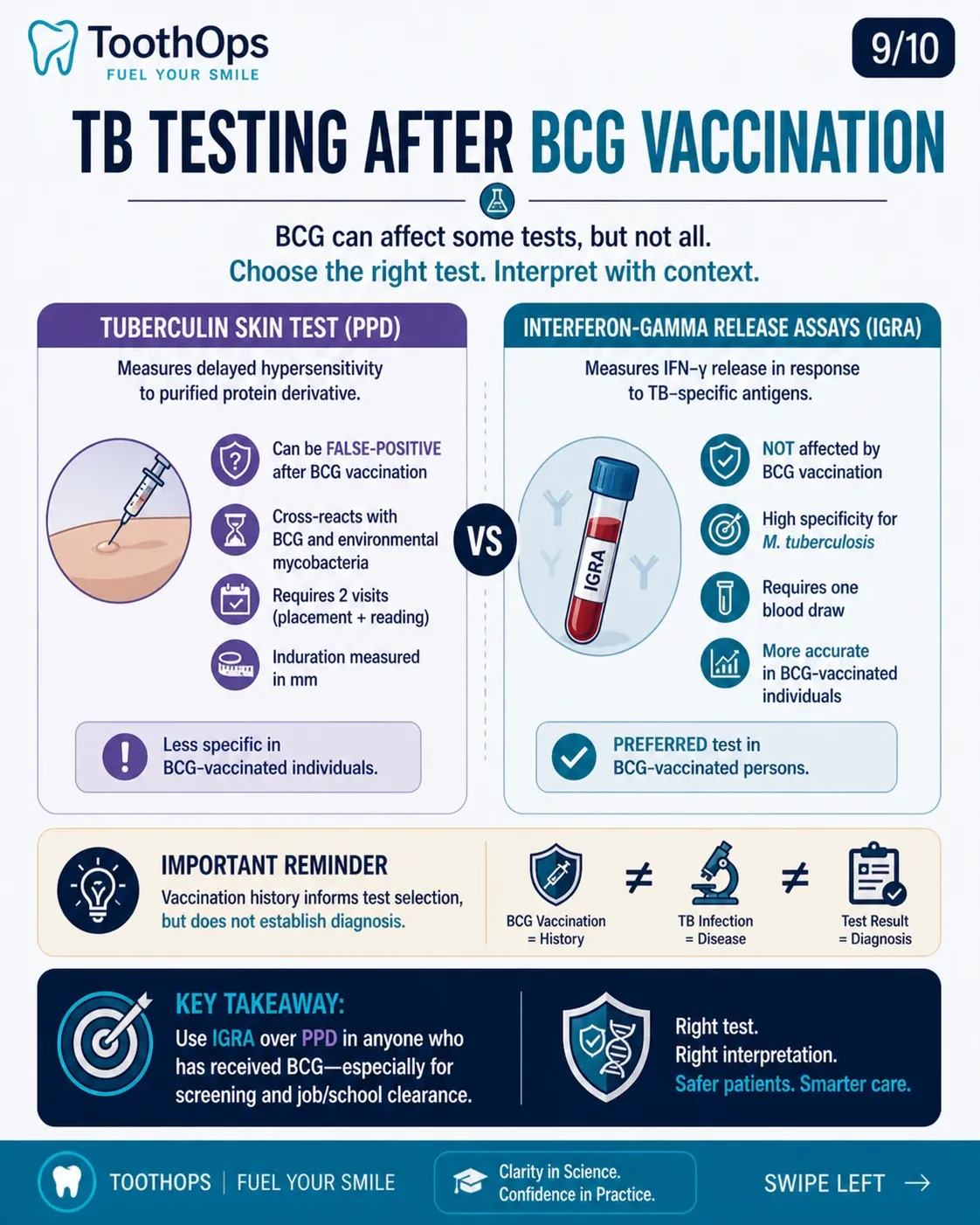
BCG affects how we test for TB.
Tuberculin Skin Test (PPD):
- Can be false-positive after BCG
Interferon-Gamma Release Assays (IGRAs):
- Detect TB-specific immune responses
- Not affected by BCG
- Preferred in BCG-vaccinated individuals
Vaccination history informs test selection, not diagnosis.
🦷 Why This Matters in Healthcare (Including Dentistry)
TB considerations extend beyond hospitals:
- Medical clearance
- Dental clinics
- School and employment screening
- Infection control
Clinicians must remember:
- Vaccination ≠ immunity
- History ≠ diagnosis
- Symptoms still matter
Understanding mechanism prevents false reassurance and protects both patients and providers.
🌱 The Big Picture
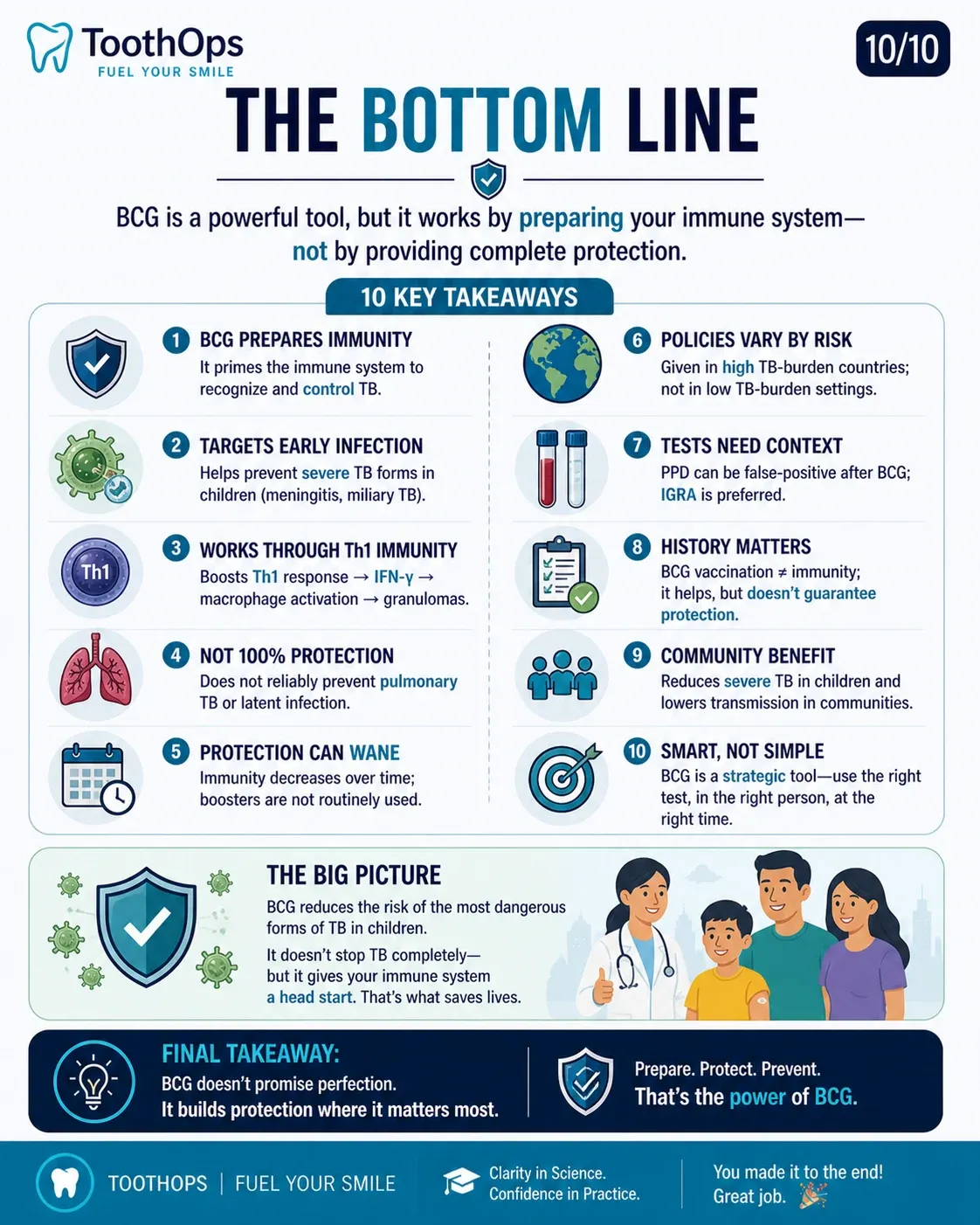
BCG vaccination has saved millions of lives — especially children’s lives.
But it works by immune containment, not elimination.
When we understand what vaccines are designed to do:
- We ask better questions
- Interpret tests more accurately
- Reduce unnecessary fear
- Practice safer, smarter healthcare
Clarity isn’t fear-based.It’s confidence-based.
@ToothOps | Fuel Your Smile 😊
Stay tuned for more insights and educational content in our blog.
Disclaimer: Content is for educational purposes only and not a substitute for medical or dental care.
© 2025 ToothOps | All Rights Reserved.