
Why Didn't My Antibiotic Fix My Dental Abscess? 🦷
 ToothOps2 min read
By ToothOps
You took the antibiotic exactly as prescribed. A few days later, your tooth still hurts, your face is swollen, and you are wondering why the medication is not working.
Many patients assume antibiotics alone can cure every dental infection. In reality, some dental infections require more than medication. Once an abscess forms, treatment often involves removing the source of infection and physically draining the accumulated pus.
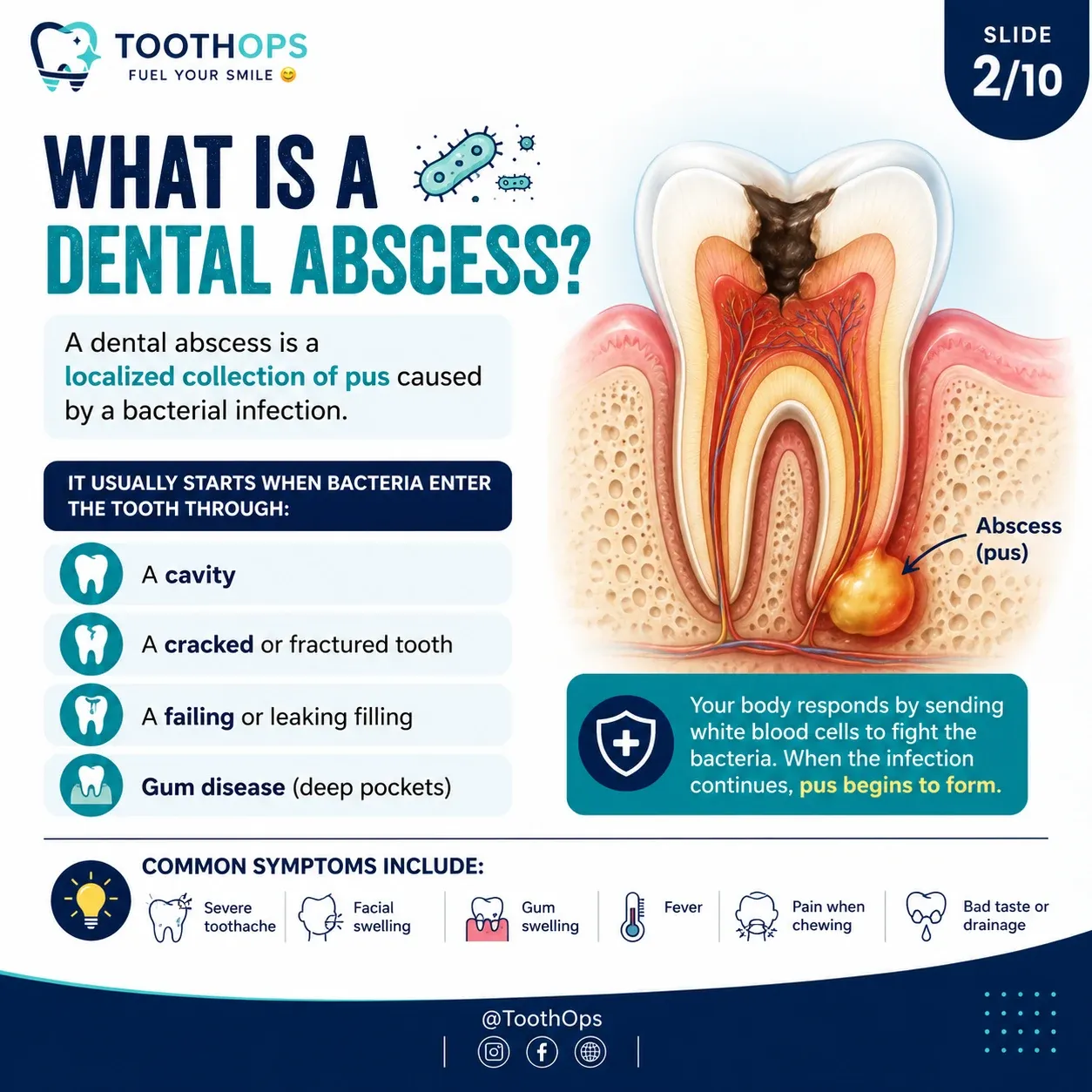
What Is a Dental Abscess? 🦠
A dental abscess is a localized collection of pus caused by bacterial infection. Most dental abscesses begin when bacteria enter the tooth through a cavity, fracture, leaking restoration, or deep periodontal pocket.
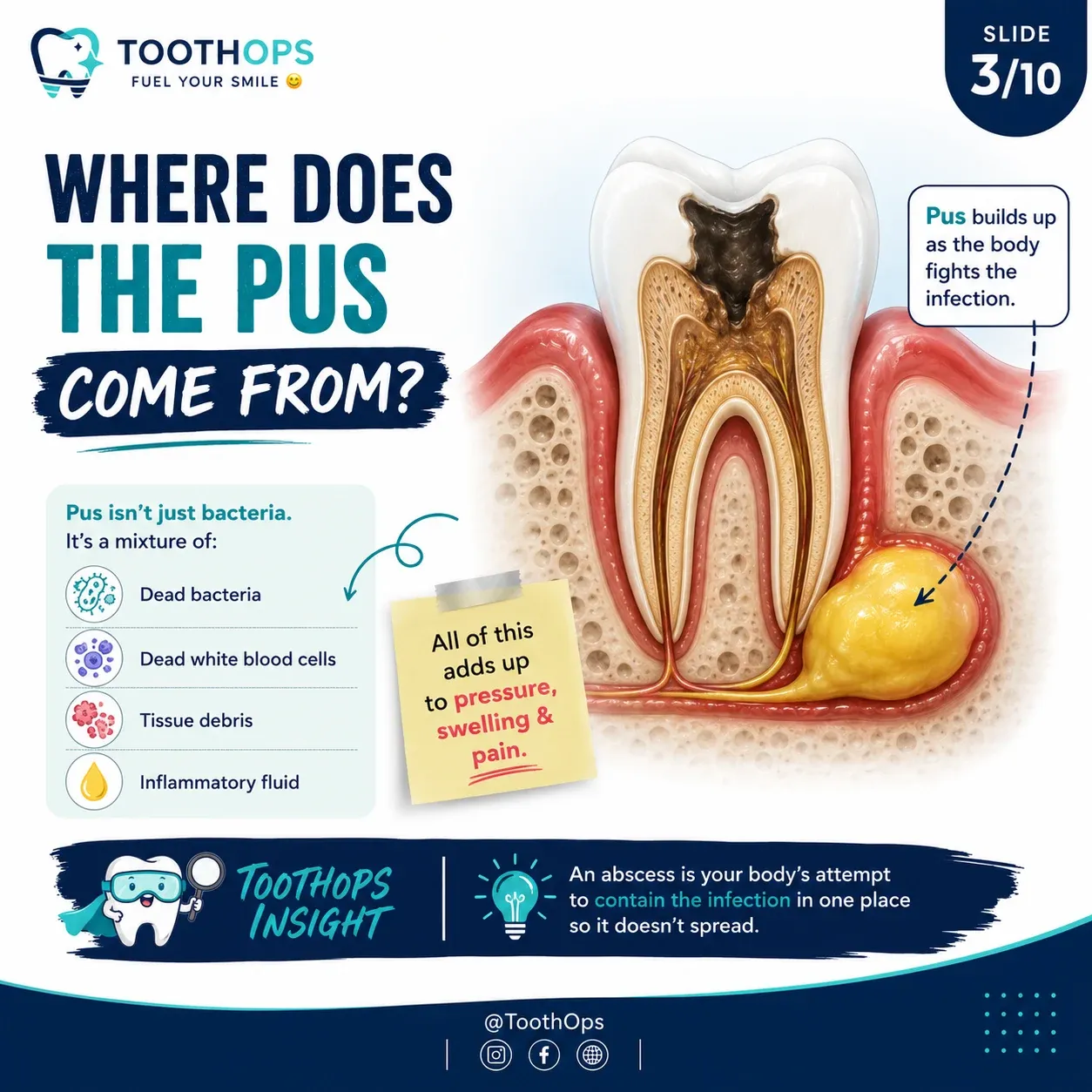
As the infection progresses, the body’s immune system responds by sending white blood cells to fight the bacteria. Over time, dead bacteria, dead immune cells, tissue debris, and inflammatory fluid accumulate and form pus.
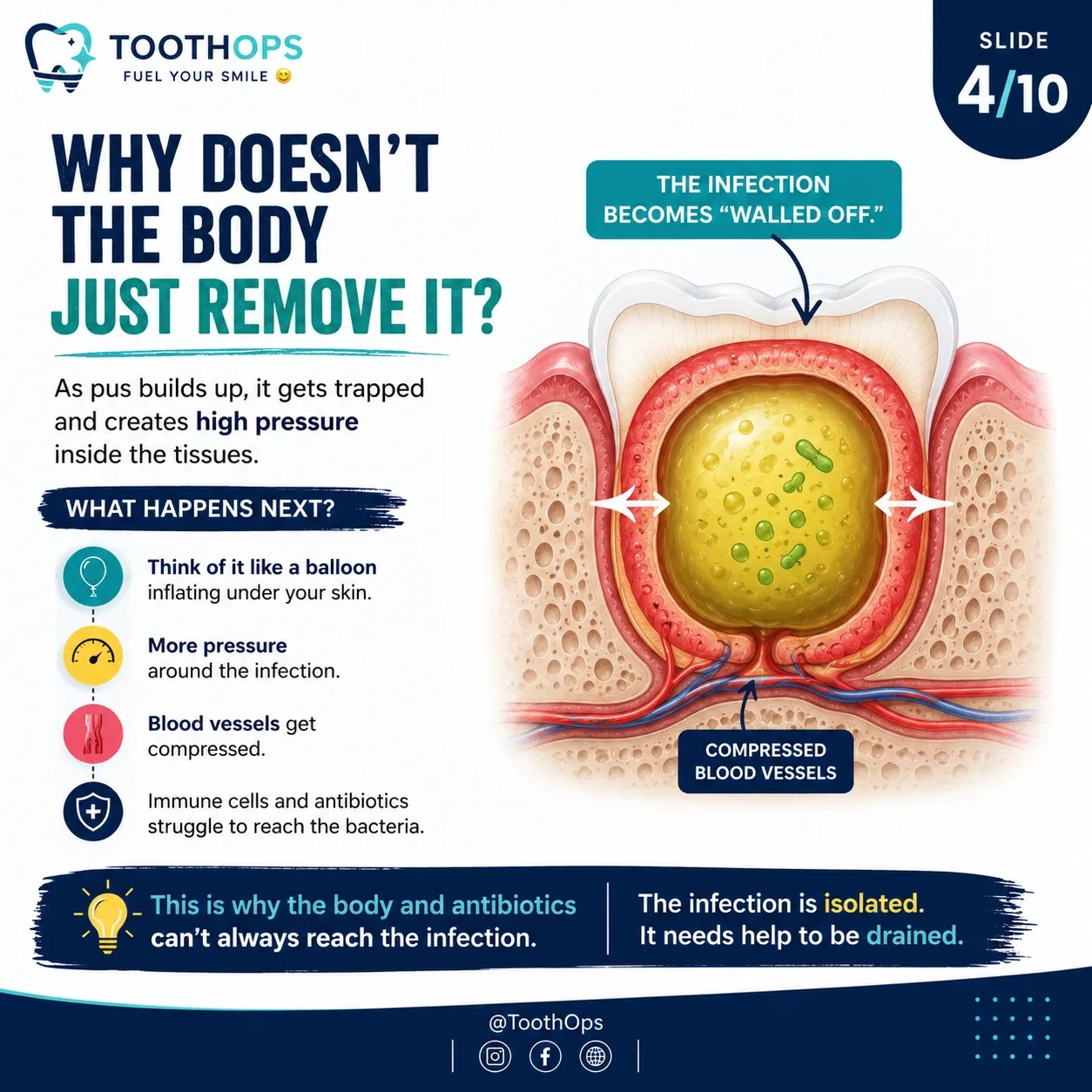
This collection of pus becomes trapped within surrounding tissues and creates an abscess.
Common Symptoms
- Severe toothache
- Facial swelling
- Gum swelling
- Pain when chewing
- Bad taste or drainage in the mouth
- Fever
- Difficulty opening the mouth
Why Antibiotics Sometimes Don’t Work 💊
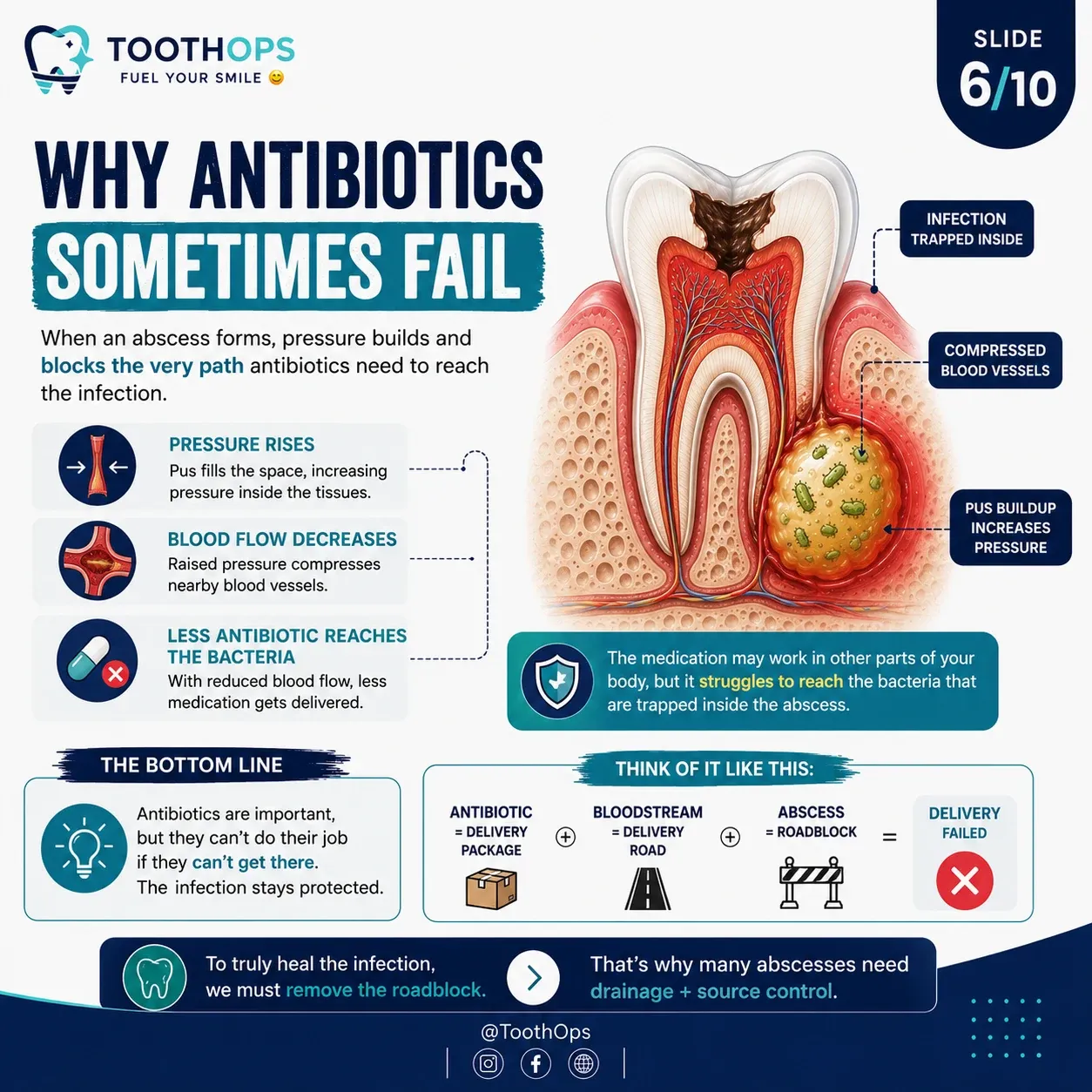
Antibiotics travel through the bloodstream to reach infected tissues.
As pus accumulates, pressure inside the abscess increases. This pressure compresses nearby blood vessels and reduces blood flow to the infected area. Because antibiotics rely on circulation to reach bacteria, reduced blood flow means less antibiotic reaches the infection.
Think of it like a road closure. If the road is blocked, delivery trucks cannot reach their destination. Similarly, antibiotics may struggle to reach bacteria trapped inside an abscess.
Why Your Dentist May Recommend Drainage ✂️
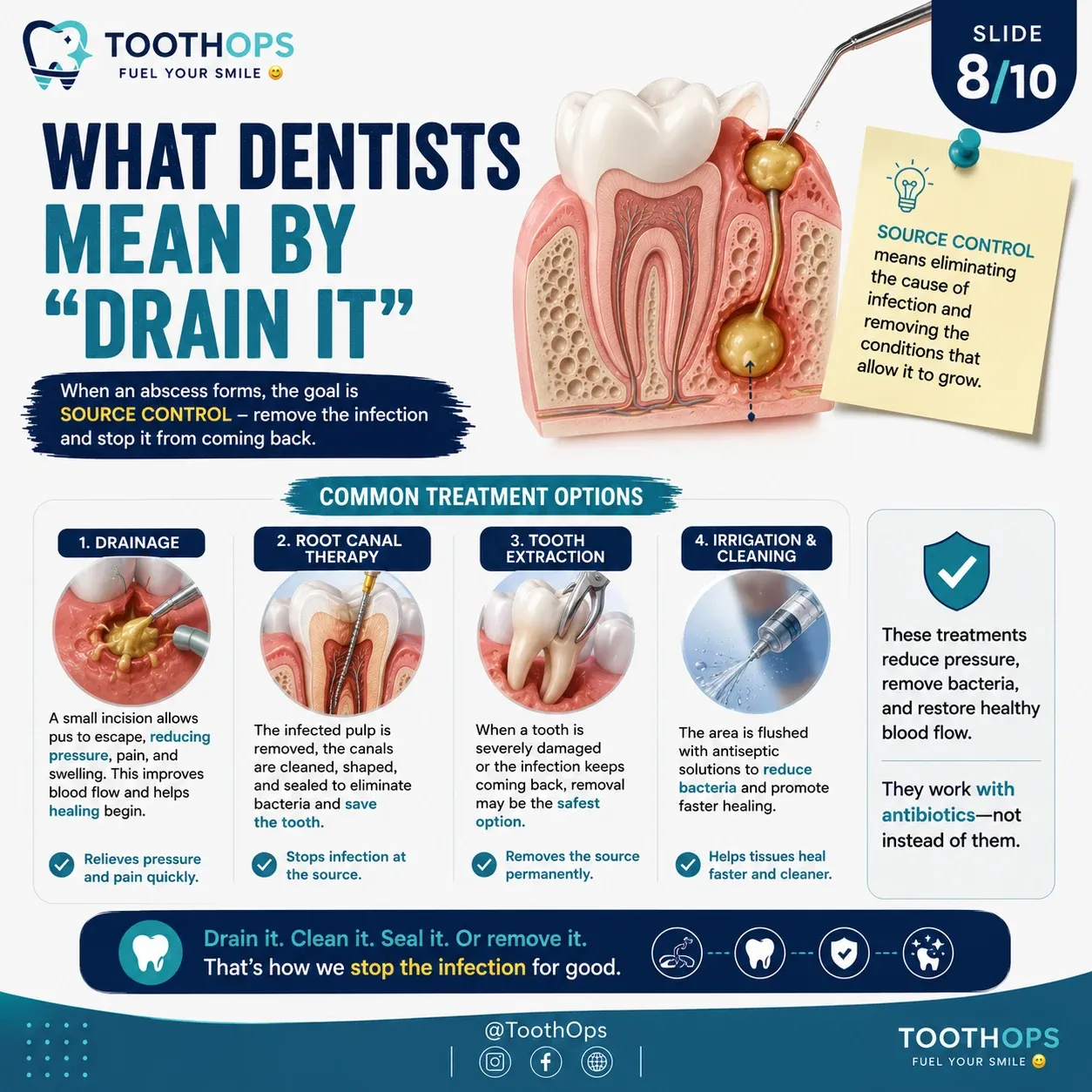
When an abscess is established, the goal becomes source control.
Source control means eliminating the infection and removing the conditions that allow it to continue growing.
Your dentist or oral surgeon may recommend:
- Drainage of the abscess
- Root canal therapy
- Tooth extraction
- Irrigation of the infected area
Drainage reduces pressure, removes pus, improves blood flow, and allows both your immune system and antibiotics to work more effectively.
What Happens If an Abscess Is Ignored? ⚠️
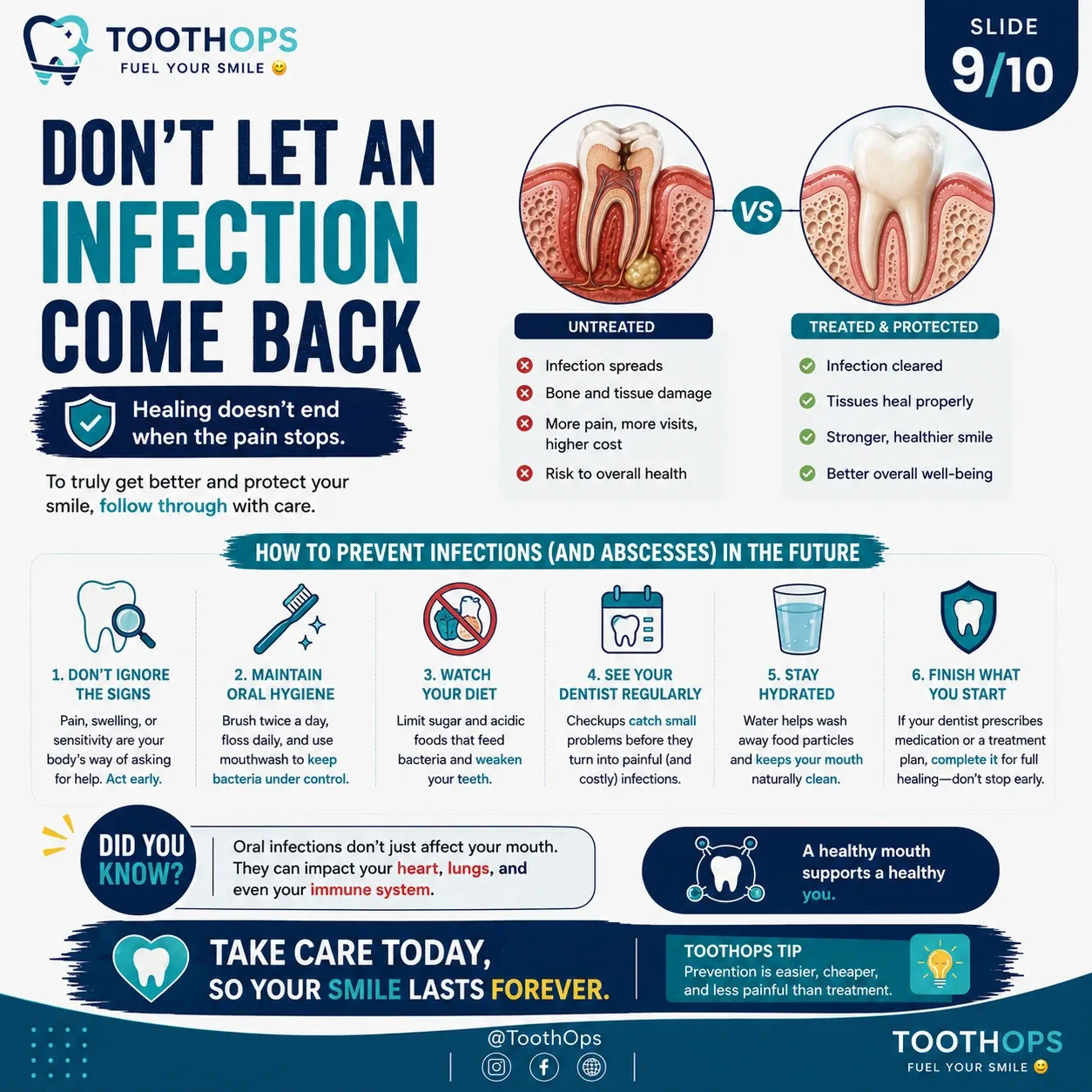
Dental infections rarely stay in one place forever.
An untreated abscess can spread into surrounding soft tissues of the face and neck. In severe cases, infection may affect spaces involved in swallowing and breathing.
Seek immediate care if you experience:
- Rapidly increasing facial swelling
- Difficulty swallowing
- Difficulty breathing
- Fever and chills
- Inability to open the mouth normally
The Bottom Line ✅
Antibiotics are an important part of treating many dental infections, but they are not always enough.
Once a true abscess develops, successful treatment often requires removing the source of infection and draining the accumulated pus.
If you have facial swelling, severe dental pain, or worsening symptoms despite antibiotics, contact a dentist immediately.
@ToothOps | Fuel Your Smile 😊
Stay tuned for more insights and educational content in our blog.
Disclaimer: Content is for educational purposes only and is not intended to diagnose, treat, cure, or replace professional medical or dental advice. Always consult a qualified healthcare professional regarding any medical or dental concerns.
© 2025 ToothOps | All Rights Reserved.