
How Your Body Stops Bleeding (And Why It Sometimes Fails)
 ToothOps3 min read
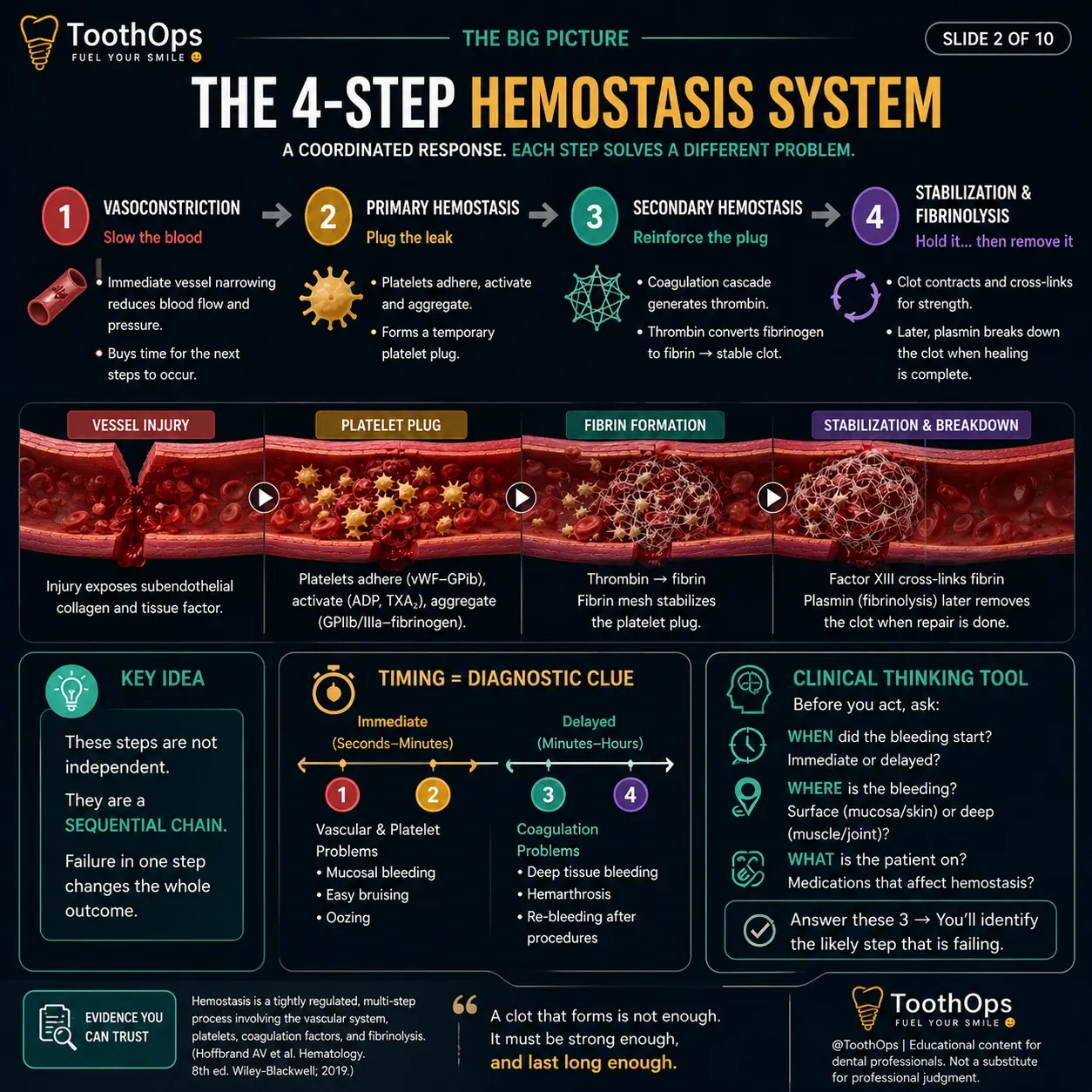
The 4-Step Hemostasis System — Mechanism → Pattern → Clinical Thinking
Most people think:
“Bleeding stops when a clot forms.”
That’s incomplete.
Because in reality:
👉 Bleeding stops only if FOUR systems work—together, in sequence, and with the right timing.
And here’s the clinical truth:
👉 If even one step is slightly off, the pattern of bleeding changes.
That’s how clinicians think.
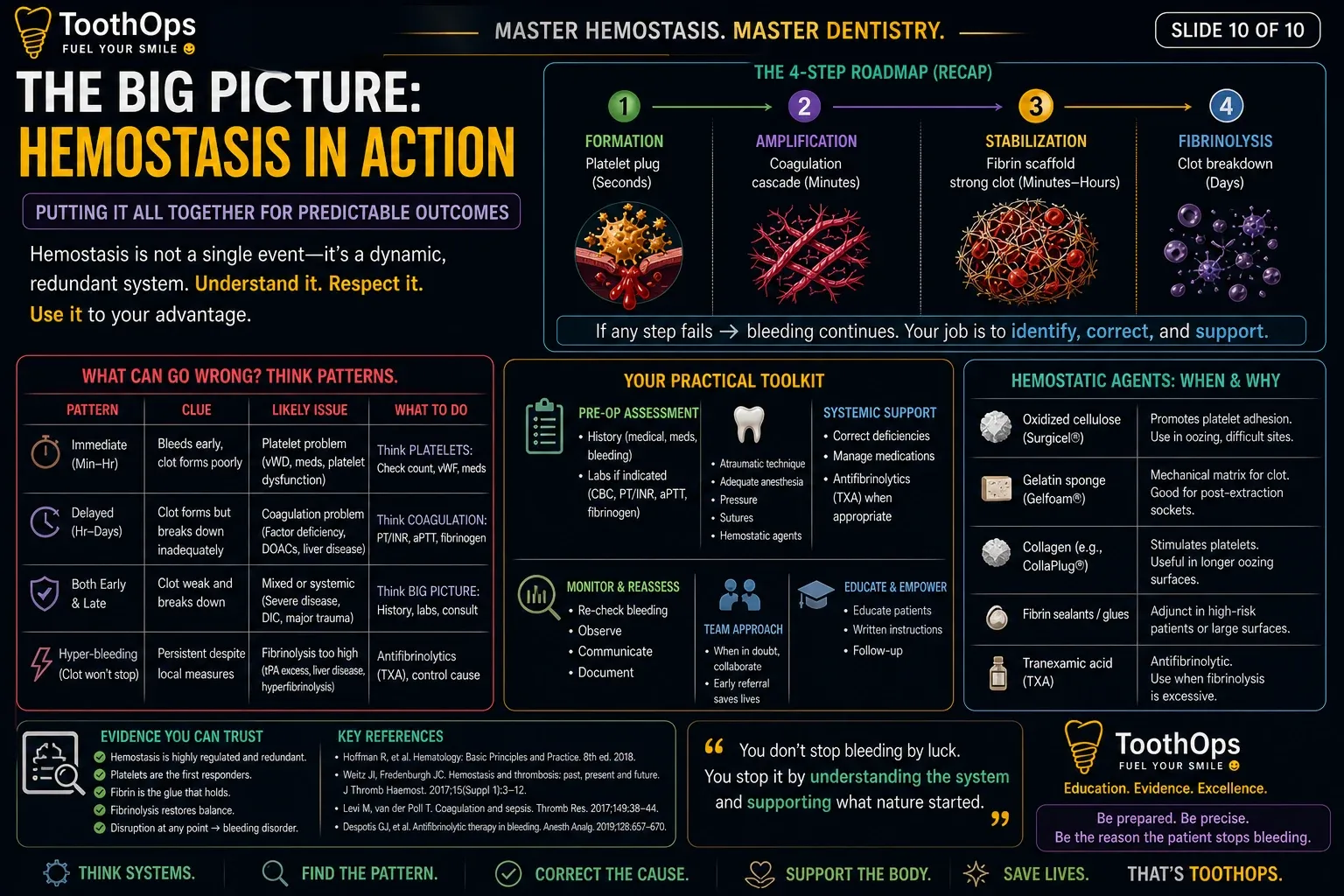
⚙️ The System
Hemostasis is not one reaction.
It is a layered response:
- Slow the blood
- Plug the leak
- Reinforce the plug
- Stabilize → then remove it
👉 Each step solves a different problem
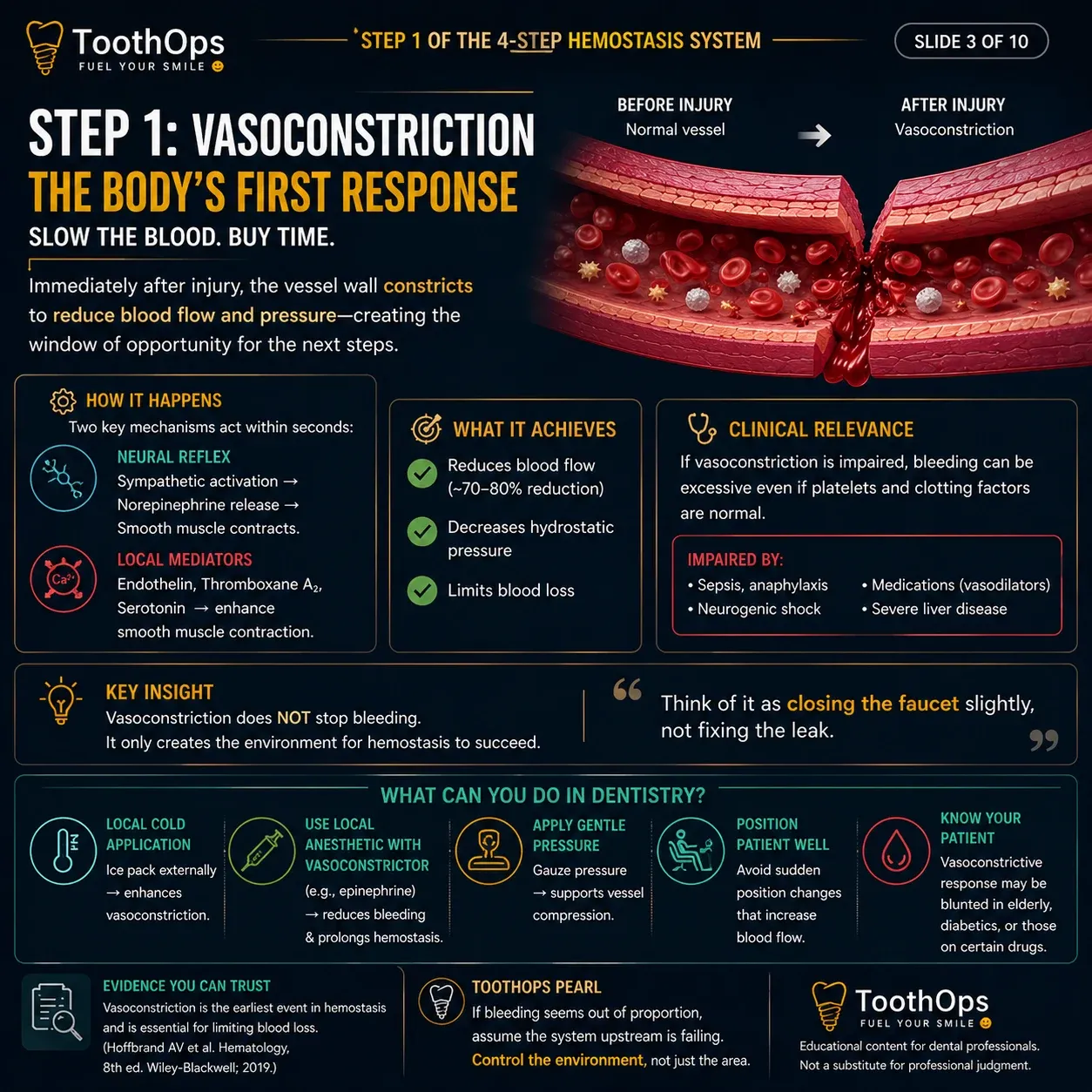
🧩 STEP 1 — Vasoconstriction
“Buy time”
What happens:
- Vessel constricts immediately
- Blood flow decreases
Why it matters:
This is not the solution—it’s time control
👉 It reduces pressure so the rest of the system can work
🧠 Insight (this is often missed)
Even perfect clotting can fail if:
👉 blood flow is too strong
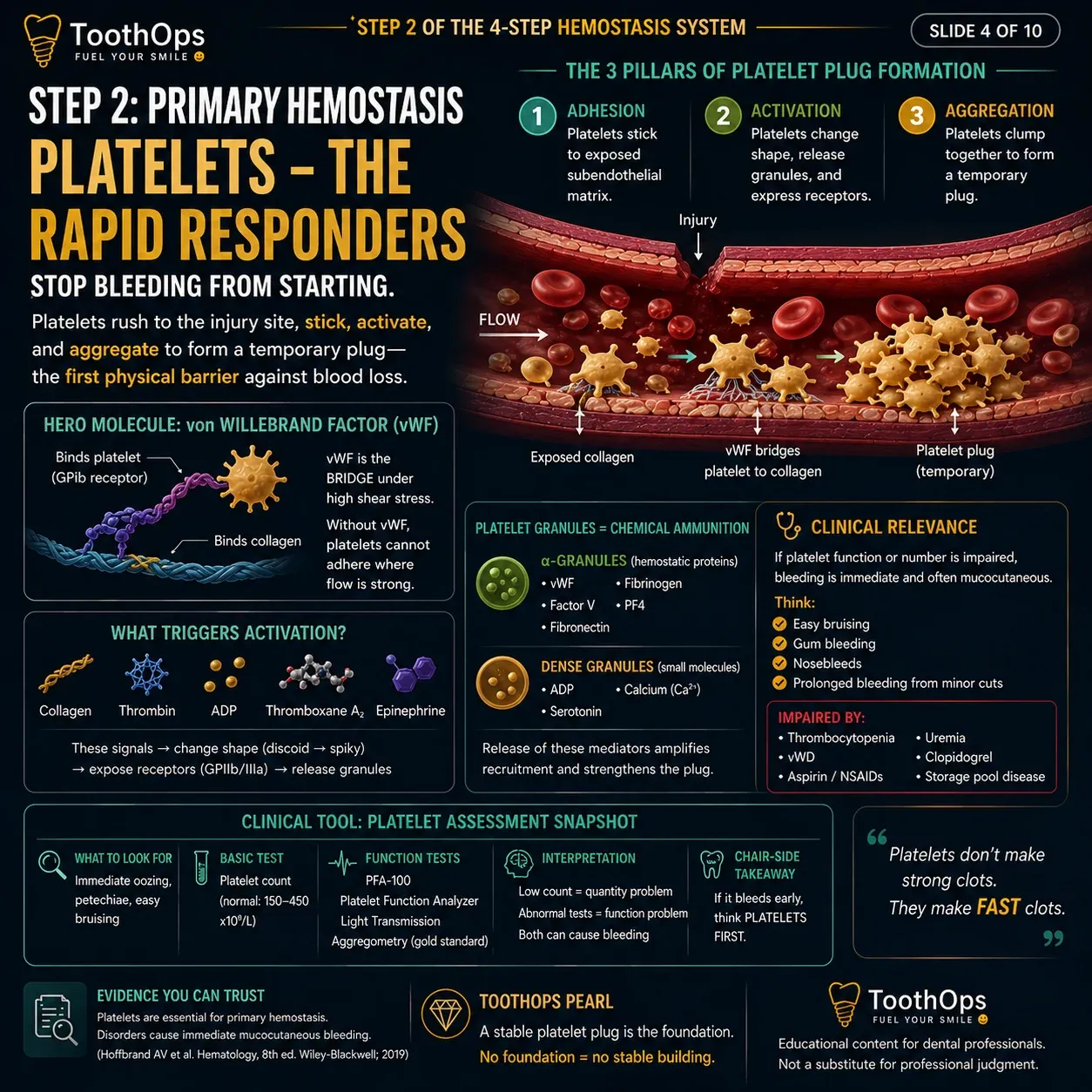
🧩 STEP 2 — Primary Hemostasis (Platelets)
“Stop bleeding from starting”
What happens:
- Platelets adhere → activate → aggregate
- Temporary platelet plug forms
Key molecule:
👉 von Willebrand factor (vWF)
- anchors platelets under flow
- stabilizes Factor VIII
🧠 Signature Insight
👉 Platelets don’t make strong clots.They make fast clots.
🦷 Clinical Pattern
If this step fails:
👉 bleeding starts immediately
- gums bleed easily
- nosebleeds
- easy bruising
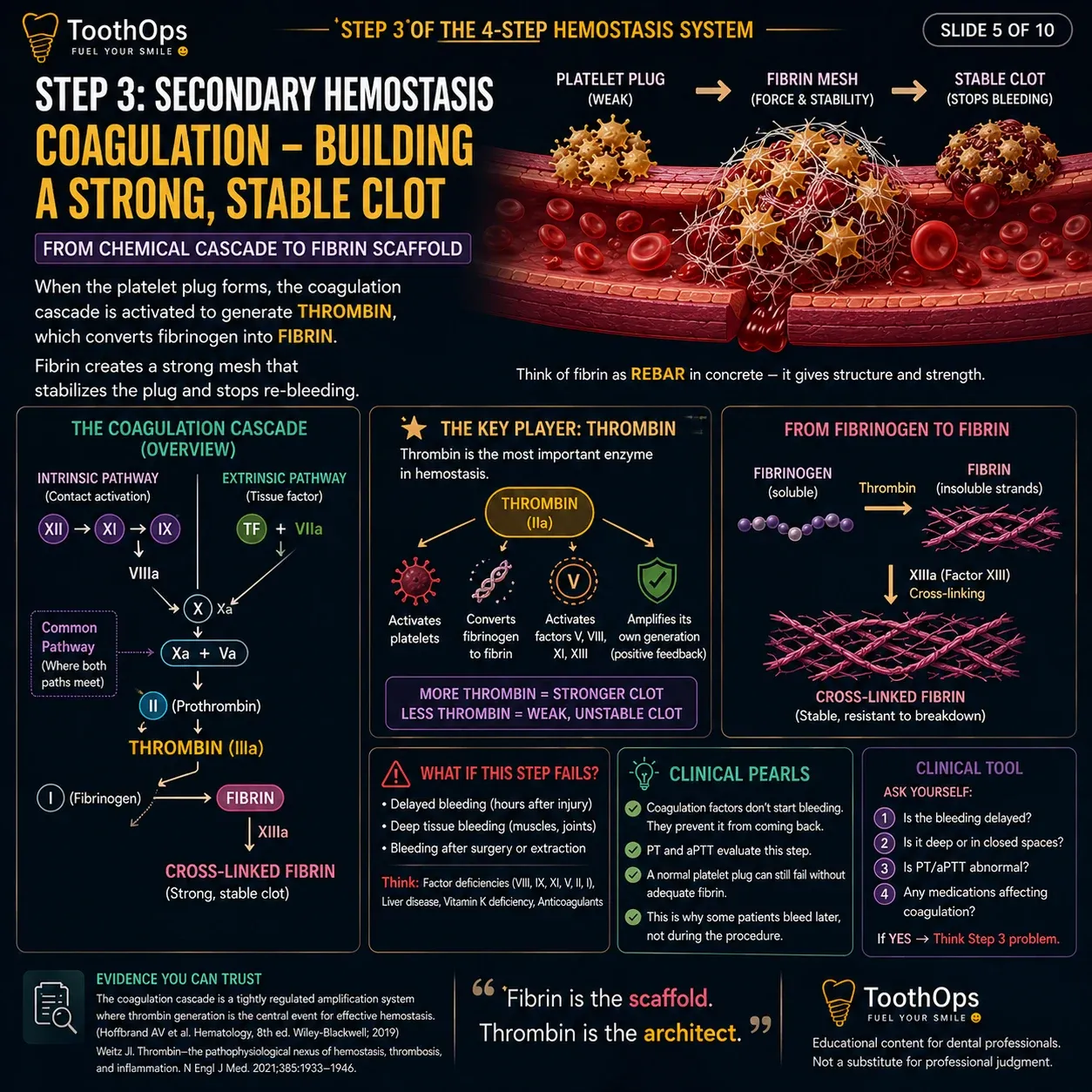
🧩 STEP 3 — Secondary Hemostasis (Coagulation)
“Make the clot strong enough to last”
What happens:
- Coagulation cascade generates thrombin
- Thrombin → fibrin
👉 Fibrin forms a reinforcing mesh
🧠 Signature Insight
👉 Clotting factors don’t start the bleed.They prevent it from coming back.
🦷 Clinical Pattern
If this step fails:
👉 bleeding is delayed
- patient leaves clinic → bleeding starts later
- deep tissue bleeding
- hemophilia pattern
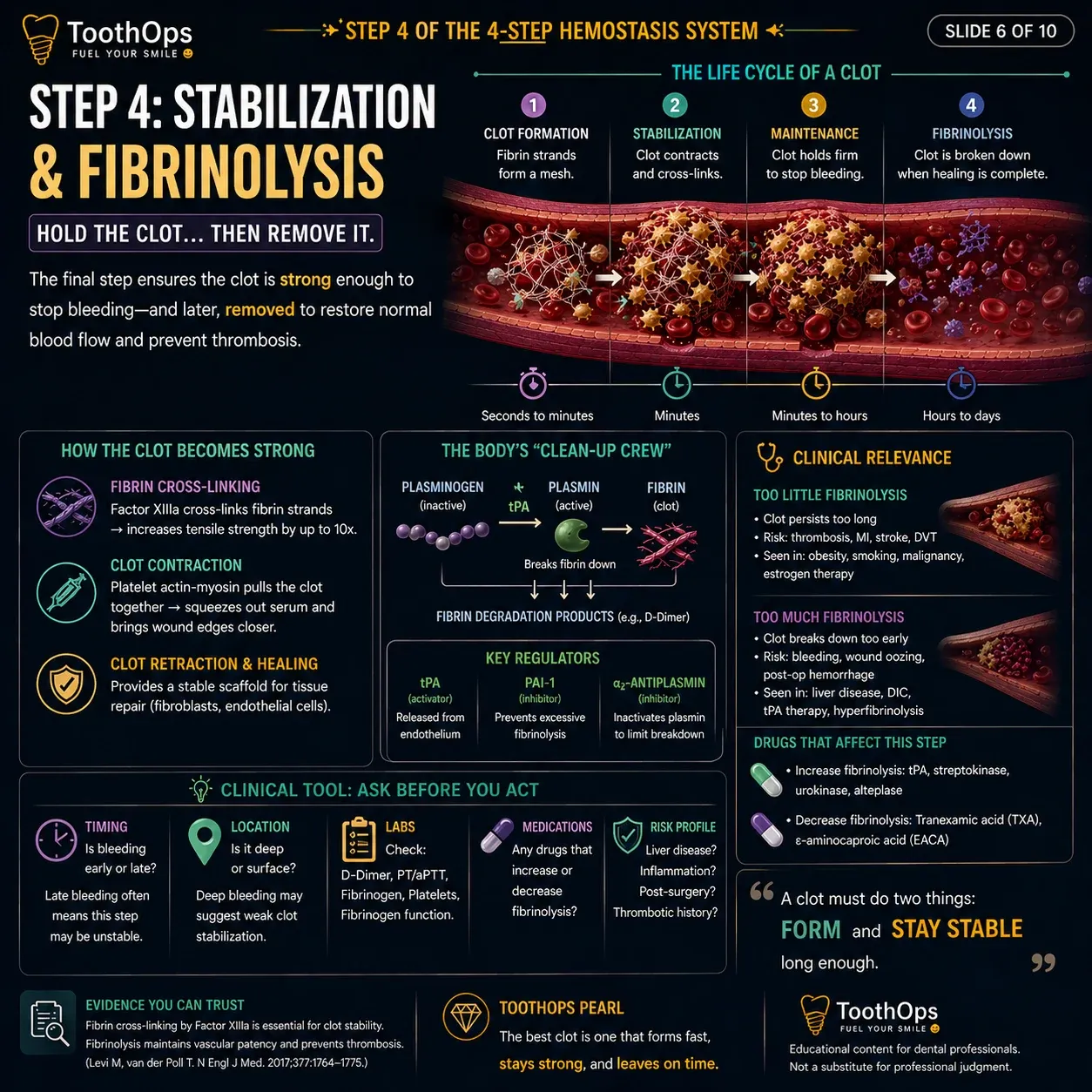
⚡ STEP 4 — Stabilization & Fibrinolysis
“Hold it… then remove it”
What happens:
- clot contracts
- fibrin cross-links
- later → plasmin breaks it down
🧠 Signature Insight
👉 A clot must do TWO things:
- form
- stay stable long enough
🦷 Clinical Pattern
If this step fails:
👉 clot forms… then breaks early
- re-bleeding
- poor healing
- post-op complications
🔬 The Hidden Layer: Why the System Actually Works
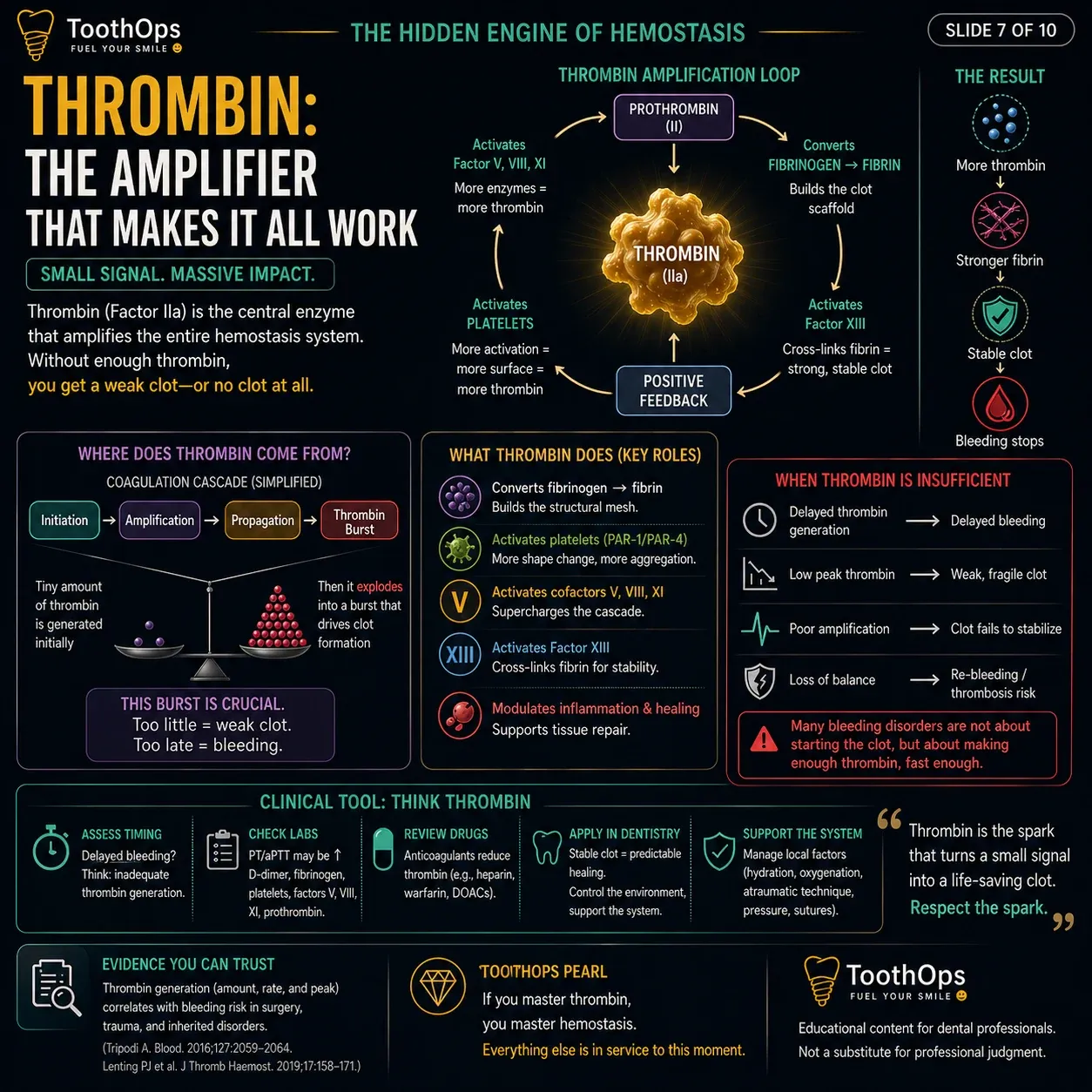
What ties all 4 steps together?
👉 Thrombin amplification
🧠 High-Level Insight
A clot is not built slowly.
It depends on a:
👉 sudden thrombin burst
That burst:
- strengthens fibrin
- activates platelets
- amplifies the system
⚠️ If amplification is weak:
- clot forms slowly
- clot is fragile
- bleeding becomes unpredictable
🧠 The Pattern That Changes Everything
Now combine everything:
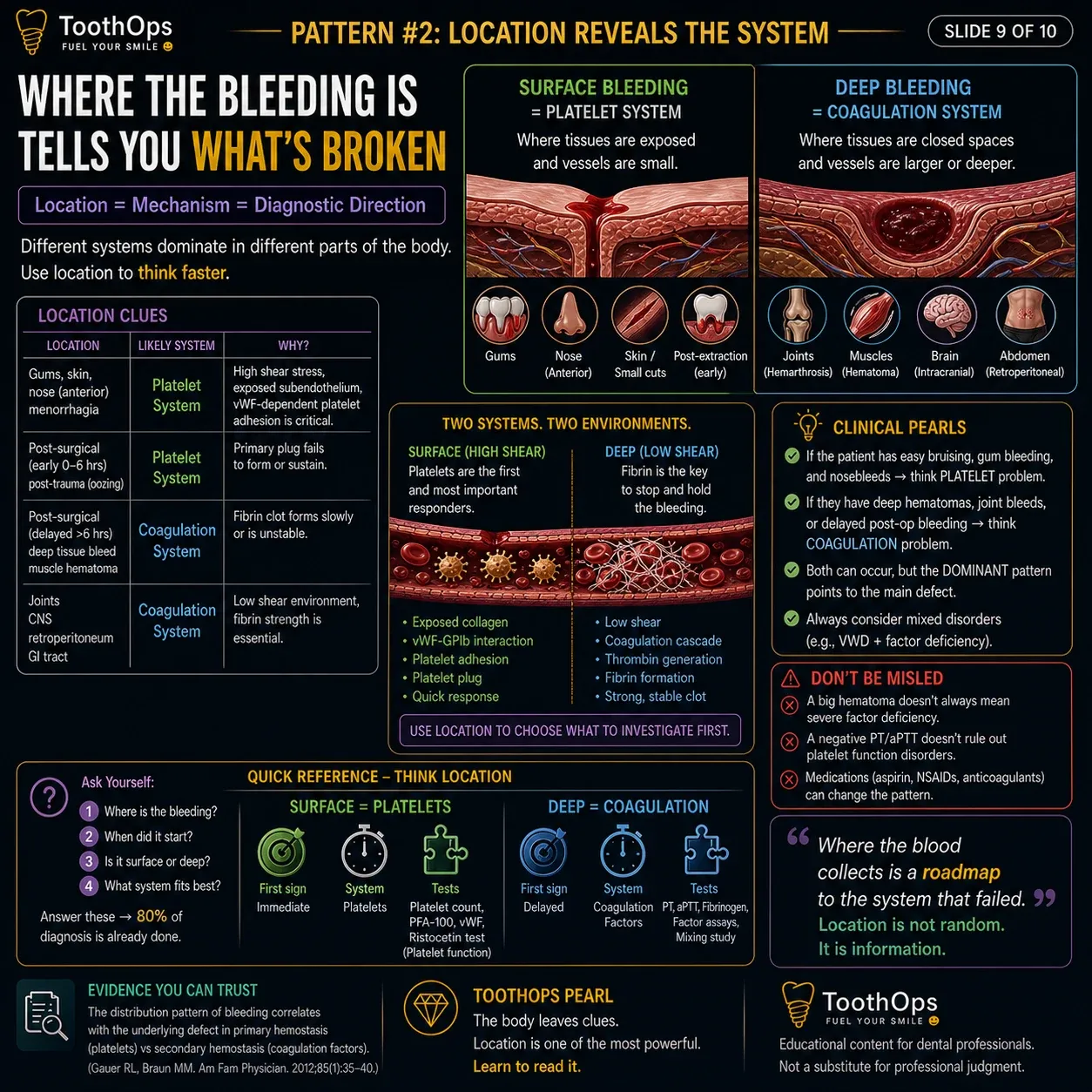
⏱️ Timing tells you WHERE the problem is
| Timing | Think |
|---|---|
| Immediate bleeding | Platelets (Step 2) |
| Delayed bleeding | Coagulation (Step 3) |
📍 Location tells you WHAT failed
| Location | Think |
|---|---|
| Surface (gums, skin) | Platelets / vWF |
| Deep (muscle, joints) | Clotting factors |
👉 This is not memorization.
👉 This is pattern recognition
🦷 Dentistry Translation (Real Value)
When a patient bleeds:
Don’t just ask:
“Are they bleeding a lot?”
Ask:
- Did it start immediately or later?
- Is it surface oozing or deep bleeding?
- Are they on medications?
🧠 High-Yield Clinical Insight
👉 Most dental bleeding is local + mechanical
NOT systemic failure
But:
👉 Systemic issues determine how stable your result will be
💬 Chairside Translation
“Your body uses multiple steps to stop bleeding. In your case, one of those steps is slightly different, so we’ll adjust how we manage the area to help your body form a stable clot.”
🧠 ToothOps Insight (Signature Line)
👉 Bleeding is not random.It is a pattern created by which step of hemostasis is failing.
✨ Final Takeaway
Don’t think:
“Does this patient bleed?”
Think:
👉 “Which step of the system is not holding?”
That question changes everything.
@ToothOps | Fuel Your Smile 😊
Stay tuned for more insights and educational content in our blog.
Disclaimer: Content is for educational purposes only and not a substitute for medical or dental care.
© 2025 ToothOps | All Rights Reserved.