
🦷 Where Blood Comes From — Hematopoiesis, Platelet Production, and the Hidden Origins of Bleeding Disorders
 ToothOps4 min read
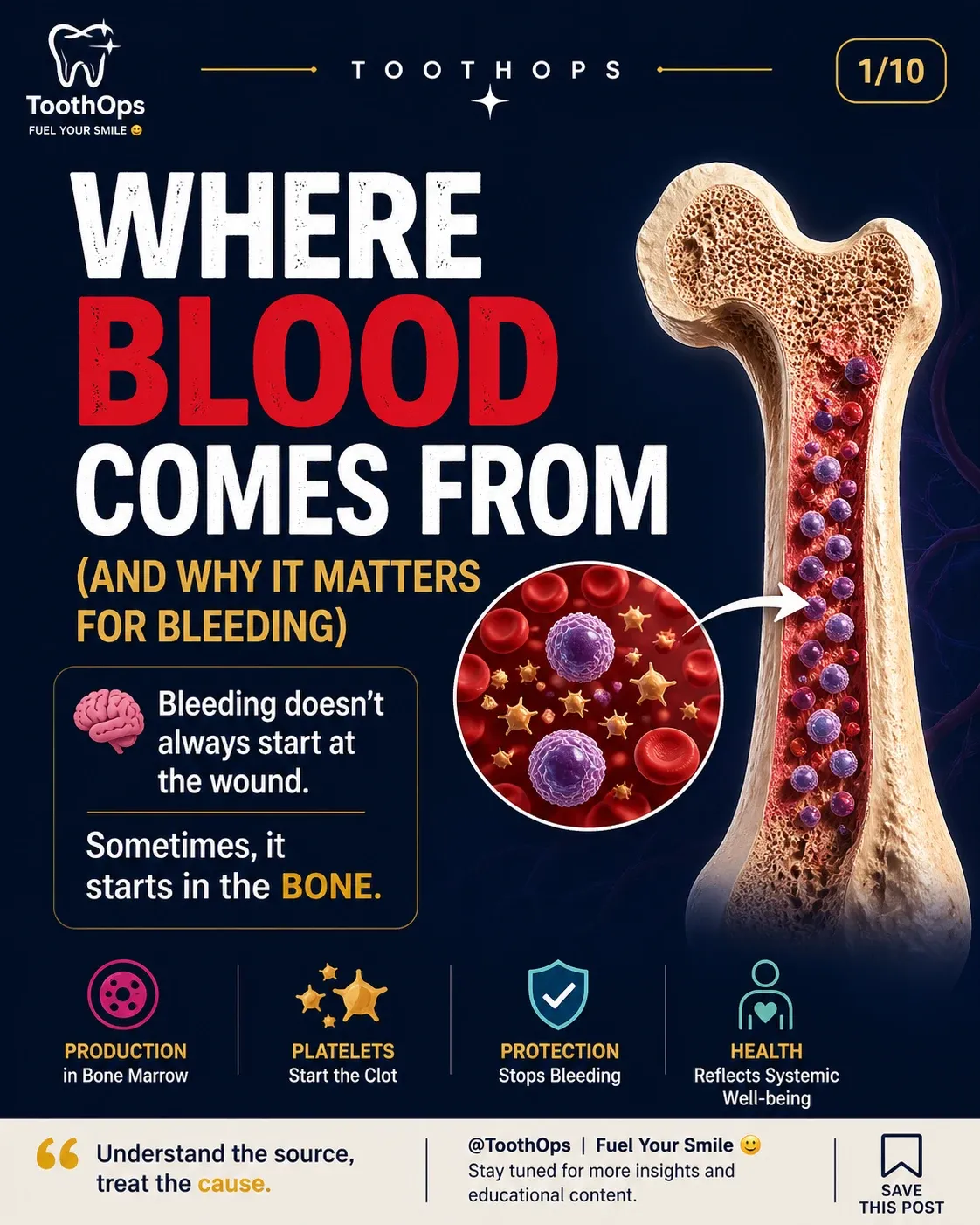
Why Bleeding Doesn’t Always Start at the Wound — It Can Start in the Bone Marrow
🧠 Start Here: The Real Question
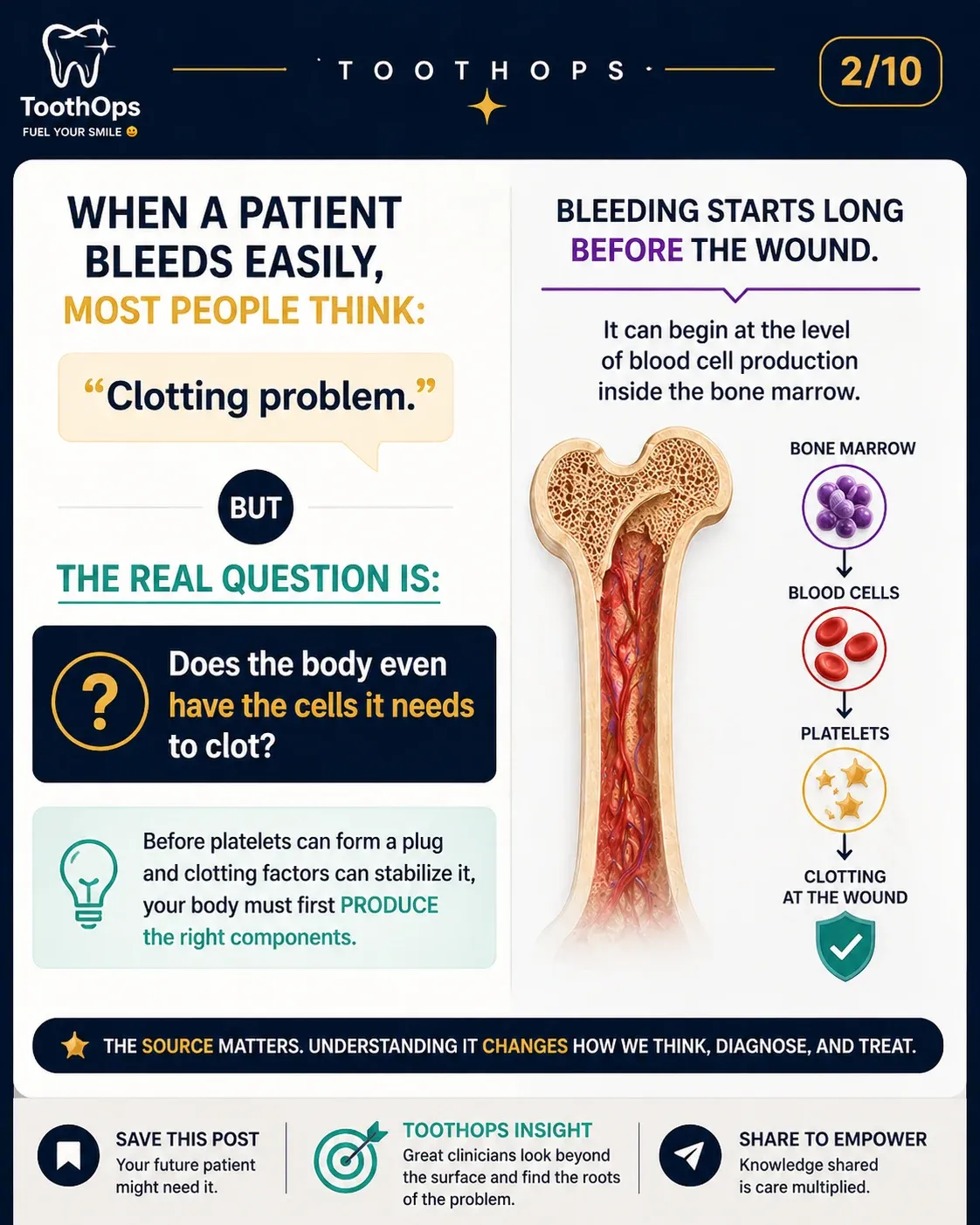
When a patient presents with bleeding, most people think:
“Something is wrong with clotting.”
But the deeper clinical question is:
👉 “Does the body have the cells it needs to clot in the first place?”
Because before:
- platelets can form a plug
- clotting factors can stabilize it
👉 those components must be produced correctly
🧠 Core Insight
You cannot understand bleeding if you don’t understand where blood cells come from
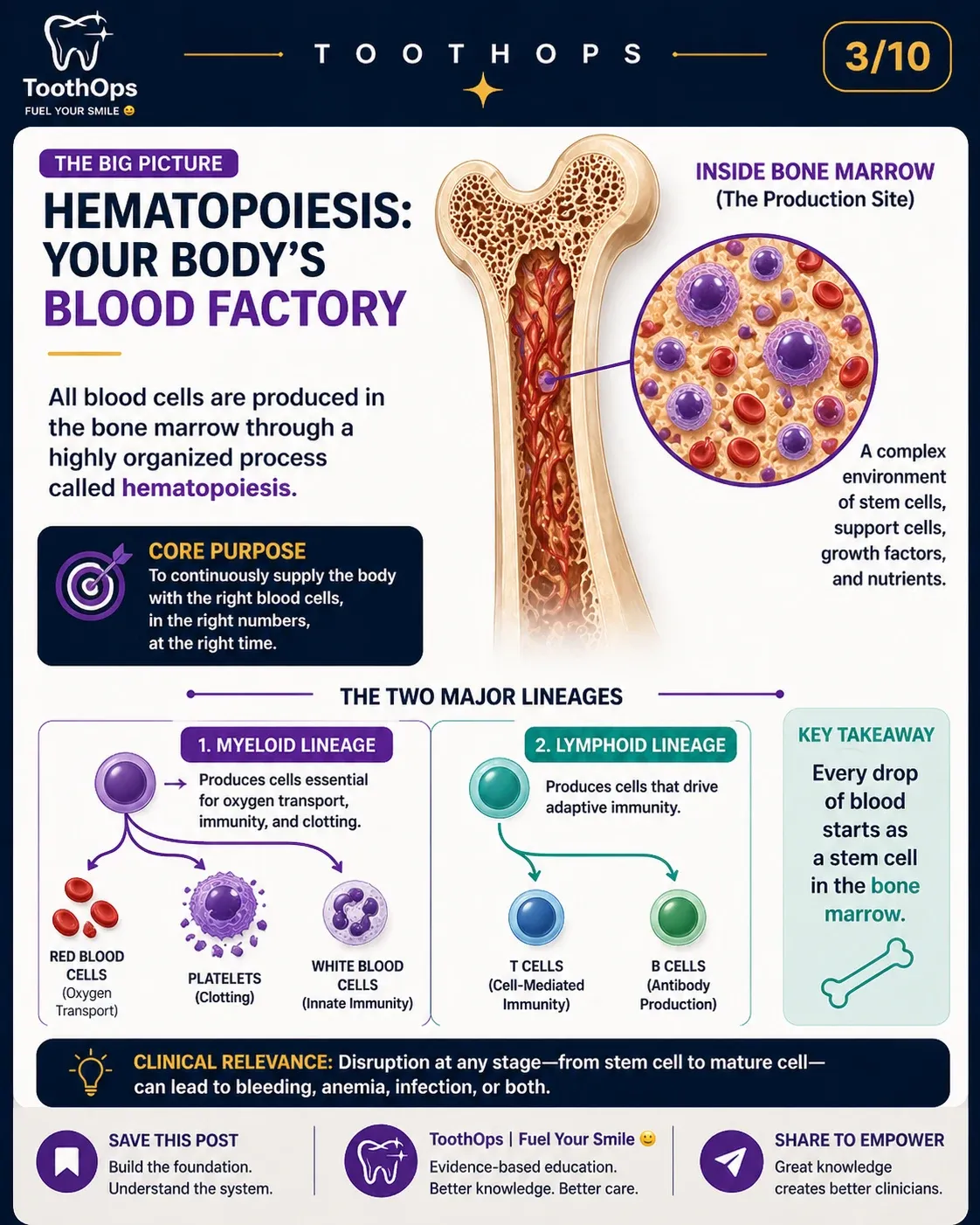
🧩 Hematopoiesis — The Origin of the System
All blood cells are produced in:
👉 Bone marrow
🔬 The Starting Point: Hematopoietic Stem Cells
These cells are:
- multipotent
- self-renewing
- capable of differentiating into all blood cell types
Two Major Lineages
| Lineage | Produces |
|---|---|
| Myeloid | RBCs, platelets, neutrophils |
| Lymphoid | T cells, B cells |
🧠 Clinical Relevance
👉 Bleeding disorders often originate before clotting begins
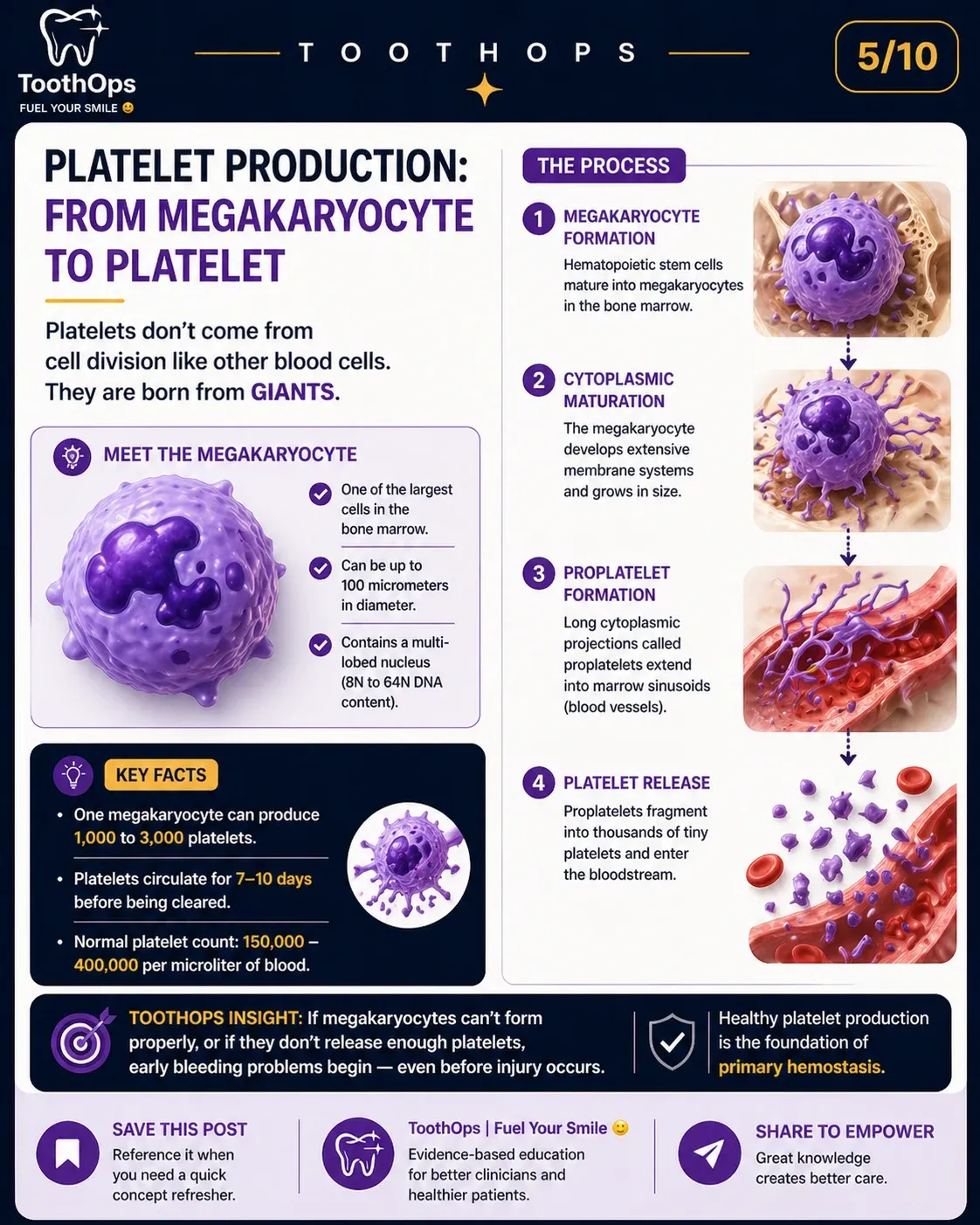
⚙️ Platelet Production — The Key to Early Hemostasis
Step 1: Megakaryocyte Formation
- stem cells → megakaryocytes
- large cells in marrow
Step 2: Platelet Release
Megakaryocytes:
- extend cytoplasmic projections
- fragment into platelets
🧠 Insight
Platelets are not full cells—they are fragments designed for rapid response
⚙️ Regulation: Thrombopoietin (TPO)
Produced mainly by:
- liver
- kidneys
Function:
👉 Stimulates megakaryocyte production
🧠 Critical Insight
Platelet production is regulated systemically—not just locally
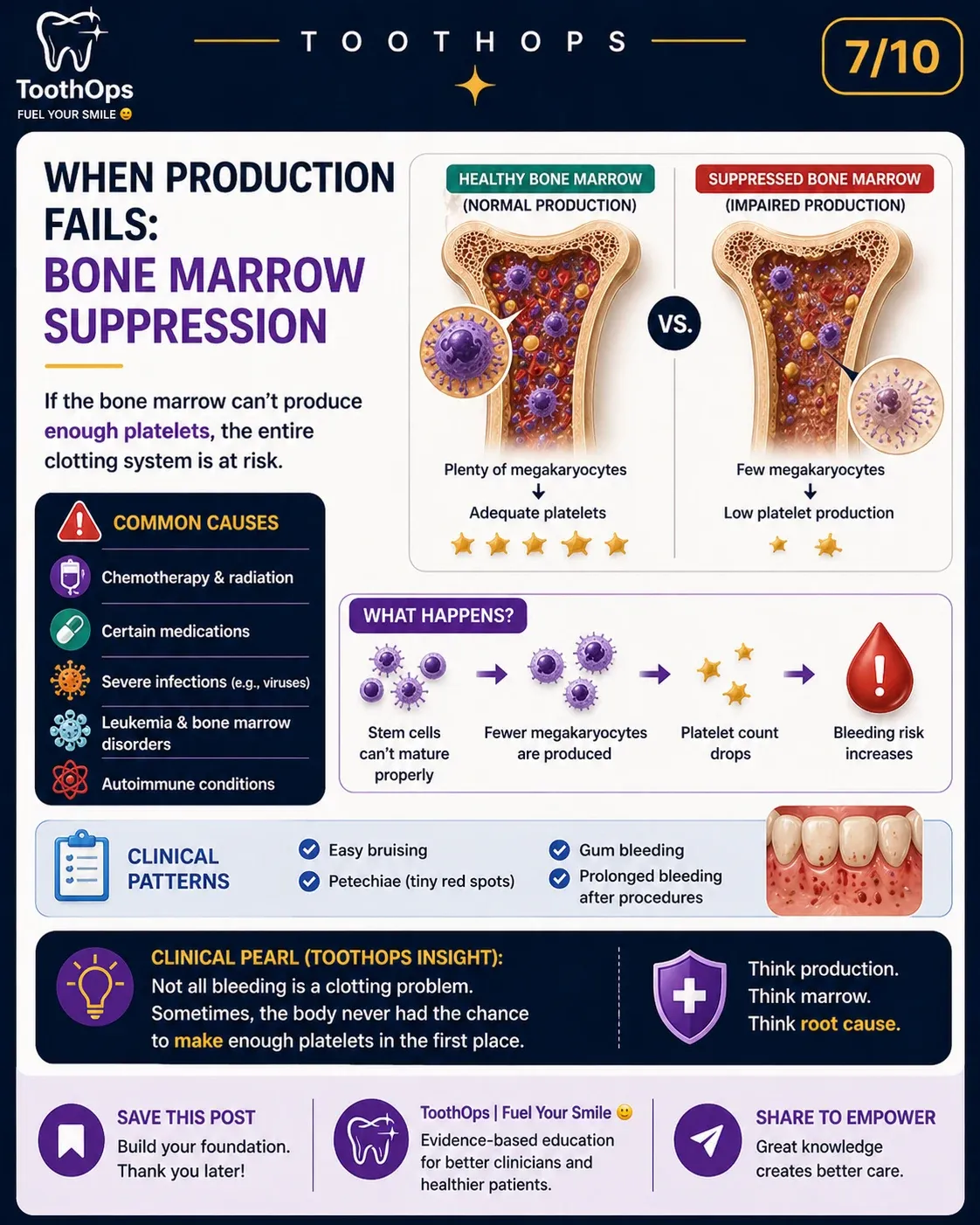
⚠️ When Production Fails — The Root of Bleeding
1. Bone Marrow Suppression
Causes:
- chemotherapy
- radiation
- medications
Mechanism:
- reduced stem cell activity
- decreased platelet production
Clinical Pattern:
- low platelet count
- increased bleeding risk
2. Bone Marrow Infiltration
Causes:
- leukemia
- metastatic cancer
Mechanism:
- abnormal cells replace normal marrow
Result:
👉 ineffective production
🧠 Insight
The problem is not clotting—it’s that the system never formed properly
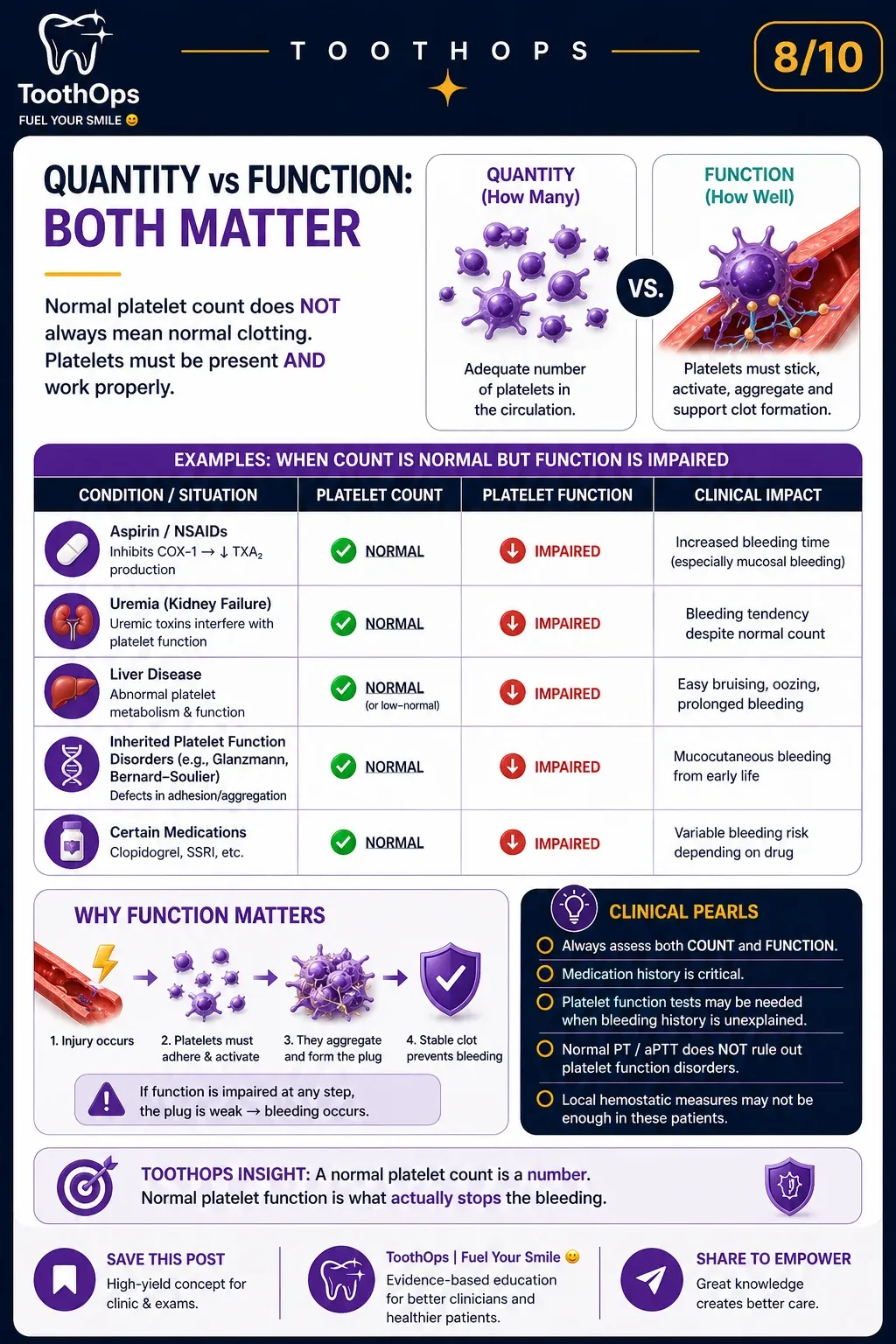
⚠️ Platelet Quantity vs Function
This is a major misunderstanding.
Platelet Count (Quantity)
- normal: ~150,000–400,000/µL
Platelet Function (Quality)
Platelets must:
- adhere
- activate
- aggregate
🧠 Critical Insight
A normal platelet count does NOT guarantee normal clotting
Clinical Examples
| Condition | Platelet Count | Function |
|---|---|---|
| Thrombocytopenia | ↓ | impaired |
| Aspirin use | normal | impaired |
| Uremia | normal | impaired |
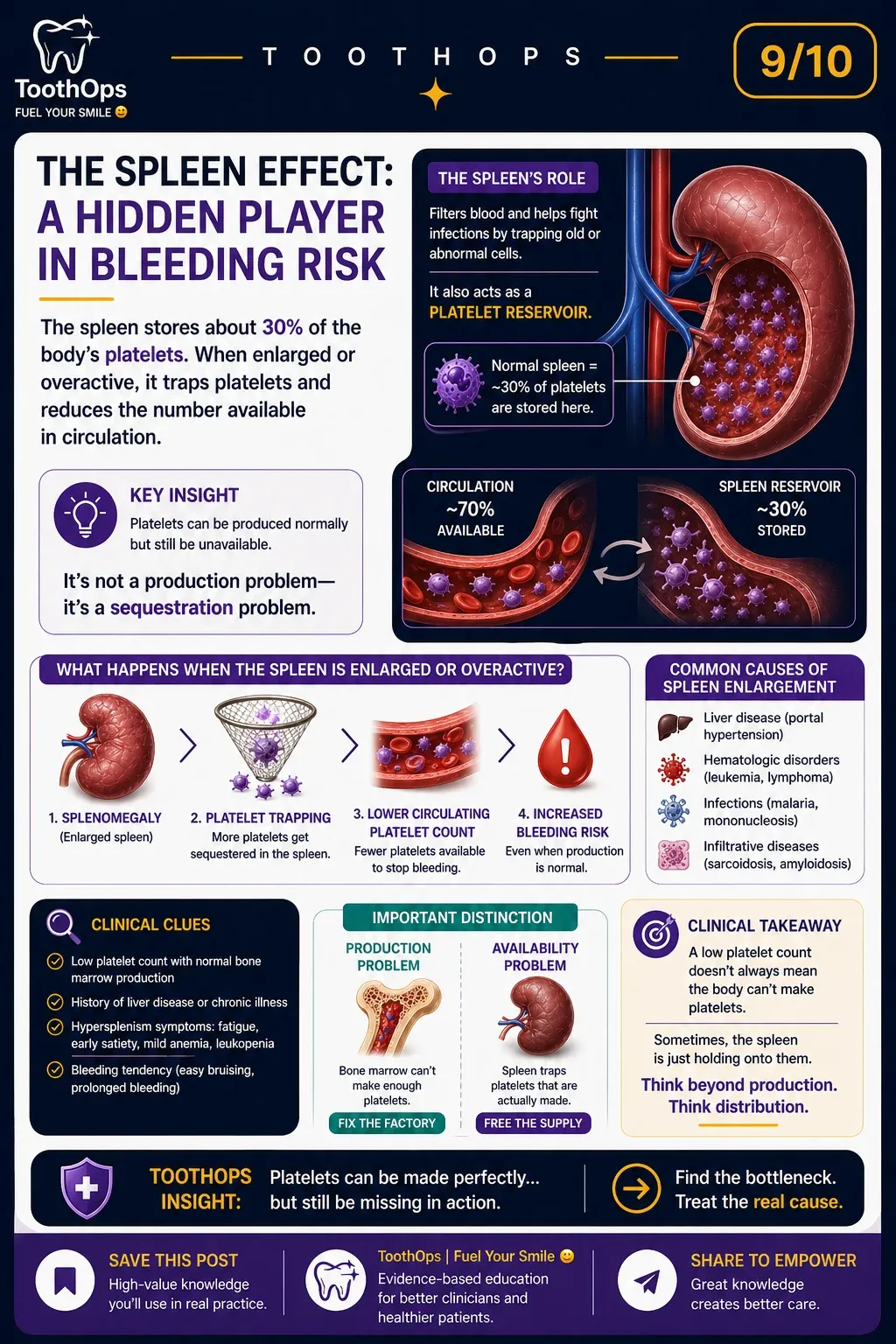
⚙️ The Spleen — The Hidden Platelet Reservoir
Function:
- stores ~30% of platelets
- removes aged/damaged cells
Problem: Splenomegaly
Mechanism:
- enlarged spleen traps platelets
Result:
👉 circulating platelet count decreases
🧠 Insight
Platelets may be produced normally—but unavailable in circulation
⚙️ The Liver — Indirect Control of Hematopoiesis
Roles:
- produces thrombopoietin
- produces clotting factors
- regulates systemic balance
🧠 Insight
The liver connects production + function
🔁 How Hematopoiesis Connects to Bleeding
Step-by-Step Failure Model
Normal:
- marrow produces platelets
- platelets circulate
- injury → clot forms
Failure:
- marrow impaired
- platelets ↓
- injury → no effective plug
Result:
👉 Immediate bleeding (primary hemostasis failure)
📊 Clinical Pattern Recognition
| Pattern | Likely Cause |
|---|---|
| Easy bruising | platelet deficiency |
| Gum bleeding | platelet or vWF issue |
| Petechiae | low platelets |
| Delayed bleeding | factor problem |
🦷 Dentistry-Level Application
Why This Matters in Practice
Before procedures:
Ask:
- history of bleeding
- medications
- systemic disease
During treatment:
Watch for:
- excessive oozing
- difficulty achieving hemostasis
After treatment:
Monitor:
- prolonged bleeding
- delayed clot formation
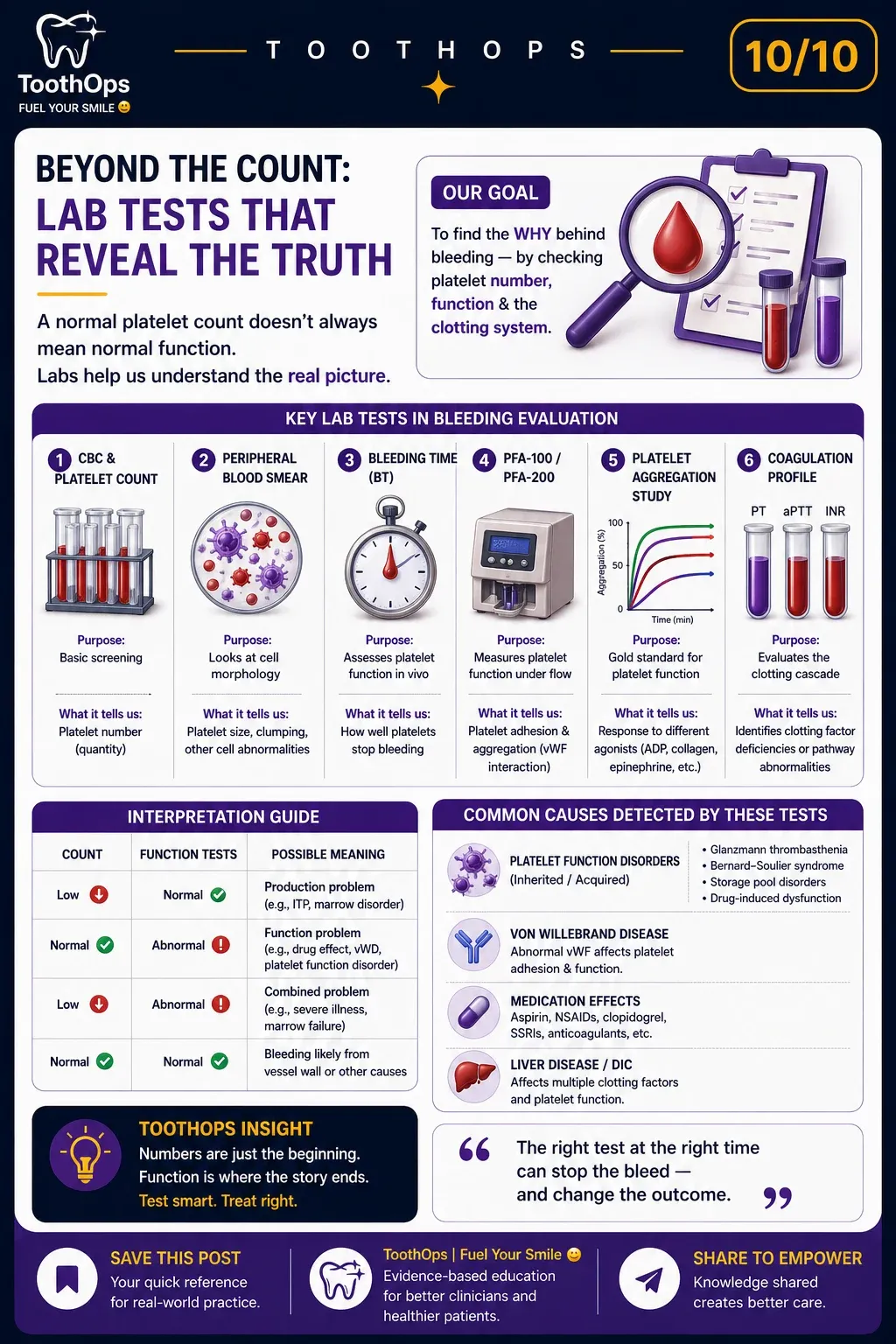
🧠 High-Yield Insight
If platelets are low or dysfunctional, local measures alone may not be enough
🤝 Chairside Communication
Scenario 1 — Low Platelets
“Your body may not be producing enough platelets, which are needed to form the first step of a clot. That’s why bleeding may occur more easily.”
Scenario 2 — Medication Effect
“Your platelet function may be affected by medication, so we’ll take extra steps to control bleeding during and after the procedure.”
⚠️ Clinical Red Flags
- spontaneous bleeding
- petechiae
- unexplained bruising
- bleeding without trauma
👉 These may indicate bone marrow or systemic issues
🧠 ToothOps Integration Insight
This topic connects:
👉 hematopoiesis👉 platelet biology👉 hemostasis👉 systemic disease👉 clinical dentistry
🧠 Higher-Level Thinking
Bleeding is not always a failure of clottingIt is often a failure of production
✨ Final Takeaway
Blood does not start at the wound.
👉 It starts in the bone marrow
And:
👉 If the system cannot produce the right components,no amount of clotting activation can compensate
@ToothOps | Fuel Your Smile 😊
Stay tuned for more insights and educational content in our blog.
Disclaimer: Content is for educational purposes only and not a substitute for medical or dental care.
© 2025 ToothOps | All Rights Reserved.