
🦷 The Science of a Cough: Your Body’s Airway Defense System
 ToothOps5 min read
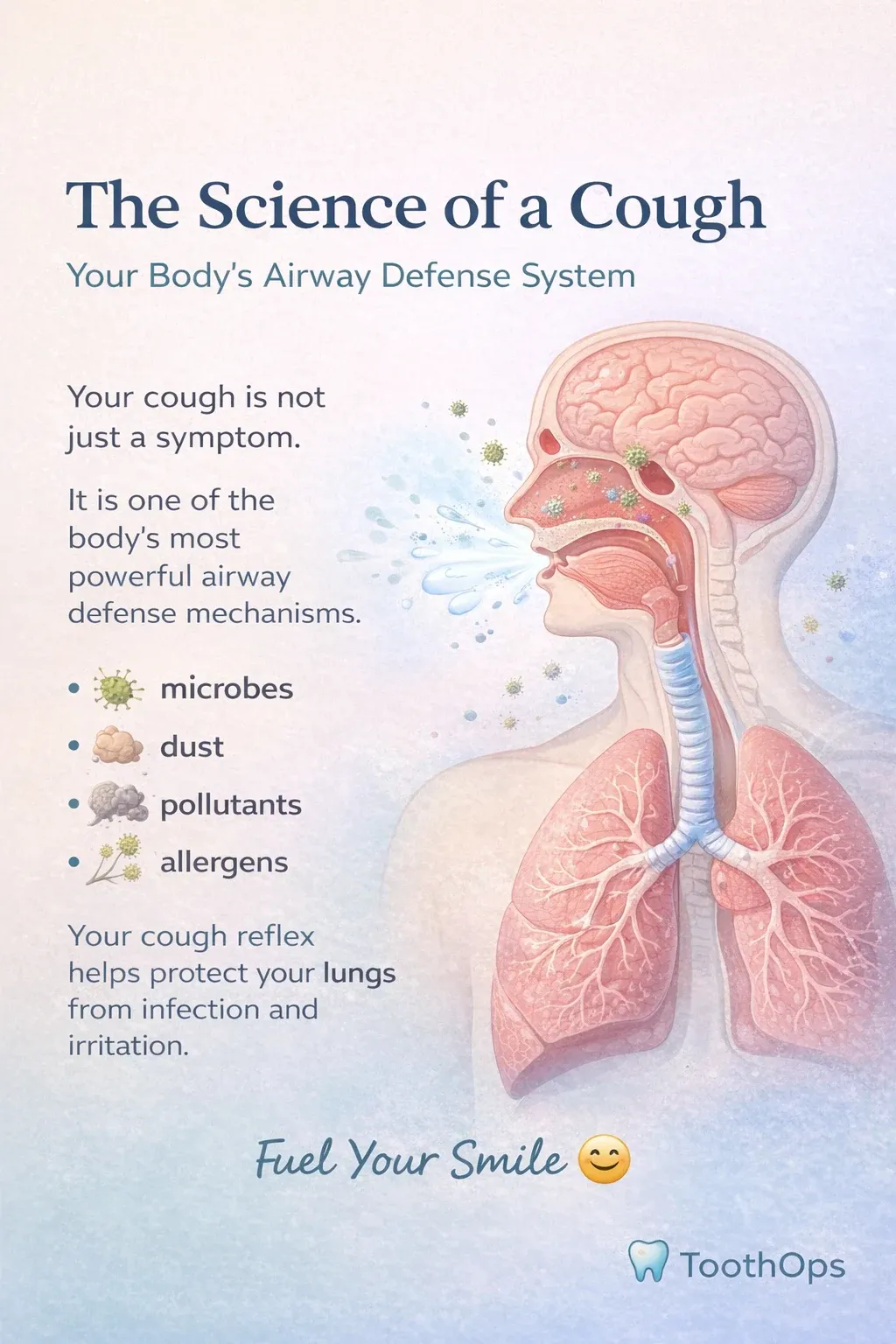
A cough may feel like an irritating symptom, but physiologically it is one of the most powerful defense mechanisms of the respiratory system.
Every day the lungs are exposed to:
• airborne microbes
• dust and pollutants
• allergens
• chemical irritants
Without protective mechanisms, these particles could easily reach the delicate alveoli where gas exchange occurs.
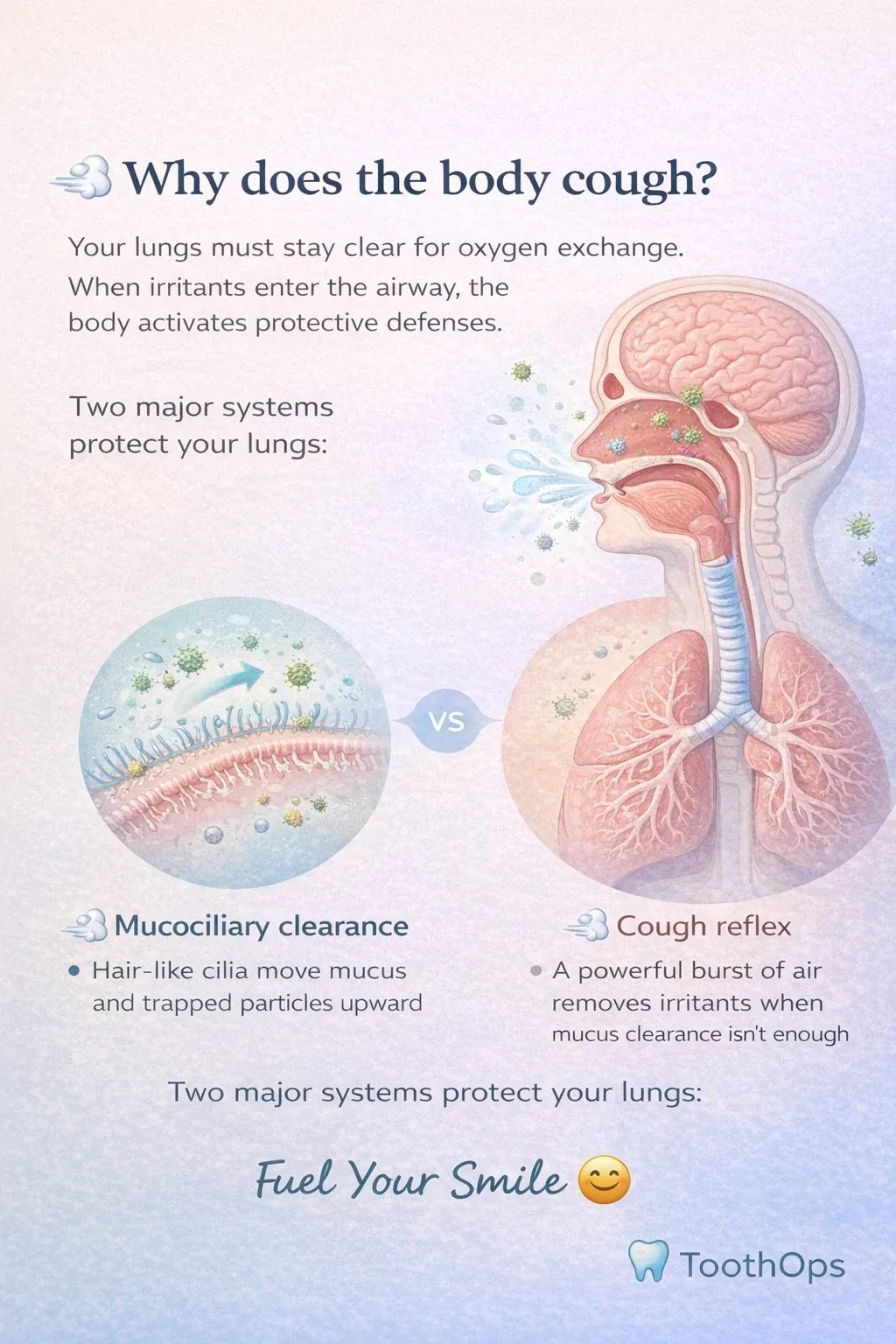
The body relies on two major defense systems to maintain airway health:
🌀 Mucociliary clearance – continuous transport of mucus upward by ciliated epithelial cells
💨 The cough reflex – a rapid, high-pressure expulsion of air that removes irritants when normal clearance fails
Together, these systems form a critical barrier protecting the lower respiratory tract from infection and inflammation.
🫁 First Line Defense: Mucociliary Clearance
Before coughing even occurs, the respiratory tract uses a sophisticated self-cleaning system.
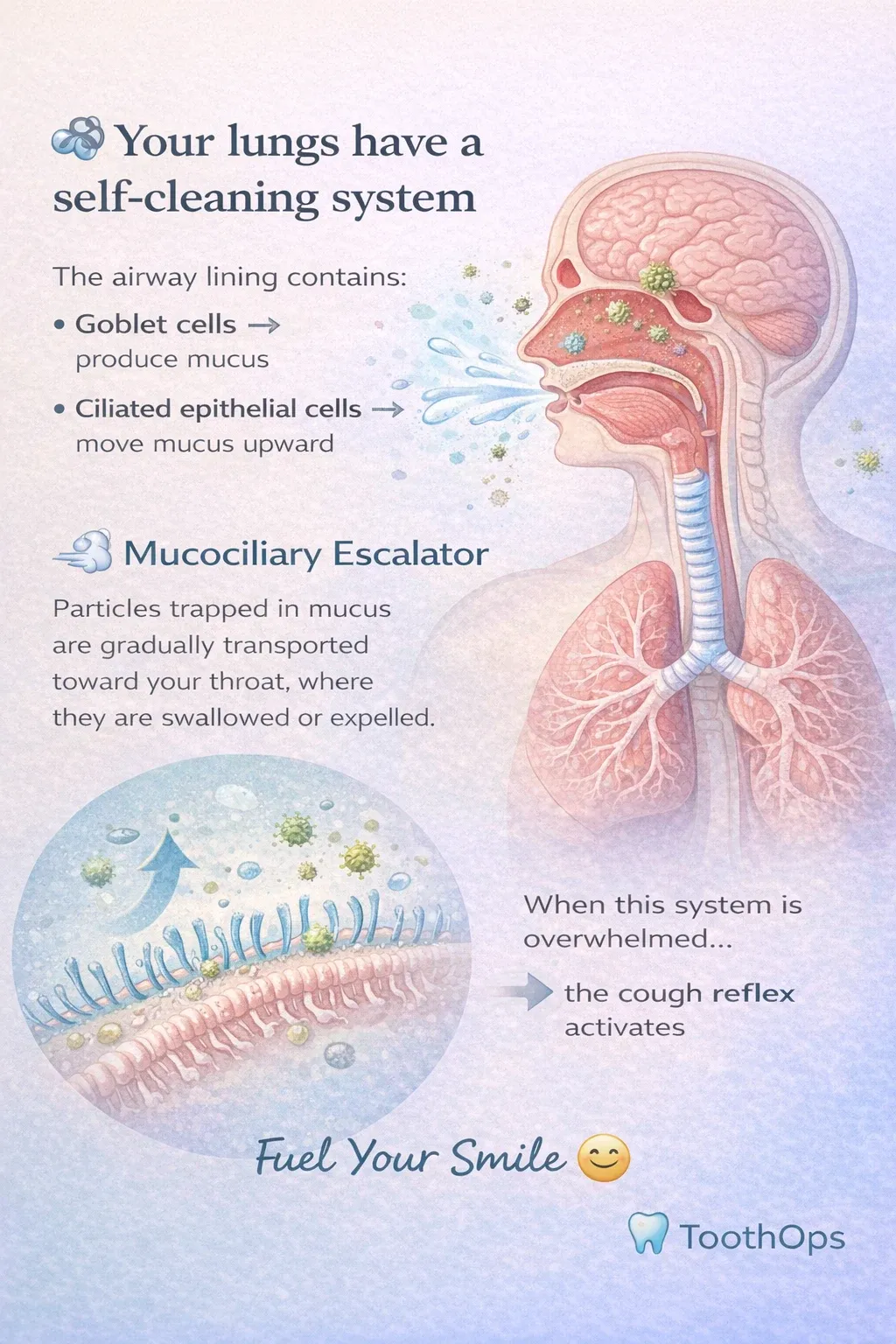
The airway epithelium contains:
• goblet cells – produce mucus that traps particles
• ciliated epithelial cells – beat rhythmically to move mucus upward toward the throat
This process is called the mucociliary escalator.
Particles trapped in mucus are gradually transported toward the pharynx, where they are swallowed or expelled.
However, when the burden of irritants becomes too great, the body activates a more forceful defense — the cough reflex.
🧠 Where the Cough Reflex Begins
The cough reflex is initiated by specialized sensory receptors distributed throughout the airway.
Major cough receptor locations
| Location | Functional role |
|---|---|
| Larynx | Protects airway from aspiration |
| Trachea | Highly sensitive to mechanical irritation |
| Bronchi | Detects mucus accumulation and inflammation |
| External auditory canal | Rare reflex via vagus nerve stimulation |
These receptors detect stimuli such as:
• mucus accumulation
• microbial toxins
• inflammatory mediators
• inhaled particles or smoke
• chemical irritants
Once activated, they send signals to the brainstem.
🧬 Two Key Types of Cough Receptors
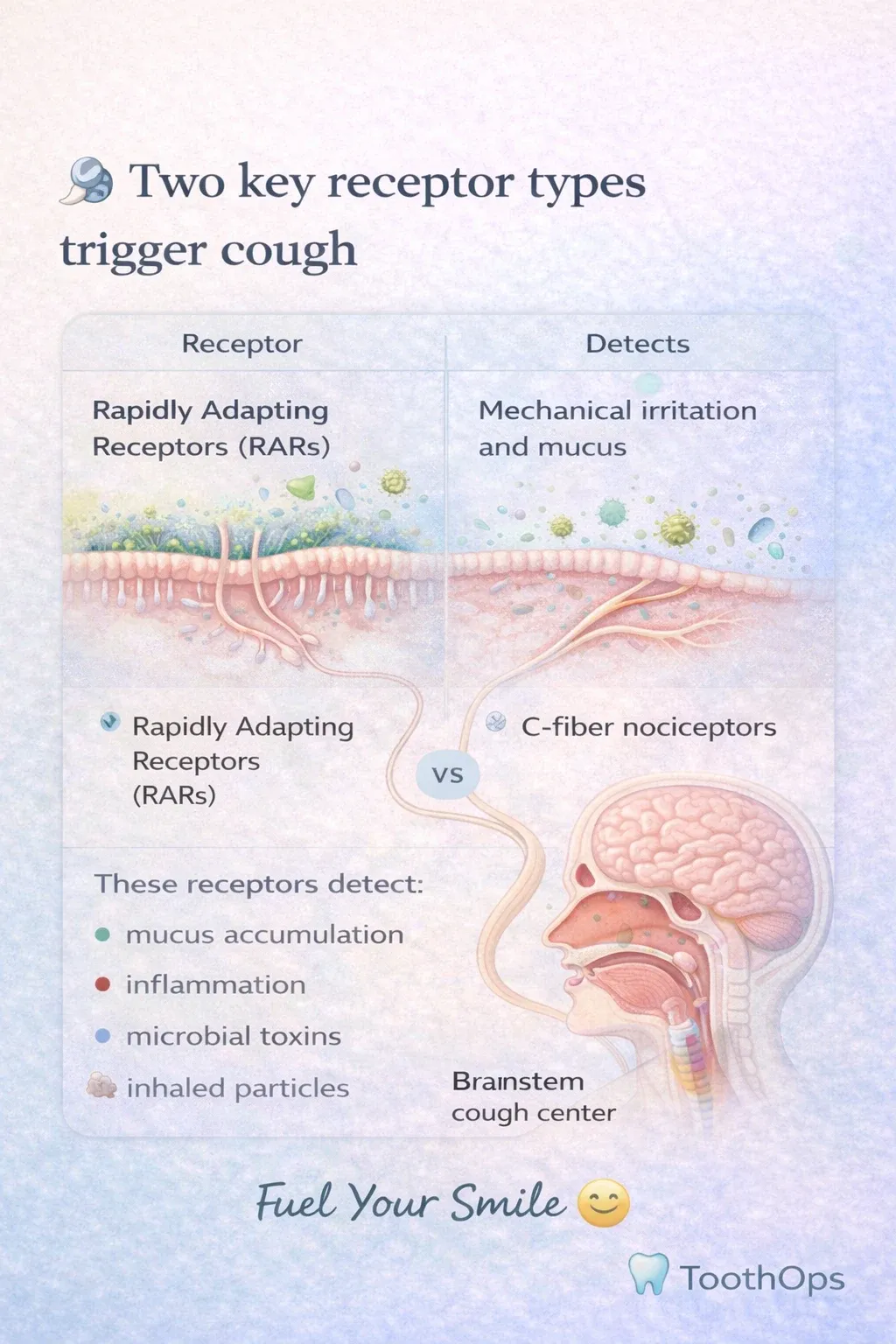
Modern respiratory physiology identifies two major sensory pathways responsible for cough initiation.
| Receptor Type | Stimulus | Role |
|---|---|---|
| Rapidly Adapting Receptors (RARs) | Mechanical irritation, mucus | Trigger cough to clear airway |
| C-fiber nociceptors | Chemical mediators (bradykinin, prostaglandins, capsaicin) | Detect inflammatory signals |
These receptors transmit sensory information through afferent fibers of the vagus nerve (cranial nerve X).
🧠 The Brainstem Cough Center
Signals from airway receptors travel to the brainstem, where cough is coordinated by a specialized neural network.
Key brainstem structures involved
| Brain region | Function |
|---|---|
| Nucleus tractus solitarius (NTS) | Receives sensory signals from vagus nerve |
| Medullary respiratory center | Coordinates breathing muscles |
| Nucleus ambiguus | Controls laryngeal muscle activity |
Together, these structures form the central cough network.
Once activated, the brainstem sends motor signals to:
• diaphragm
• intercostal muscles
• abdominal muscles
• laryngeal muscles
This produces the coordinated mechanics of a cough.
💨 The Three Phases of a Cough
A cough is not a simple action—it is a complex sequence of biomechanical events.
1️⃣ Inspiratory phase
A deep breath increases lung volume.
2️⃣ Compression phase
The glottis closes, while expiratory muscles contract, generating high intrathoracic pressure.
3️⃣ Expulsive phase
The glottis suddenly opens, releasing a high-velocity burst of air.
Airflow during a cough can exceed 300 miles per hour, effectively clearing mucus and particles from the airway.
🦠 Why Respiratory Infections Cause Cough
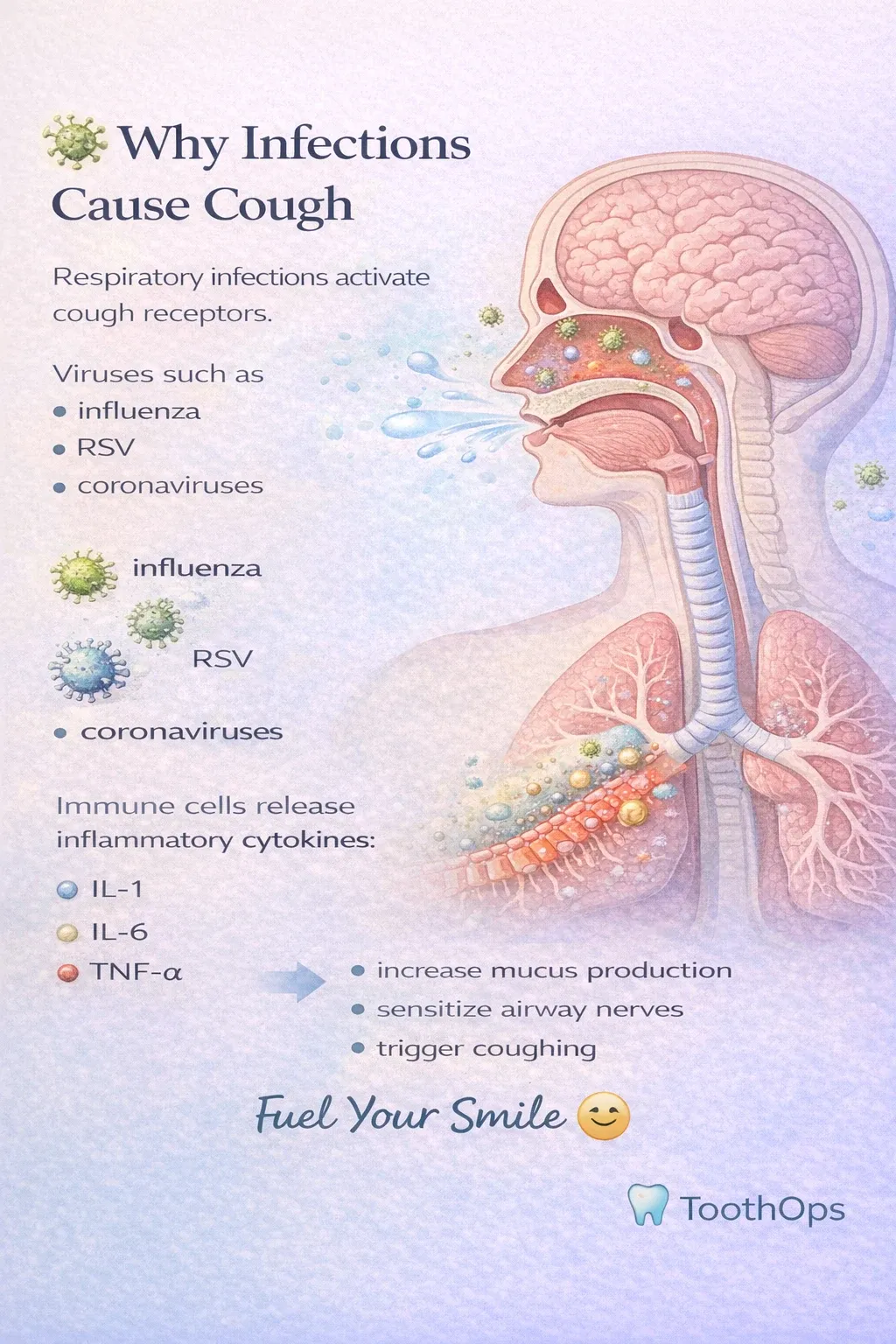
Cough is commonly triggered during respiratory infections because inflammation activates airway sensory receptors.
Viral infections
Viruses such as:
• influenza
• respiratory syncytial virus (RSV)
• coronaviruses
infect respiratory epithelial cells.
Infected cells release inflammatory mediators including:
• IL-1β
• TNF-α
• IL-6
These cytokines increase mucus production and sensitize cough receptors.
Bacterial infections
Bacterial pneumonia causes inflammation within the alveoli, producing:
• inflammatory fluid
• neutrophil infiltration
• cellular debris
This material must be cleared from the airway, stimulating cough to remove infected secretions.
🧬 Immune Cells Protecting the Lungs
Several immune cells play critical roles in eliminating respiratory pathogens.
| Immune Cell | Function |
|---|---|
| Alveolar macrophages | Detect pathogens and initiate immune response |
| Neutrophils | Rapidly attack bacteria |
| Dendritic cells | Present viral antigens to T cells |
| CD8⁺ cytotoxic T cells | Destroy virus-infected epithelial cells |
| B cells / plasma cells | Produce pathogen-specific antibodies |
These immune defenses work together with the cough reflex to clear infection and restore airway function.
🧠 Why Viral Coughs Often Last Weeks
Many people notice that a cough can persist long after a cold or flu has resolved.
This occurs due to post-viral cough hypersensitivity.
During infection, inflammatory mediators such as:
• bradykinin
• prostaglandins
• substance P
increase the sensitivity of airway sensory nerves.
Even after the virus is cleared, cough receptors may remain hyper-responsive, causing prolonged coughing.
This explains why post-viral cough can last several weeks despite recovery from infection.
⚠️ When a Cough Requires Medical Evaluation
Although coughing is protective, certain symptoms may indicate more serious disease.
Medical evaluation is recommended if cough occurs with:
• persistent high fever
• shortness of breath
• coughing blood
• severe chest pain
• cough lasting longer than 3–8 weeks
These symptoms may indicate conditions such as:
• pneumonia
• asthma
• chronic bronchitis
• gastroesophageal reflux disease (GERD)
Early evaluation helps identify the underlying cause.
🦷 Why Understanding Cough Matters in Healthcare
Respiratory symptoms are important considerations in healthcare environments, including dental settings.
Because coughing generates respiratory droplets and aerosols, clinicians carefully evaluate patients with active respiratory illness before performing procedures.
This helps protect:
• patients
• healthcare workers
• clinical environments
and supports safe care for everyone involved.
💡 Key Takeaway
A cough is far more than a simple symptom—it is a sophisticated neurophysiological defense mechanism.
Through the coordinated action of airway receptors, the vagus nerve, brainstem respiratory centers, immune responses, and respiratory muscles, the body can rapidly clear irritants and infectious particles from the airway.
Understanding this remarkable reflex highlights how the respiratory system continuously protects itself and maintains lung health.
@ToothOps | Fuel Your Smile 😊
Stay tuned for more insights and educational content in our blog.
Disclaimer: Content is for educational purposes only and not a substitute for medical or dental care.
© 2025 ToothOps | All Rights Reserved.