
17 🦷 Why Your Immune System Needs to Learn What Not to Attack
 ToothOps5 min read
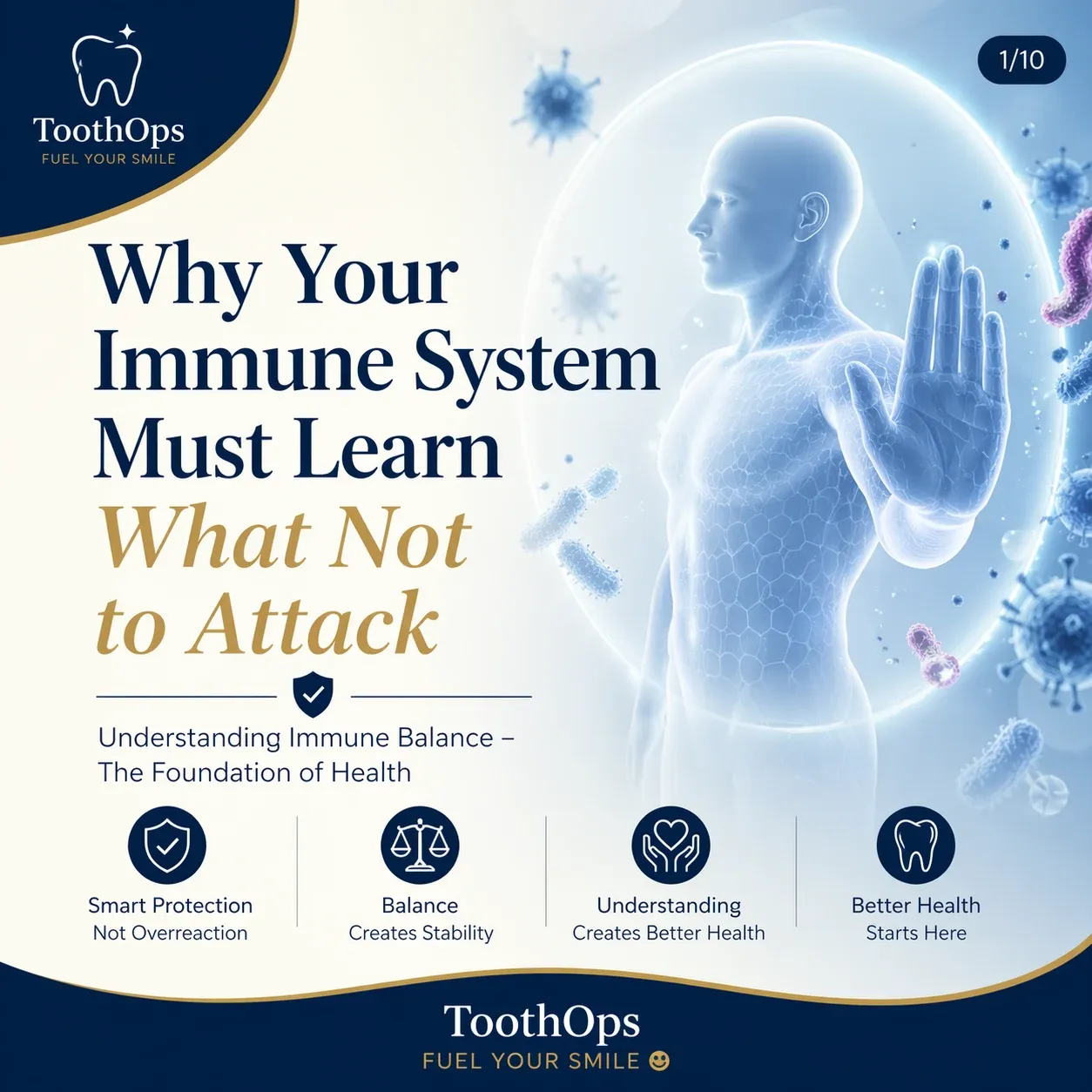
Immune Tolerance as the Foundation of Stability, Inflammation, and Healing
🔍 Introduction
Every day, your immune system encounters:
- food-derived molecules
- environmental particles
- bacteria
- your own tissues
Yet most of the time, there is no reaction.
This is not because your immune system is inactive.
👉 It is because it has been trained not to respond unnecessarily.
🧠 Core Principle
The immune system is not designed to react to everything it recognizes.
👉 It is designed to filter, prioritize, and decide
It must determine:
- what is dangerous
- what is harmless
- what belongs
This process is called:
👉 Immune Tolerance
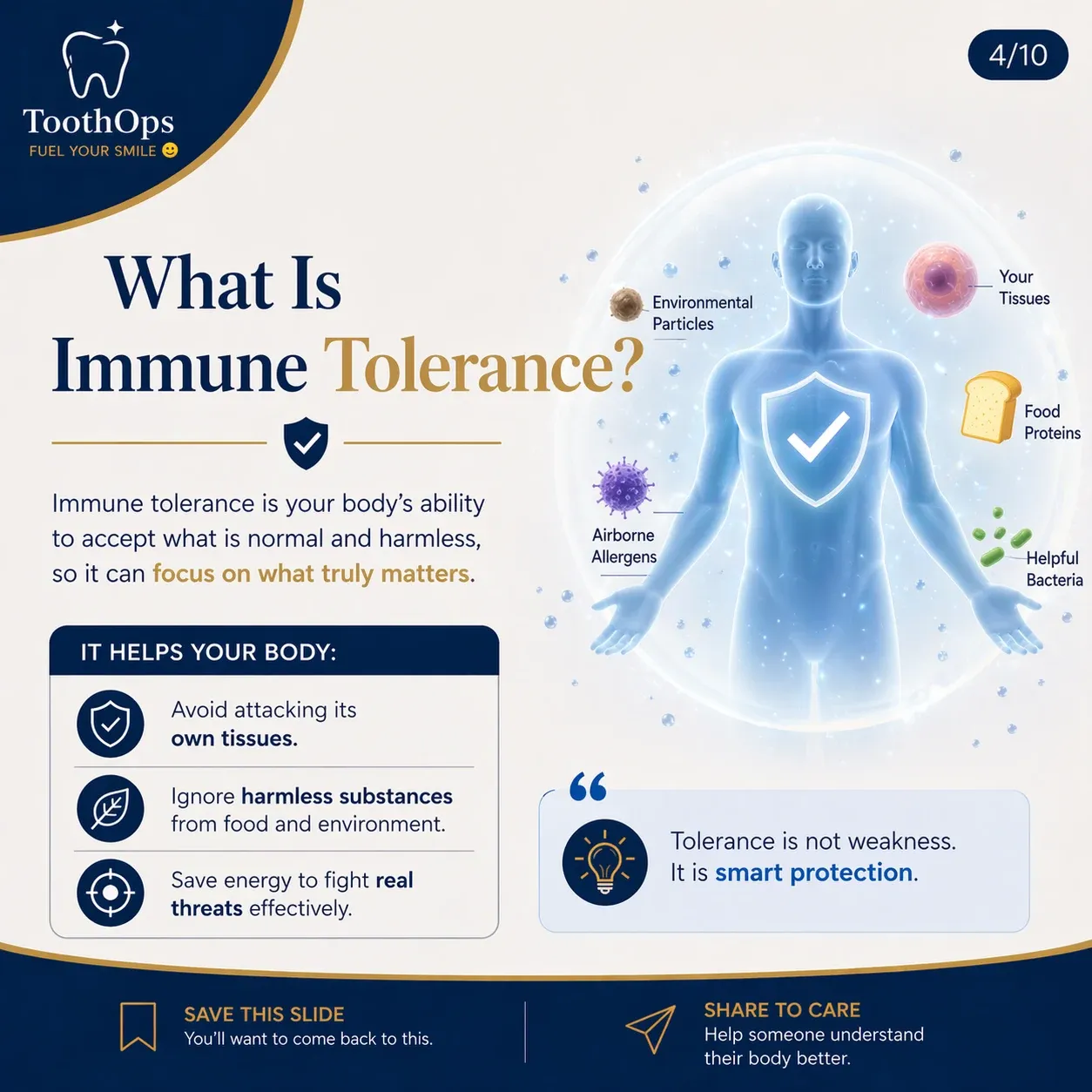
📊 Table 1 — Immune Decision Framework
| Input Detected | Immune Interpretation | Outcome |
|---|---|---|
| Pathogen (clear threat) | Dangerous | Activation |
| Food / environment | Harmless | No response |
| Self tissue | “Belongs” | Tolerance |
| Ambiguous signal | Requires confirmation | Controlled response |
👉 **Key Insight:**Health depends on correct interpretation—not constant activation
⚙️ Mechanism 1 — Diversity Comes First (and Creates Risk)
Your immune system generates a massive range of receptors through:
👉 random genetic recombination (V(D)J recombination)
This allows recognition of nearly any possible antigen.
⚠️ Built-in consequence:
Some immune cells will inevitably recognize:
👉 your own tissues
👉 This is not failure.It is the cost of having a highly adaptable system.
⚙️ Mechanism 2 — Central Tolerance (Primary Selection)
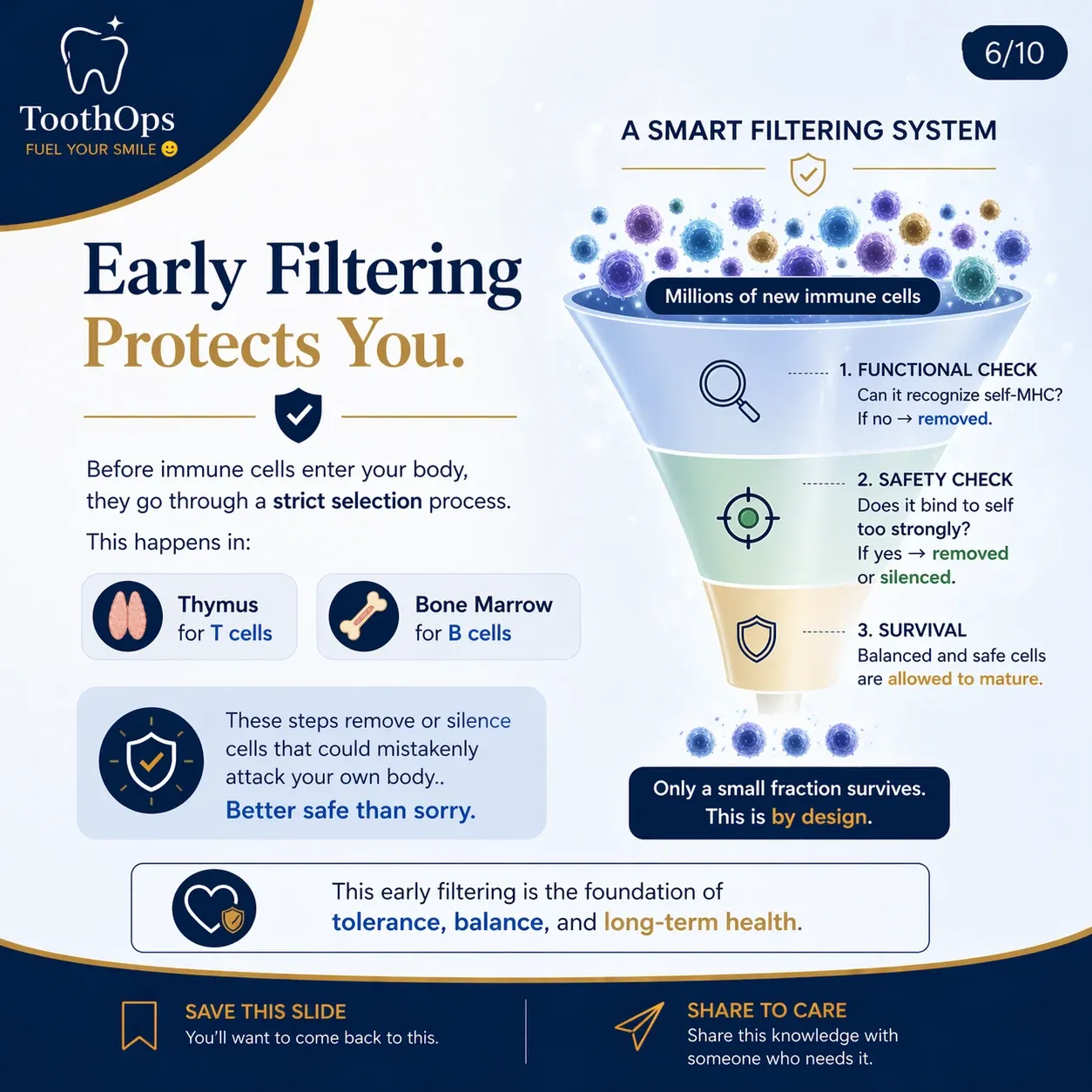
To prevent harm, the body filters immune cells early in development:
- Thymus → T cells
- Bone marrow → B cells
📊 Table 2 — Central Selection Logic
| Stage | What Is Tested | Outcome |
|---|---|---|
| Functional check | Can the cell recognize self-MHC? | If no → eliminated |
| Safety check | Does it bind self too strongly? | If yes → removed or silenced |
| Survival | Balanced reactivity | Cell allowed to mature |
👉 Only a small fraction of cells survive this process
🧠 Mechanistic Insight
Cells are removed not because they are useless—
👉 but because they are too reactive to safely exist
💬 Chairside Explanation
“Your body creates many immune cells, but it carefully removes the ones that could mistakenly attack your own tissues.”
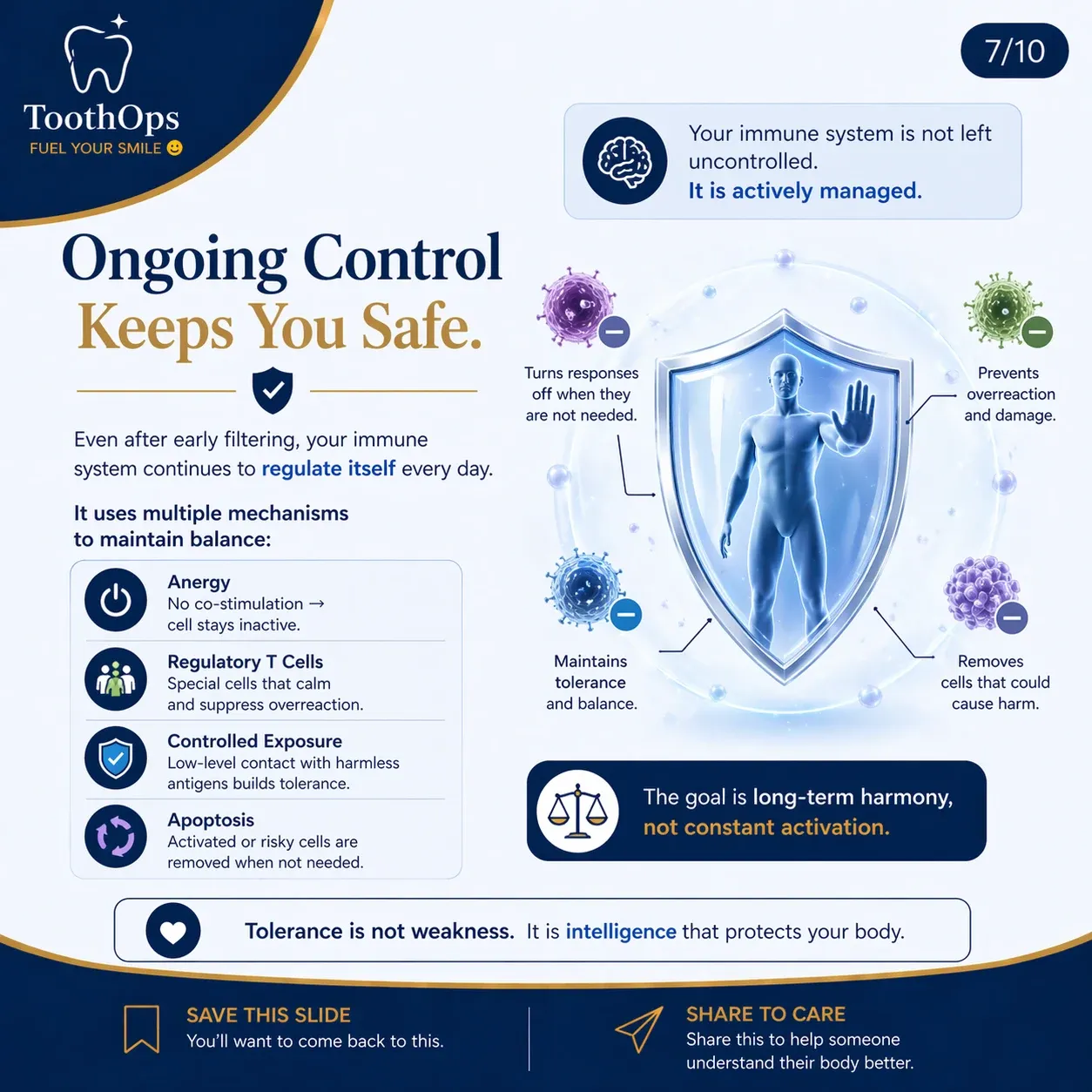
⚙️ Mechanism 3 — Peripheral Tolerance (Ongoing Control)
Not all self-reactive cells are eliminated early.
So the body applies continuous regulation after they enter circulation.
📊 Table 3 — Peripheral Control Mechanisms
| Mechanism | How It Works | Functional Purpose |
|---|---|---|
| Anergy | No co-stimulation → inactive state | Prevent accidental activation |
| Regulatory T cells | Suppress immune signaling | Limit inflammation |
| Controlled exposure | Low-level antigen presence | Maintain tolerance |
| Apoptosis | Programmed removal of activated cells | Prevent persistence |
👉 The immune system is actively kept in balance, not left uncontrolled
⚙️ Mechanism 4 — Activation Requires Multiple Signals
Recognition alone is not enough to trigger a response.
📊 Table 4 — Immune Activation Logic
| Signals Present | Outcome |
|---|---|
| Antigen recognition only | No activation (silencing) |
| Recognition + co-stimulation | Full immune response |
| Strong self-recognition | Removal or suppression |
👉 This prevents unnecessary damage to normal tissues
🧠 Key Insight
The immune system is not designed to react quickly.
👉 It is designed to react correctly
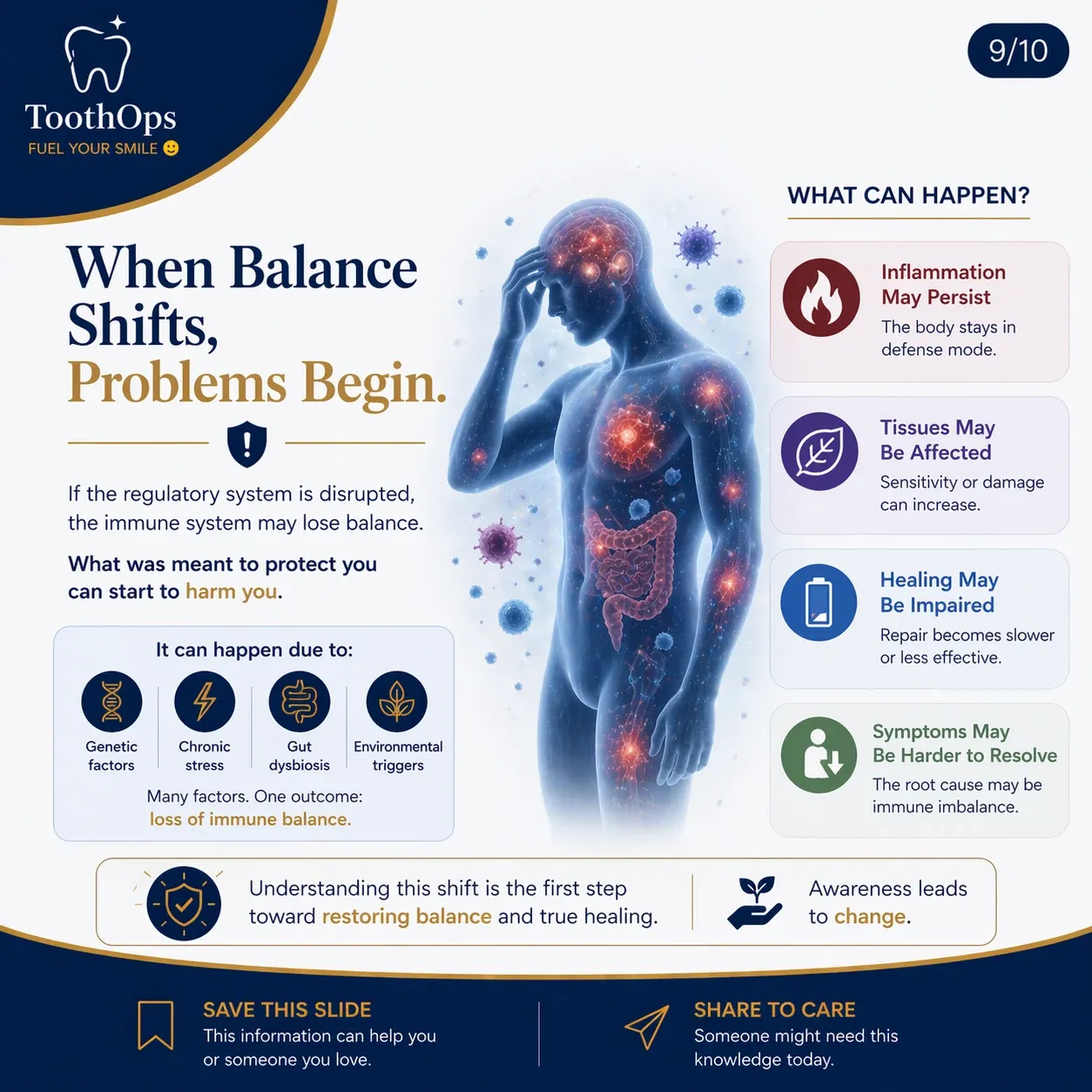
⚠️ When Tolerance Fails
When regulation is disrupted:
- responses become exaggerated
- inflammation becomes persistent
- normal tissues may be affected
📊 Table 5 — Balanced vs Dysregulated System
| State | Immune Behavior | Clinical Outcome |
|---|---|---|
| Balanced | Selective + controlled | Stability and healing |
| Overactive | Excessive response | Inflammation |
| Misdirected | Targets normal tissue | Chronic conditions |
👉 Many chronic inflammatory conditions reflect loss of control—not lack of defense
🦷 Clinical & Dental Relevance
Immune tolerance directly affects oral health:
📊 Table 6 — Oral-Systemic Relevance
| Scenario | Immune Role | Clinical Meaning |
|---|---|---|
| Gingival inflammation | Controlled vs excessive response | Determines tissue breakdown |
| Healing after procedures | Balanced immune activity | Affects recovery |
| Chronic irritation | Dysregulated response | Sustained inflammation |
| Oral mucosal conditions | Altered tolerance | Immune-mediated lesions |
👉 The immune system determines not just if disease occurs👉 but how the body responds to it
💬 Patient Communication (Chairside)
“You don’t just have an immune system that fights infection—you have one that constantly decides when not to react. When that balance shifts, it can lead to inflammation or sensitivity.”
🧠 Higher-Level Insight
Tolerance is not passive.
It is:
- actively maintained
- dependent on signaling pathways
- influenced by environment and repeated exposure
Small disruptions in this balance can lead to:
- increased sensitivity
- prolonged inflammation
- altered healing patterns
💡 ToothOps Perspective
Most people think:
👉 “If something is inflamed, something must be wrong”
But a more accurate understanding is:
👉 Inflammation reflects how the immune system is interpreting a situation
🌱 Closing
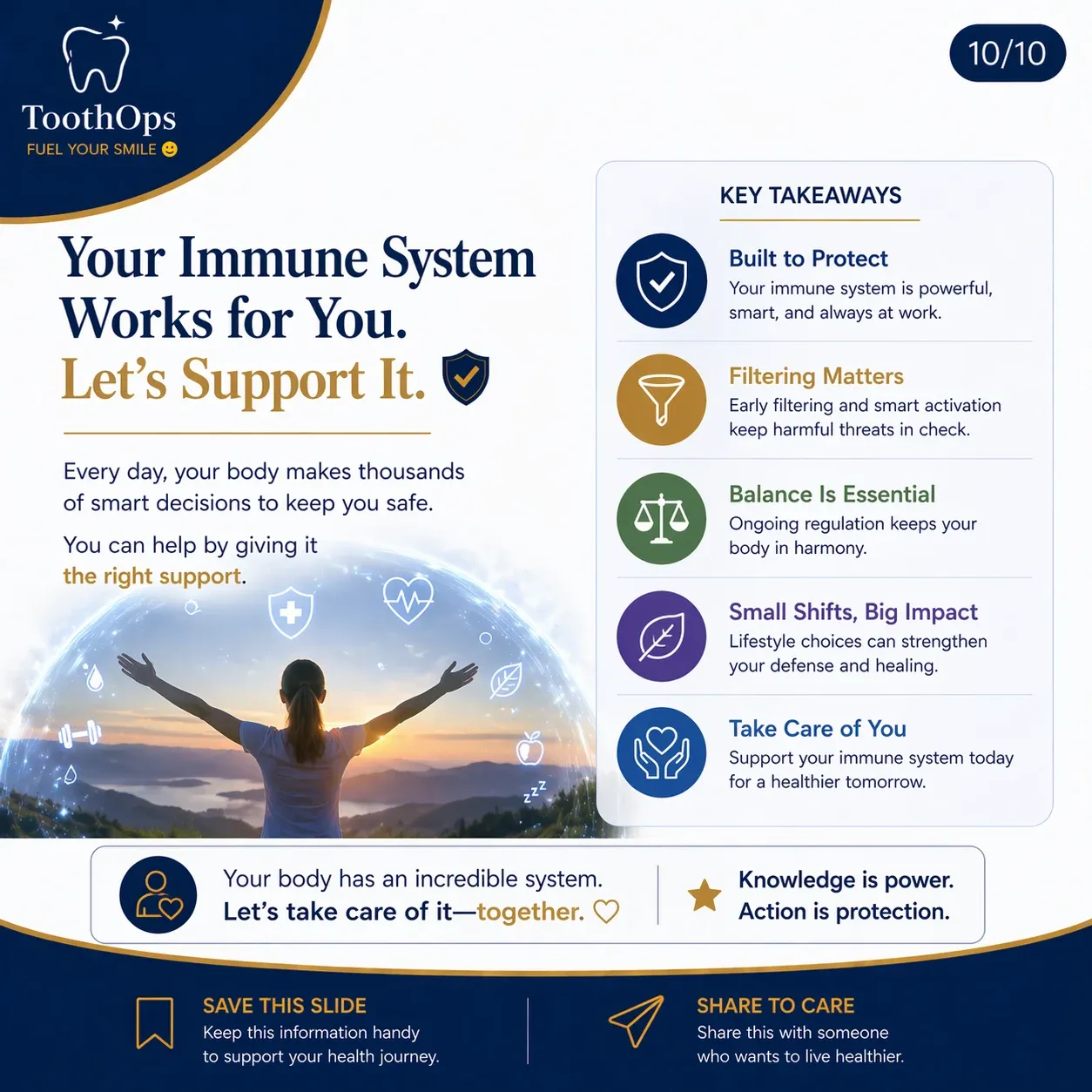
Your immune system is constantly making decisions.
Not just about what to attack—
👉 but what to allow
Its strength is not in reacting more.
It is in reacting appropriately
Understanding this brings:
- clarity instead of confusion
- control instead of fear
- better decisions in care and health
@ToothOps | Fuel Your Smile 😊
Stay tuned for more insights and educational content in our blog.
Disclaimer: Content is for educational purposes only and not a substitute for medical or dental care.
© 2025 ToothOps | All Rights Reserved.