
🦷Why Your Immune System Can Hurt You While Trying to Protect You
 ToothOps3 min read
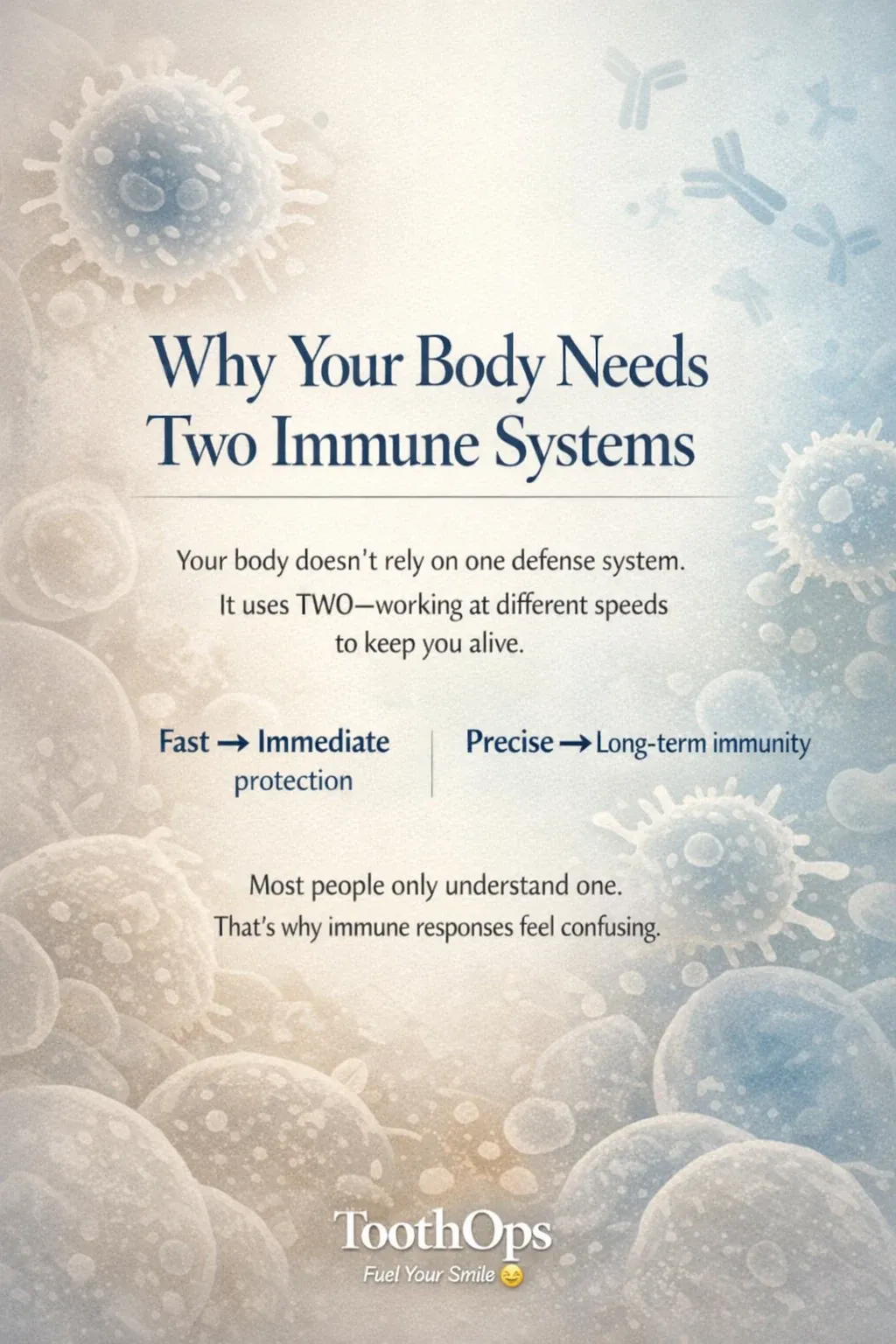
Understanding Hypersensitivity Reactions (Types I–IV)
**🔍**You sneeze around pollen.
Your skin reacts to something harmless.
Your body attacks its own tissues in autoimmune disease.
It feels inconsistent.
Why would a system designed to protect you…
cause damage instead?
🧠 Reality Reframe
Your immune system is not just a defense system.
It is a reaction system.
And when that reaction is:
- too strong
- misdirected
- or poorly regulated
👉 it becomes the source of disease.
⚙️ The Mechanism (Core Teaching Section)
What Hypersensitivity Actually Is
Hypersensitivity is:
👉 an exaggerated immune response to an antigen that leads to tissue damage
This response can be triggered by exposure through:
- inhalation
- ingestion
- injection
- skin contact
Important:
👉 the type of reaction depends on the immune pathway involved, not just the allergen itself
🧩 The 4 Types — Mechanism → Symptom → Meaning
🟥 Type I — Immediate (IgE-Mediated Allergy)
⚙️ Mechanism
- Allergen binds IgE antibodies on mast cells and basophils
- Triggers degranulation
- Releases mediators:
- histamine
- leukotrienes
- prostaglandins
🧠 What Histamine Actually Does
- vasodilation
- increased vascular permeability
- bronchoconstriction
- mucus production
💡 What You Feel
- itching
- swelling
- runny nose
- difficulty breathing
⚠️ Clinical Meaning
👉 Fast reaction (minutes)
👉 Can escalate to anaphylaxis (life-threatening shock)
🟦 Type II — Antibody-Mediated Cell Destruction
⚙️ Mechanism
- IgG or IgM antibodies bind directly to cell surfaces
- Activates:
- complement
- cytotoxic immune pathways
→ leads to cell destruction
💡 Examples
- mismatched blood transfusion
- autoimmune hemolytic anemia
🧠 Key Insight
👉 This is a targeted attack on cells, not generalized inflammation
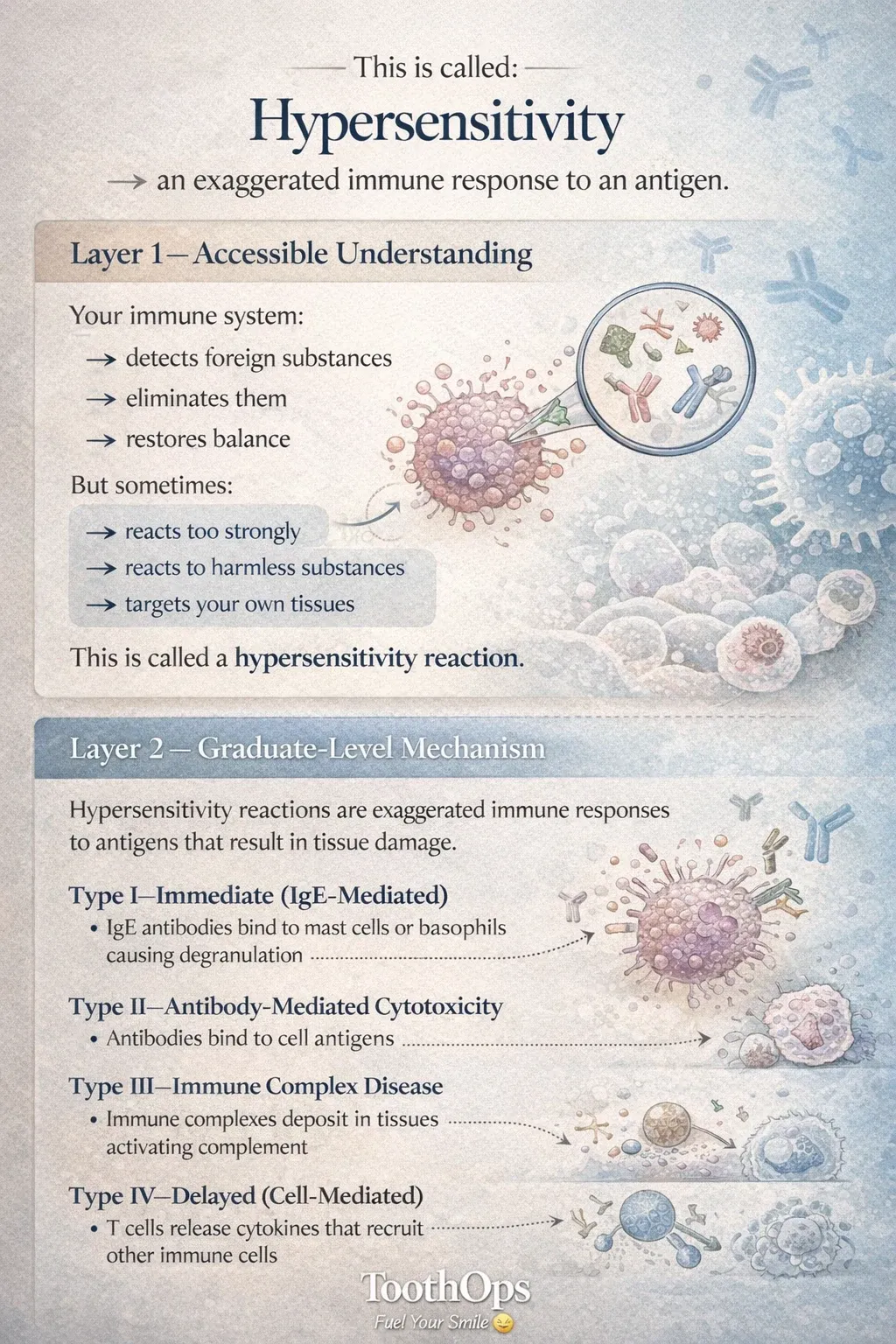
🟩 Type III — Immune Complex Deposition
⚙️ Mechanism
- Antigen + antibody form insoluble complexes
- Circulate and deposit in tissues:
- joints
- kidneys
- blood vessels
→ activate complement → inflammation
💡 What Happens
- inflammation
- tissue damage
- chronic disease patterns
🧠 Key Insight
👉 Damage is indirect (caused by inflammation, not direct cell targeting)
🟨 Type IV — Delayed (T-Cell Mediated)
⚙️ Mechanism
- Driven by T lymphocytes (not antibodies)
- Occurs 24–72 hours after exposure
- Cytokines recruit inflammatory cells → tissue damage
💡 Examples
- contact dermatitis
- TB skin test reaction
🧠 Key Insight
👉 Slower, but often more sustained tissue damage
🧠 Integration (This Is the ToothOps Layer)
All four reactions look different.
But they share one core pattern:
👉 the immune system is activated—but not properly regulated
🧩 Pattern Table
| Type | Mechanism | Timing | Key Outcome |
|---|---|---|---|
| I | IgE + mast cells | Immediate | Allergy / anaphylaxis |
| II | IgG/IgM vs cells | Immediate | Cell destruction |
| III | Immune complexes | Delayed | Inflammation |
| IV | T-cell mediated | 24–72 hrs | Chronic tissue damage |
🧠 Why This Matters (Real-World Translation)
For Patients
- Not all symptoms = infection
- Not all inflammation needs antibiotics
- Some reactions come from your own immune system
For Dental & Medical Context
This explains:
- why swelling happens after procedures
- why allergic reactions to materials occur
- why chronic inflammatory diseases persist
For Clinical Thinking
Instead of asking:
❌ “What disease is this?”
Start asking:
👉 What immune mechanism is happening?
👉 How fast is the response?
👉 What pathway is driving the damage?
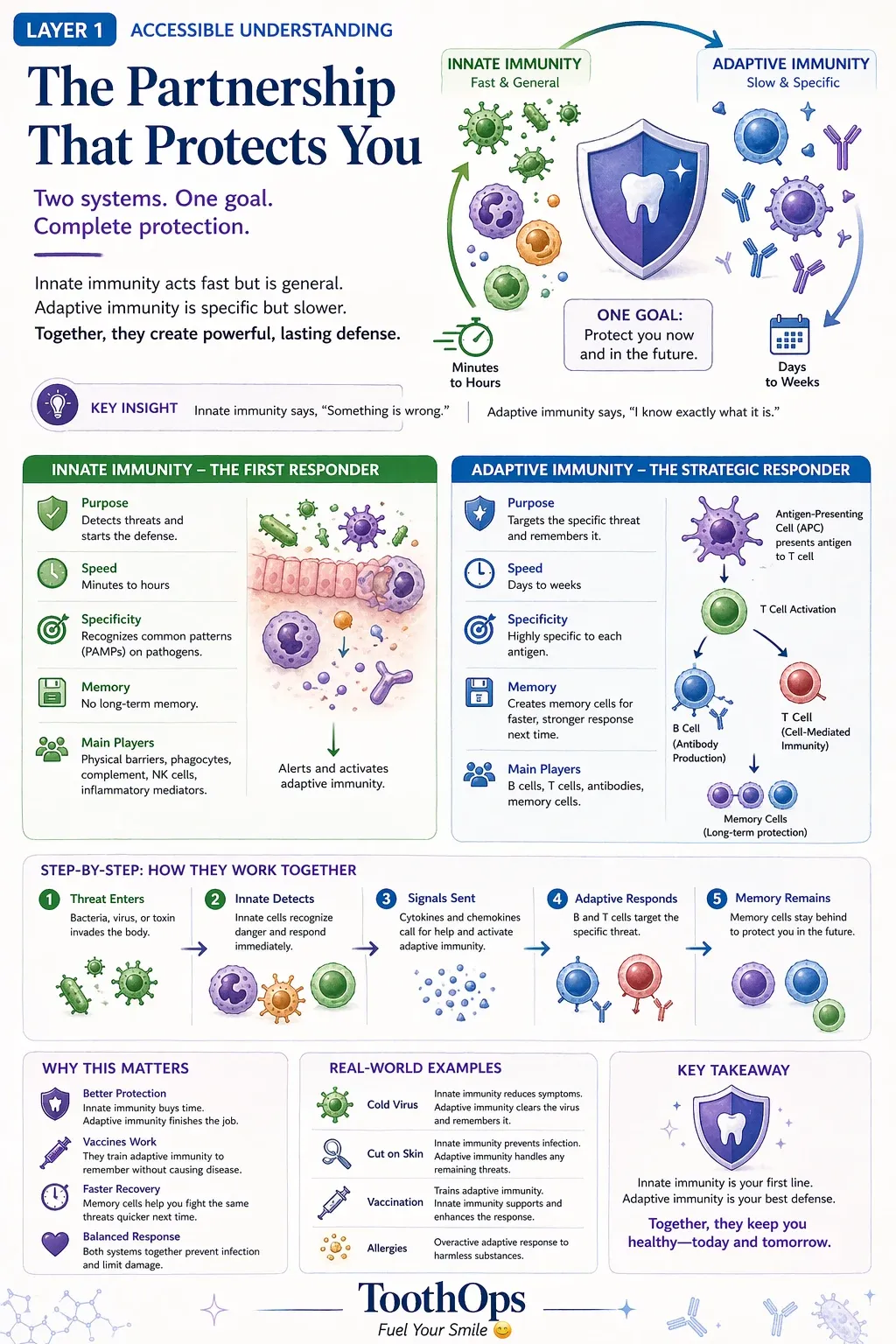
⚖️ Decision Layer
Understanding mechanism changes decisions:
- antihistamines → Type I
- immunosuppressants → Type II/III/IV
- avoidance strategies → exposure-dependent
🏁 ToothOps Takeaway
- Your immune system is not always protective
- Symptoms are often immune-driven, not pathogen-driven
- Timing + mechanism = understanding disease
👉 If you understand the mechanism, you understand the pattern
@ToothOps | Fuel Your Smile 😊
Stay tuned for more insights and educational content in our blog.
Disclaimer: Content is for educational purposes only and not a substitute for medical or dental care.
© 2026 ToothOps | All Rights Reserved.