
🦷 Why Bones Break Without Trauma
 ToothOps3 min read
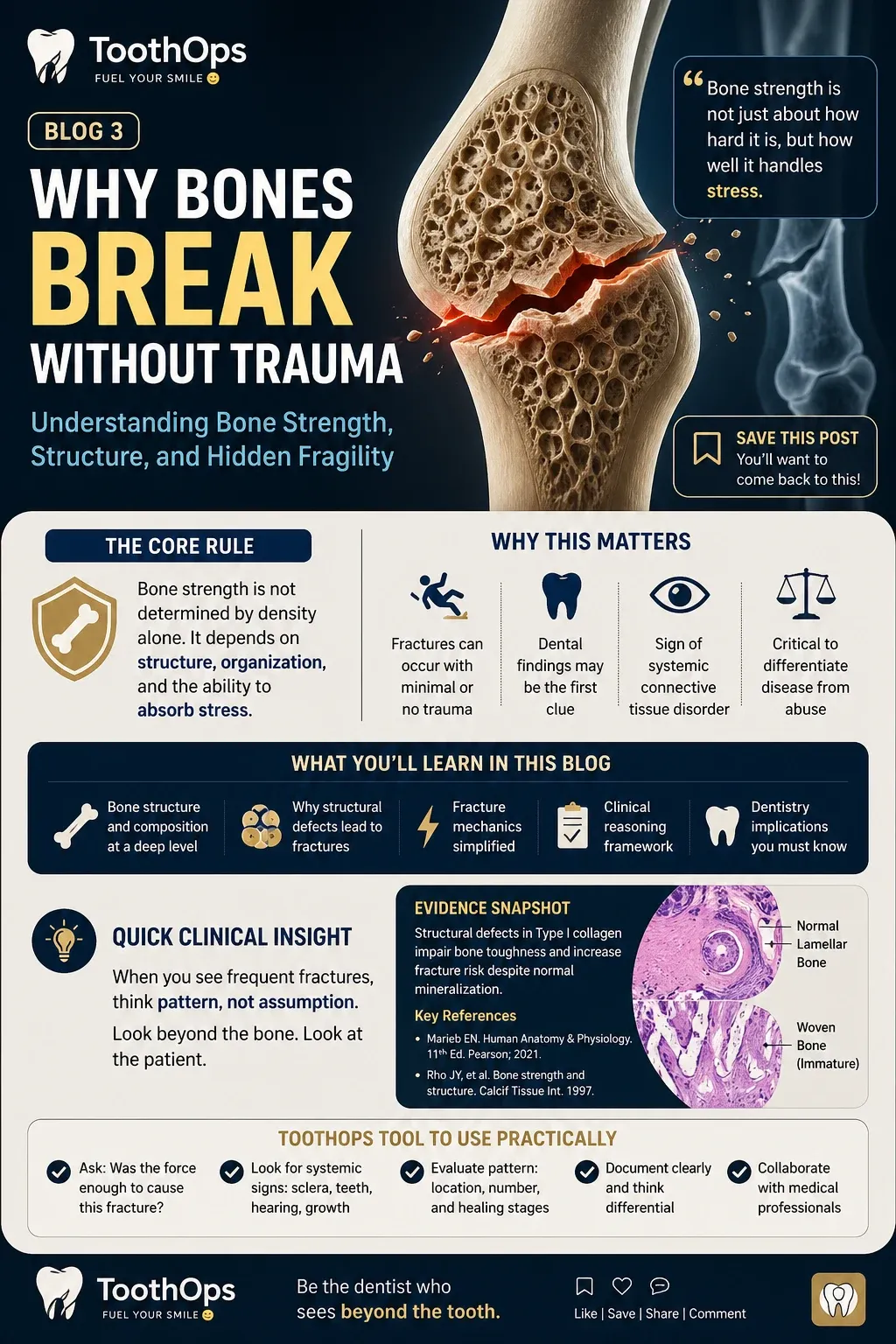
Understanding Bone Strength, Structure, and Hidden Fragility
🧠 Start Here
A child has multiple fractures.
Most people think:
👉 “That must be trauma.”
But sometimes the real answer is:
👉 The bone wasn’t built to handle normal stress.
🧠 Core Rule
Bone strength is not just about how hard it is.It’s about how well it handles stress.
🪶 The Simple Truth
Your bones are not solid rocks.
They are engineered structures made of:
- 🧱 Collagen → gives flexibility and absorbs force
- 🪨 Mineral → gives hardness and strength
👉 These must work together.
💡 Aha Insight
Hard bone is not always strong bone.
👉 Without flexibility, bone becomes brittle
👉 Brittle bone breaks easily
⚙️ What’s Really Happening (Mechanism Made Clear)
🧬 Bone Composition
| Component | Role | Why It Matters |
|---|---|---|
| Mineral (≈70%) | hardness | resists pressure |
| Collagen (≈30%) | flexibility | absorbs stress |
👉 If collagen fails → stress is not distributed → fractures happen
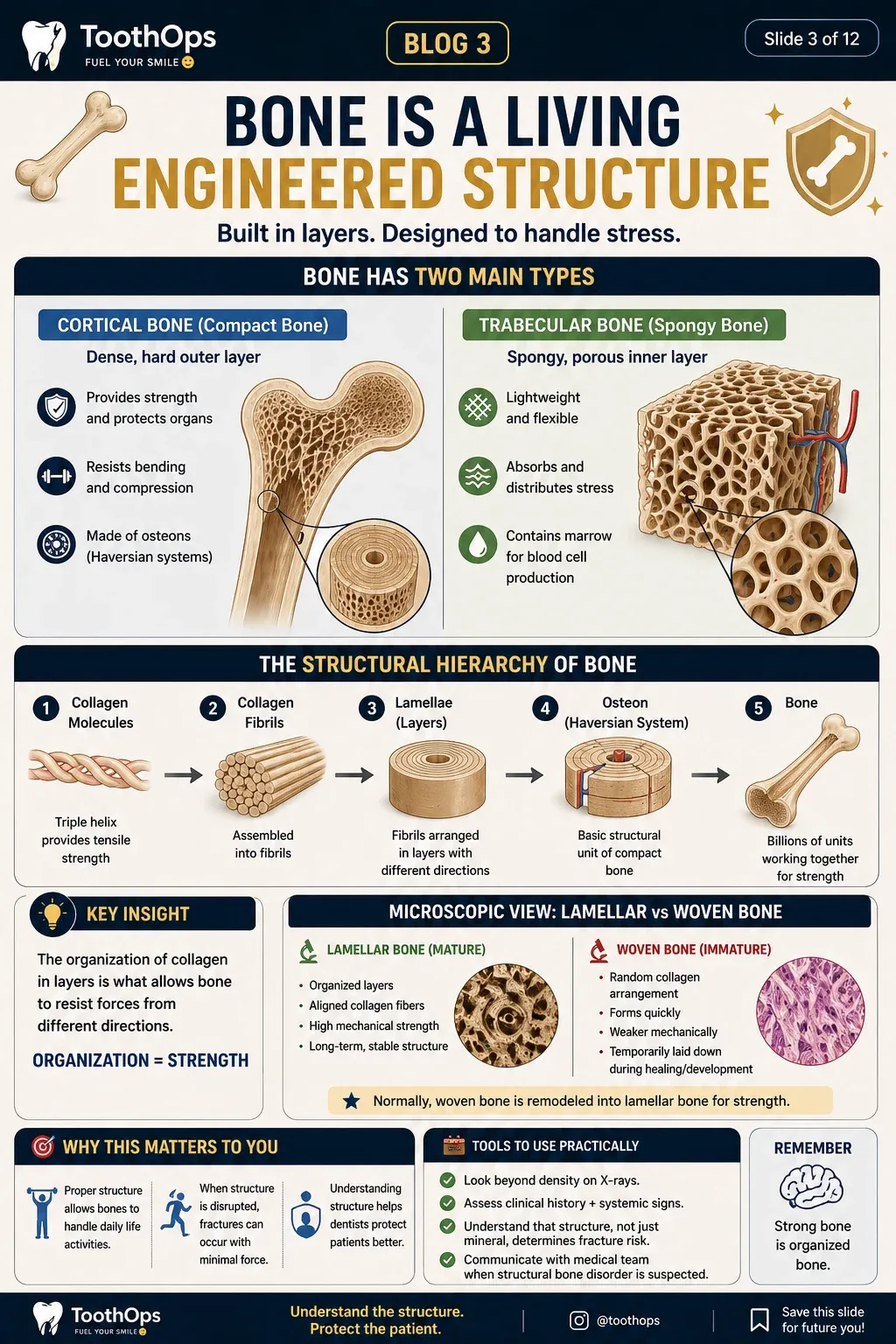
🦴 Bone Structure (The Hidden Key)
🟢 Lamellar Bone (Healthy)
- organized layers of collagen
- fibers aligned in different directions
- spreads stress evenly
👉 This is strong bone
🔴 Woven Bone (Weak)
- disorganized collagen
- forms quickly during healing
- not built for long-term strength
👉 Normally replaced by lamellar bone
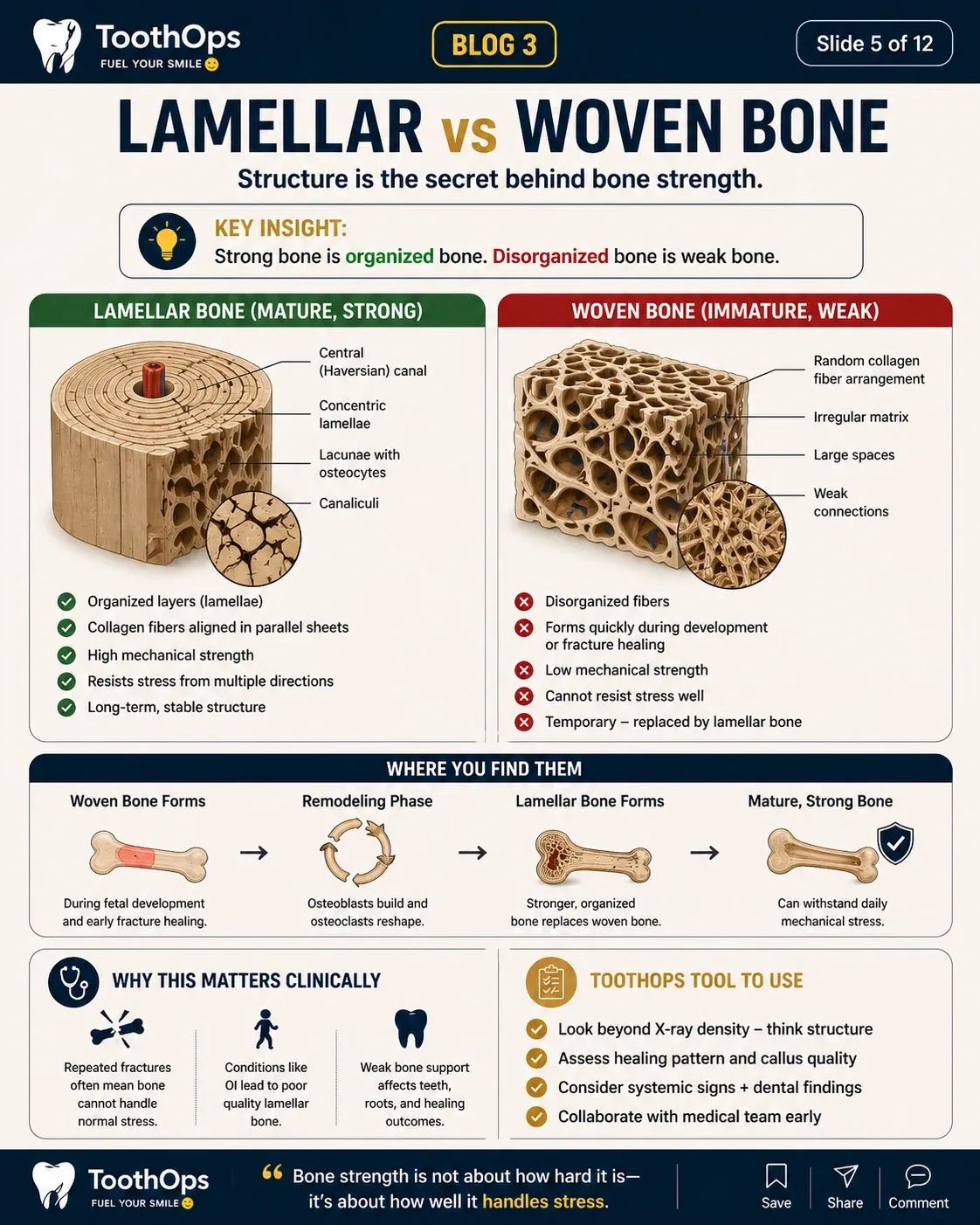
🧠 Key Insight
Strong bone = organized bone
🧬 Osteoid (Where Bone Begins)
👉 Osteoid = early bone matrix (before mineral)
Process:
- cells build collagen framework
- mineral is added later
❗ In Structural Disease
- collagen is defective
- mineral still attaches
👉 Bone looks normal
👉 But structure is weak
🧠 Critical Insight
The problem is not what the bone is made of.It’s how it is built.
🔬 What Fails (Biomechanics Simplified)
Normal Bone
- absorbs energy
- spreads force
- resists cracks
Fragile Bone
- cannot absorb energy
- force concentrates
- cracks spread quickly
📊 Mechanical Comparison
| Property | Healthy Bone | Fragile Bone |
|---|---|---|
| Toughness | High | Low |
| Flexibility | Moderate | Low |
| Brittleness | Low | High |
🧠 Key Insight
These bones don’t bend—they break.
🧠 Pattern Recognition (Think Like a Clinician)
Look for patterns—not just symptoms:
🚩 Key Findings
- multiple fractures
- fractures with minimal trauma
- bone deformity (bowing)
- repeated healing
- dental abnormalities
👉 These point to a systemic structural issue
⚠️ Critical Clinical Distinction
🟡 Bone Disease vs Trauma
| Feature | Structural Disease | Trauma |
|---|---|---|
| Cause | internal weakness | external force |
| Pattern | multiple, repeated | isolated |
| Other signs | systemic findings | localized |
🚨 Why This Matters
Misinterpreting this can lead to:
- incorrect diagnosis
- unnecessary legal action
- delayed proper care
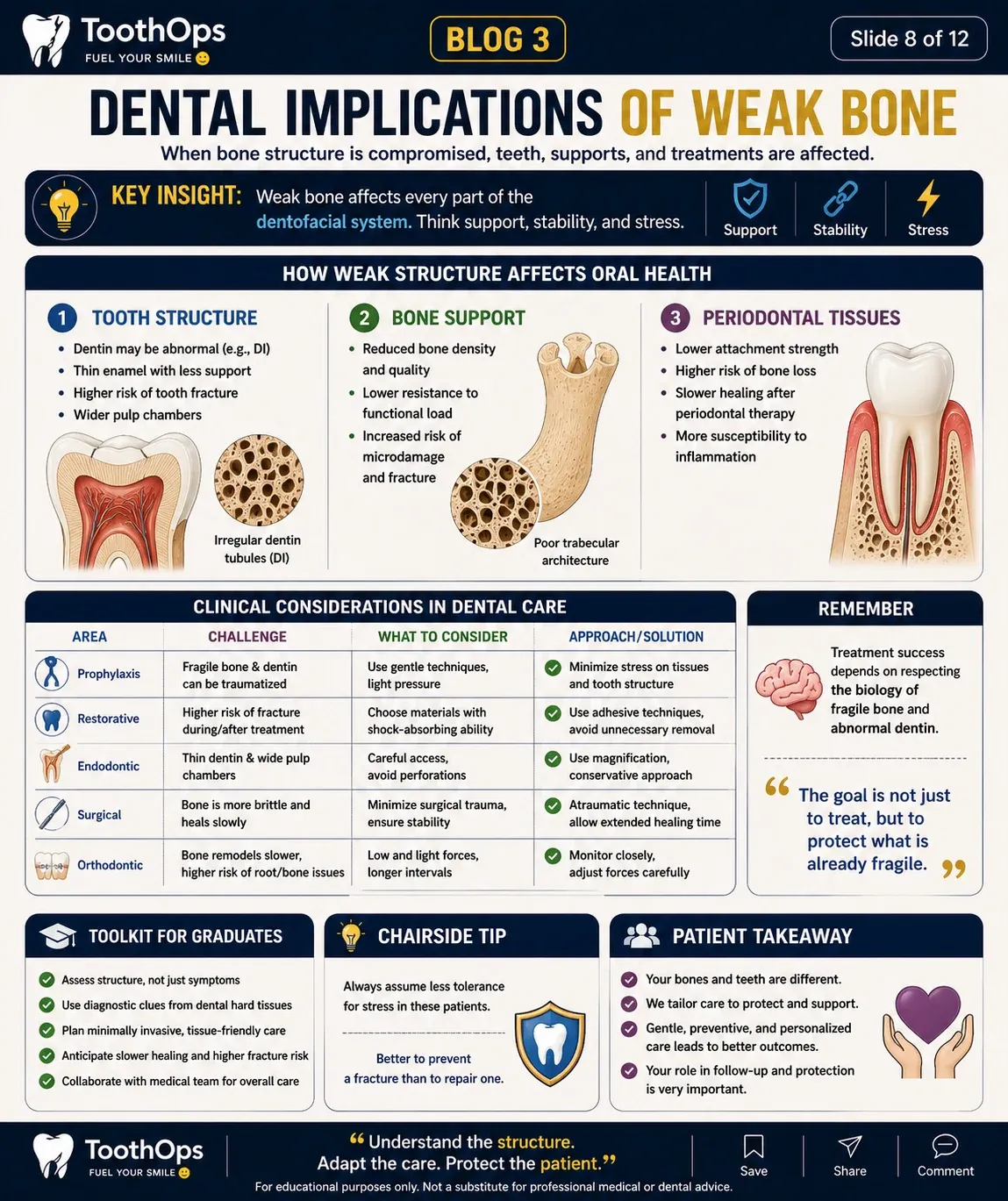
🦷 Why This Matters in Dentistry
🧠 What dentists need to recognize:
- teeth may fracture easily
- dentin support is weak
- restorations may fail faster
🛠️ Clinical Approach
- reduce stress on teeth
- choose stronger restorative options
- handle tissues gently
🧠 Key Clinical Insight
Dental findings may be the first clue to a systemic condition
💬 Chairside Translation
Your bones and teeth rely on a structure that helps absorb stress.
In your case, that structure is different, so even normal forces can cause damage.
We will adjust your care to protect your teeth and reduce stress as much as possible.
🧠 ToothOps Insight
Bone strength is not about hardness.It is about how well stress is handled.
📦 If You Only Remember One Thing
👉 Strong bone is organized bone👉 Disorganized structure = fracture risk
✨ Final Takeaway
This is not a problem of missing material.
👉 It is a problem of how the body builds structure
And understanding that changes:
- diagnosis
- treatment
- clinical thinking
@ToothOps | Fuel Your Smile 😊
Stay tuned for more insights and educational content in our blog.
Disclaimer: Content is for educational purposes only and not a substitute for medical or dental care.
© 2025 ToothOps | All Rights Reserved.