
🦷 What Happens When a Tooth Gets Knocked Out (And Why Timing Matters)
 ToothOps5 min read
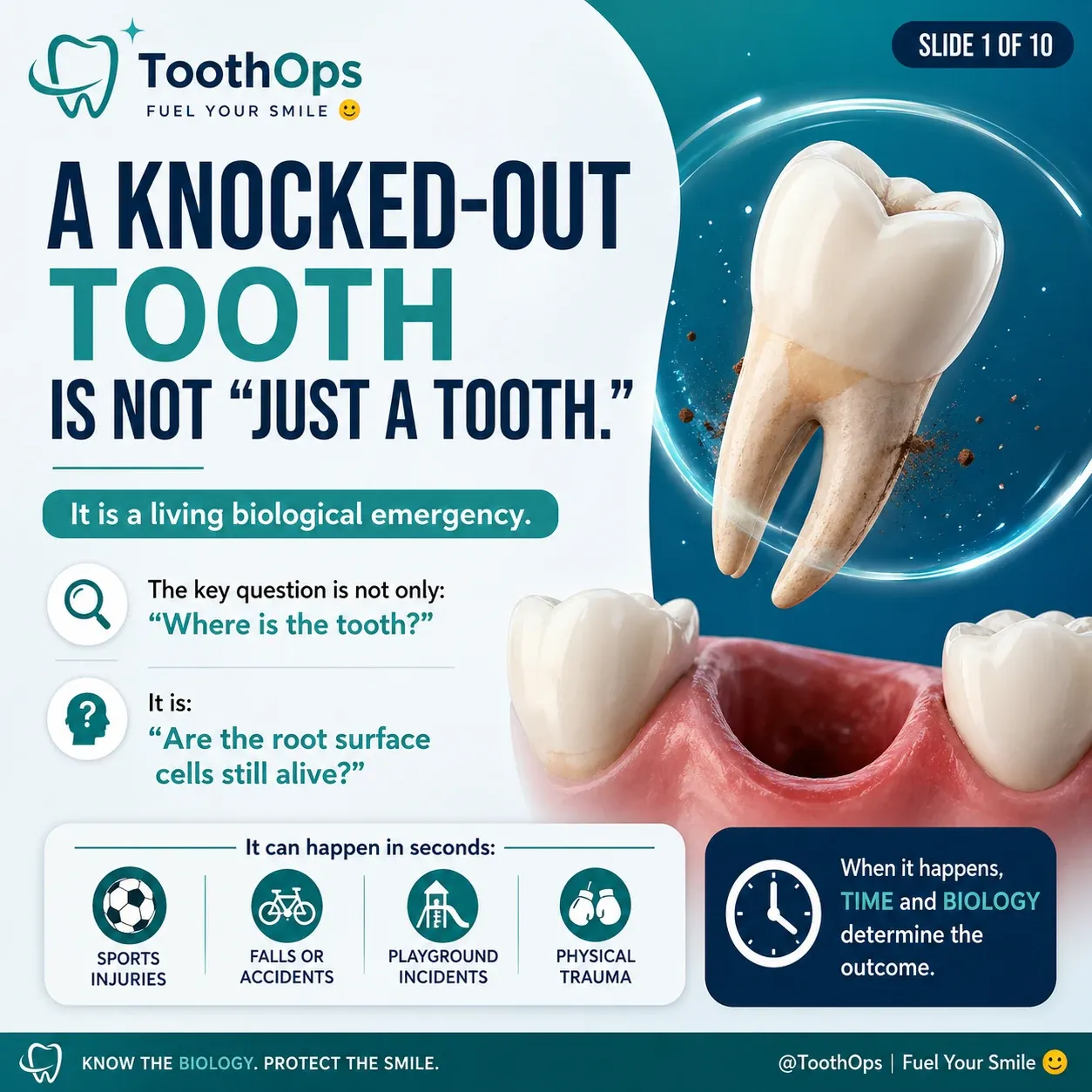
A tooth getting knocked out — called tooth avulsion — can happen in seconds.
It may occur during:
⚽ sports injuries
🚲 falls or accidents
🧒 playground incidents
🥊 physical trauma
When it happens, the natural reaction is often panic.
But biologically, something remarkable is occurring in that moment:the survival of microscopic cells on the root surface becomes the most important factor.
Understanding the tissues involved in dental trauma helps explain why time, handling, and the biological environment of the tooth matter so much.
🧬 What Actually Anchors a Tooth in the Jaw
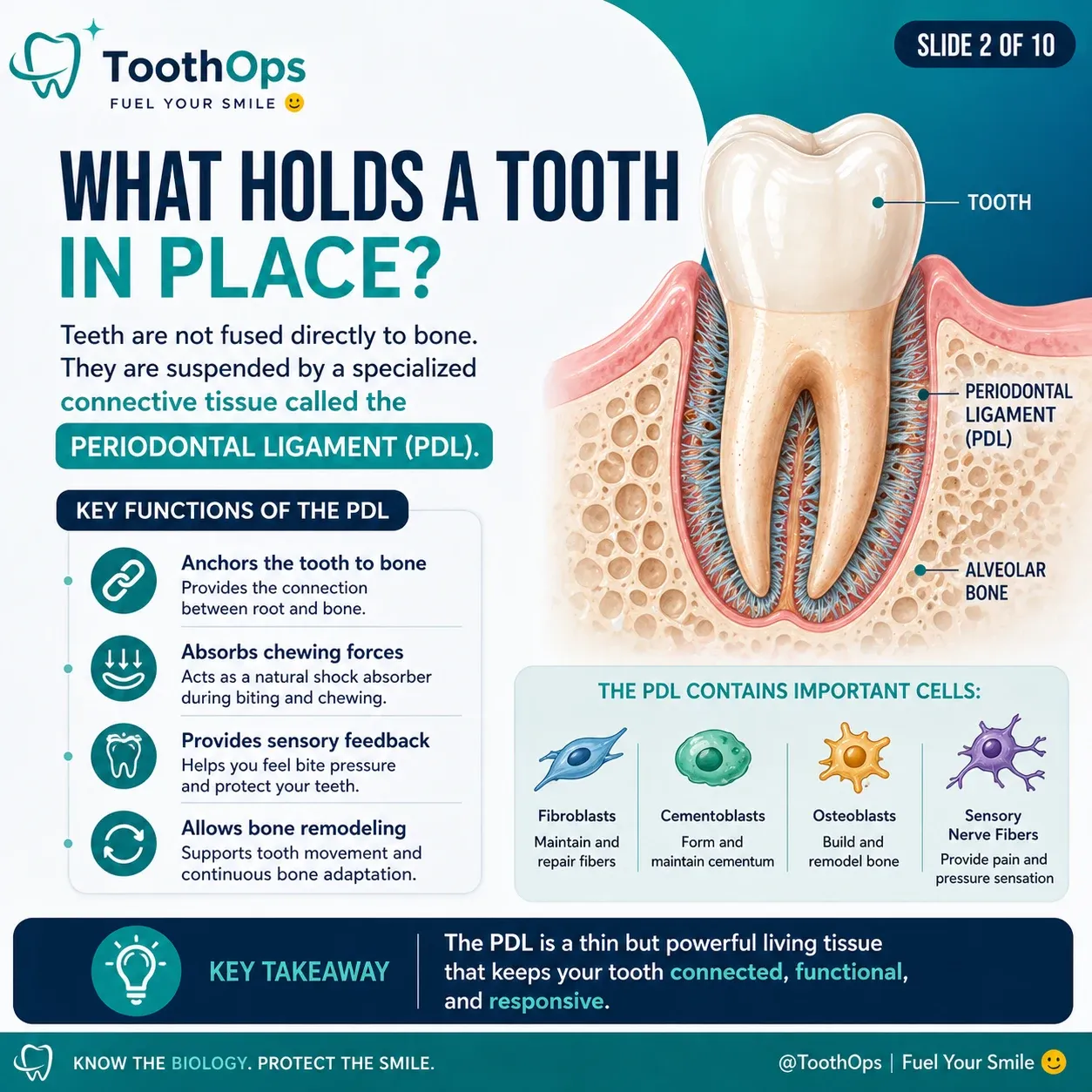
Teeth are not fused directly to bone.
They are connected through a specialized connective tissue called the periodontal ligament (PDL).
This thin layer of living tissue sits between the root of the tooth and the surrounding alveolar bone.
Key functions of the periodontal ligament
🔗 Anchors the tooth to bone
🦴 Absorbs chewing forces
🧠 Provides sensory feedback for biting pressure
🔄 Allows bone remodeling during tooth movement
The periodontal ligament contains important cells including:
• fibroblasts
• cementoblasts
• osteoblasts
• sensory nerve fibers
These cells regulate the dynamic relationship between tooth, ligament, and bone.
When trauma occurs, this biological interface becomes critically important.
⚡ What Happens the Moment a Tooth Is Avulsed
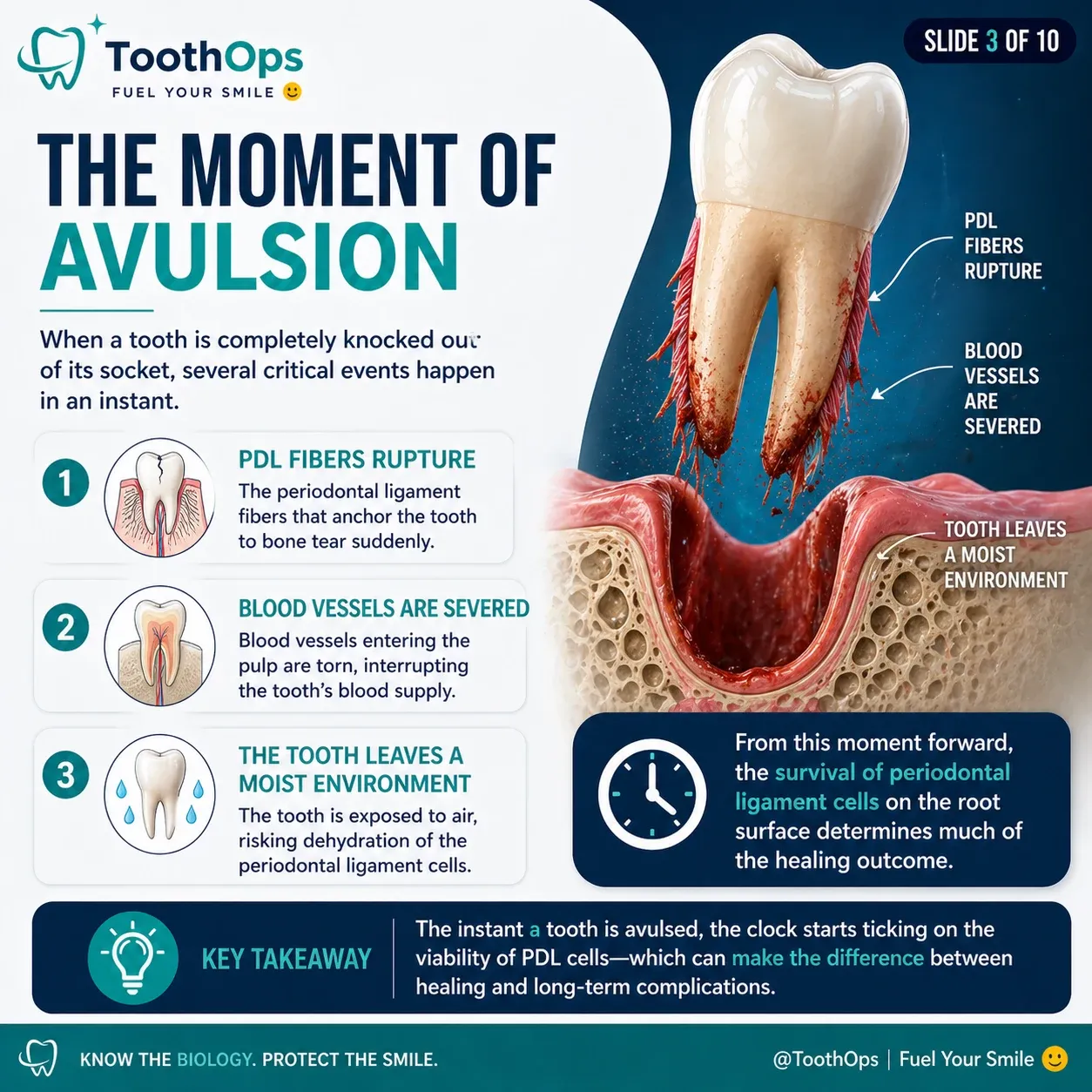
When a tooth is completely displaced from its socket:
1️⃣ PDL fibers rupture
2️⃣ Blood vessels entering the pulp are severed
3️⃣ The tooth leaves the moist oral environment
From this moment forward, the survival of periodontal ligament cells on the root surface determines much of the healing outcome.
If these cells remain viable, the ligament can reconnect with surrounding bone.
🔬 Why Root Surface Cells Matter
The periodontal ligament is a living tissue.
If PDL cells survive:
🦷 ligament fibers can reattach
🦴 bone remodeling can occur
🔄 the tooth may reintegrate successfully
If these cells die, other biological responses may occur:
• ankylosis — bone fuses directly to the root
• external root resorption — root structure gradually breaks down
Both occur when the protective PDL layer is lost.
⏳ Why Time Outside the Mouth Matters
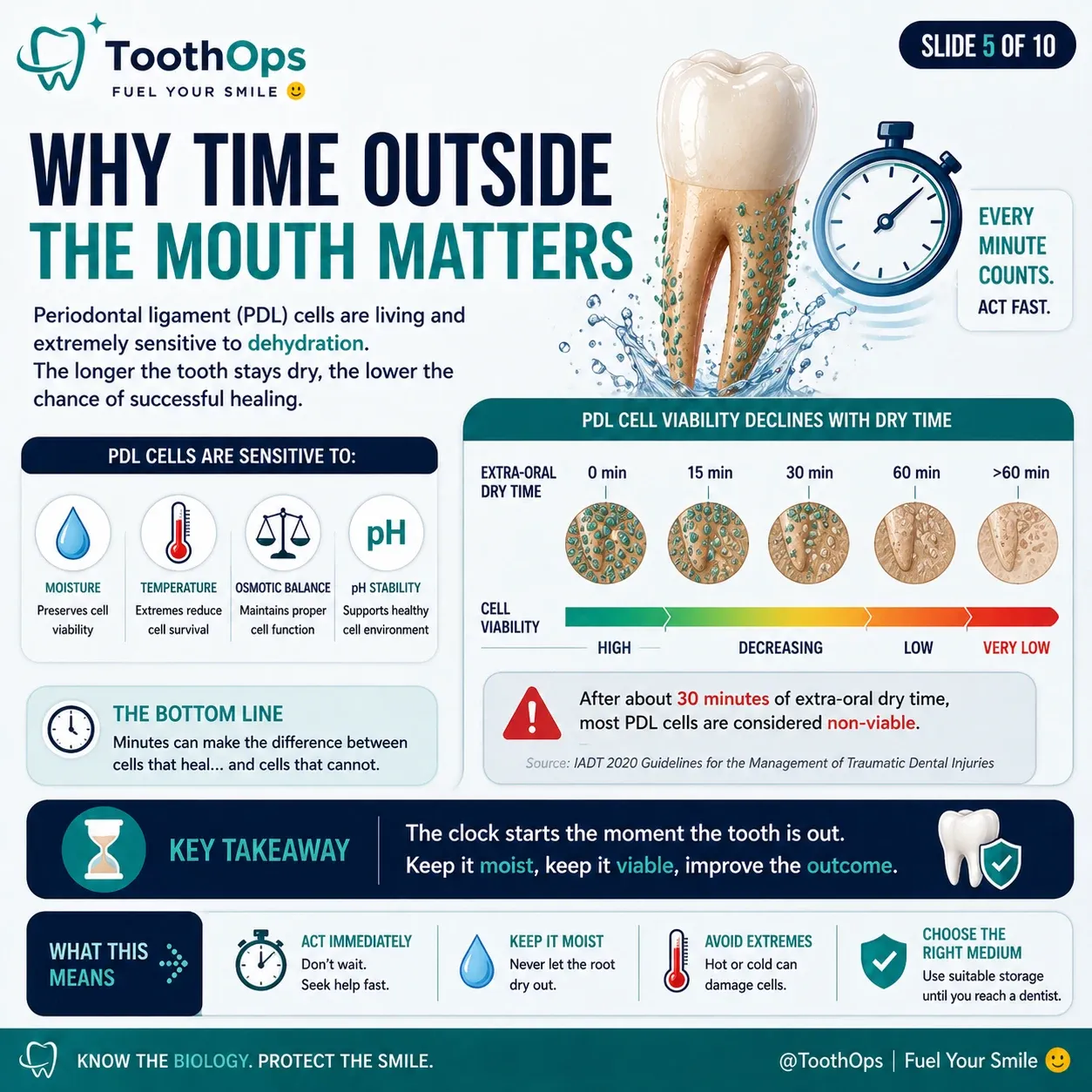
Periodontal ligament cells are highly sensitive to dehydration.
Several biological factors influence their survival:
💧 moisture preservation
🌡 temperature stability⚖ osmotic balance
When a tooth remains dry, PDL cells gradually lose viability.
This is why dental trauma guidelines emphasize minimizing extra-oral dry time and preserving the root surface environment.
🦷 Types of Dental Trauma
Dental injuries can affect several tissues:
• enamel
• dentin
• pulp
• periodontal ligament
• alveolar bone
Understanding trauma patterns helps clinicians interpret the biological response to injury.
Below are the major dental trauma categories.
📊 Crown and Root Fractures
| Trauma Type | Tissue Involved | Key Point |
|---|---|---|
| Class I fracture | Enamel only | Usually minimal symptoms |
| Class II fracture | Enamel + dentin | Dentin exposure may cause sensitivity |
| Class III fracture | Enamel + dentin + pulp | Pulp exposure present |
| Class IV fracture | Root fracture | Mobility and healing depend on fracture location |
These injuries primarily affect tooth structure.
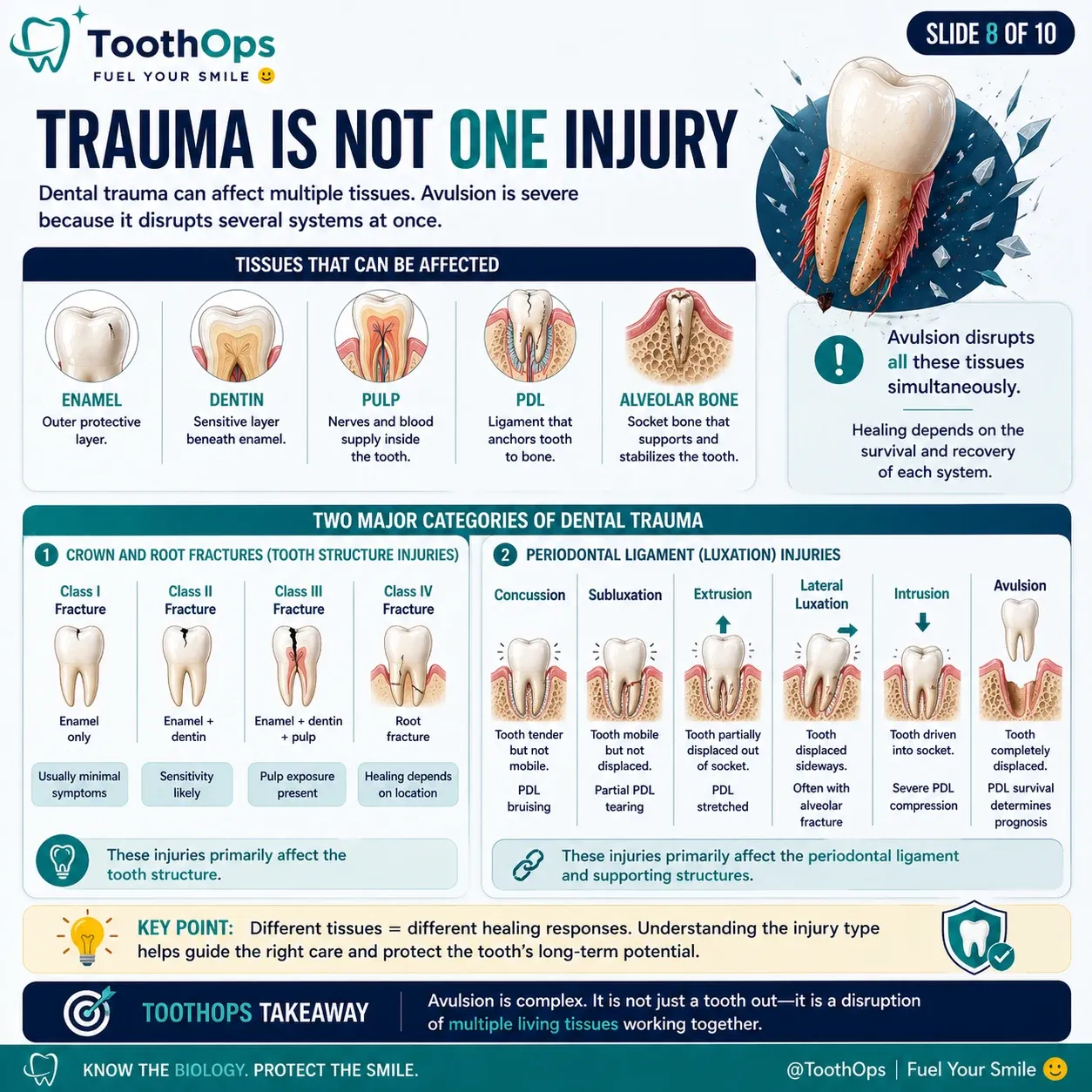
📊 Periodontal Ligament (Luxation) Injuries
| Injury | What Happens | Biological Feature |
|---|---|---|
| Concussion | Tooth tender but not mobile | PDL bruising |
| Subluxation | Tooth mobile but not displaced | Partial PDL tearing |
| Extrusion | Tooth partially displaced out of socket | PDL stretched |
| Lateral luxation | Tooth displaced sideways | Often accompanied by alveolar fracture |
| Intrusion | Tooth driven into socket | Severe PDL compression |
| Avulsion | Tooth completely displaced | PDL survival determines prognosis |
Luxation injuries primarily affect the periodontal ligament and supporting structures.
🧪 What Happens Inside the Tooth
Inside every tooth is the dental pulp, containing:
🩸 blood vessels
🧠 nerves
🧬 connective tissue
When avulsion occurs, the blood supply to the pulp is interrupted.
The pulp may respond in several ways depending on biological conditions:
• temporary survival
• gradual degeneration
• pulpal necrosis
Root maturity and revascularization potential influence these outcomes.
🦴 Healing After Reimplantation
If the tooth is repositioned into its socket, several biological processes begin.
Periodontal ligament healing
PDL cells reconnect with the surrounding alveolar bone.
Bone remodeling
Osteoblasts and osteoclasts reshape the socket to stabilize the tooth.
Pulp response
The pulp may heal or degenerate depending on vascular recovery.
These processes demonstrate the dynamic interaction between bone, ligament, and dental tissues.
🦷 Why Dentistry Pays Close Attention to Trauma
Dental professionals monitor several biological indicators following trauma:
• tooth mobility
• periodontal ligament healing
• pulp vitality
• root surface integrity
• bone response
These observations help clinicians understand how oral tissues are responding to injury.
Dental trauma highlights how teeth function within living biological systems rather than static structures.
📚 The Health Literacy Gap
Many people understandably assume that a knocked-out tooth is permanently lost.
However, the outcome often depends on biological preservation rather than the injury alone.
Understanding the role of periodontal ligament cells explains why careful handling and prompt evaluation are emphasized in dental trauma care.
Knowledge replaces panic with informed awareness.
🌿 What Understanding Changes
When people understand the biology of dental trauma, several ideas become clearer:
✔ teeth are supported by living tissues
✔ microscopic cells influence healing outcomes
✔ bone and ligament structures actively remodel after injury
✔ preservation of biological structures supports recovery
This perspective reveals how resilient oral tissues can be under the right conditions.
🪥 ToothOps Takeaway
• 🦷 Tooth avulsion occurs when a tooth is completely displaced from its socket.
• 🔗 The periodontal ligament anchors the tooth to surrounding bone.
• 🧬 Survival of PDL cells on the root surface strongly influences healing.
• ⏳ Time outside the mouth affects cellular viability.
• 🦴 Dental trauma involves both structural injuries and ligament injuries.
💭 Reflection Question
If tiny ligament cells determine whether a tooth can reconnect to bone…
what does that reveal about the importance of microscopic biology in clinical outcomes?
@ToothOps | Fuel Your Smile 😊
Stay tuned for more insights and educational content in our blog.
Disclaimer: Content is for educational purposes only and not a substitute for medical or dental care.
© 2025 ToothOps | All Rights Reserved.