
🦷 Reversible vs Irreversible Pulpitis
 ToothOps3 min read
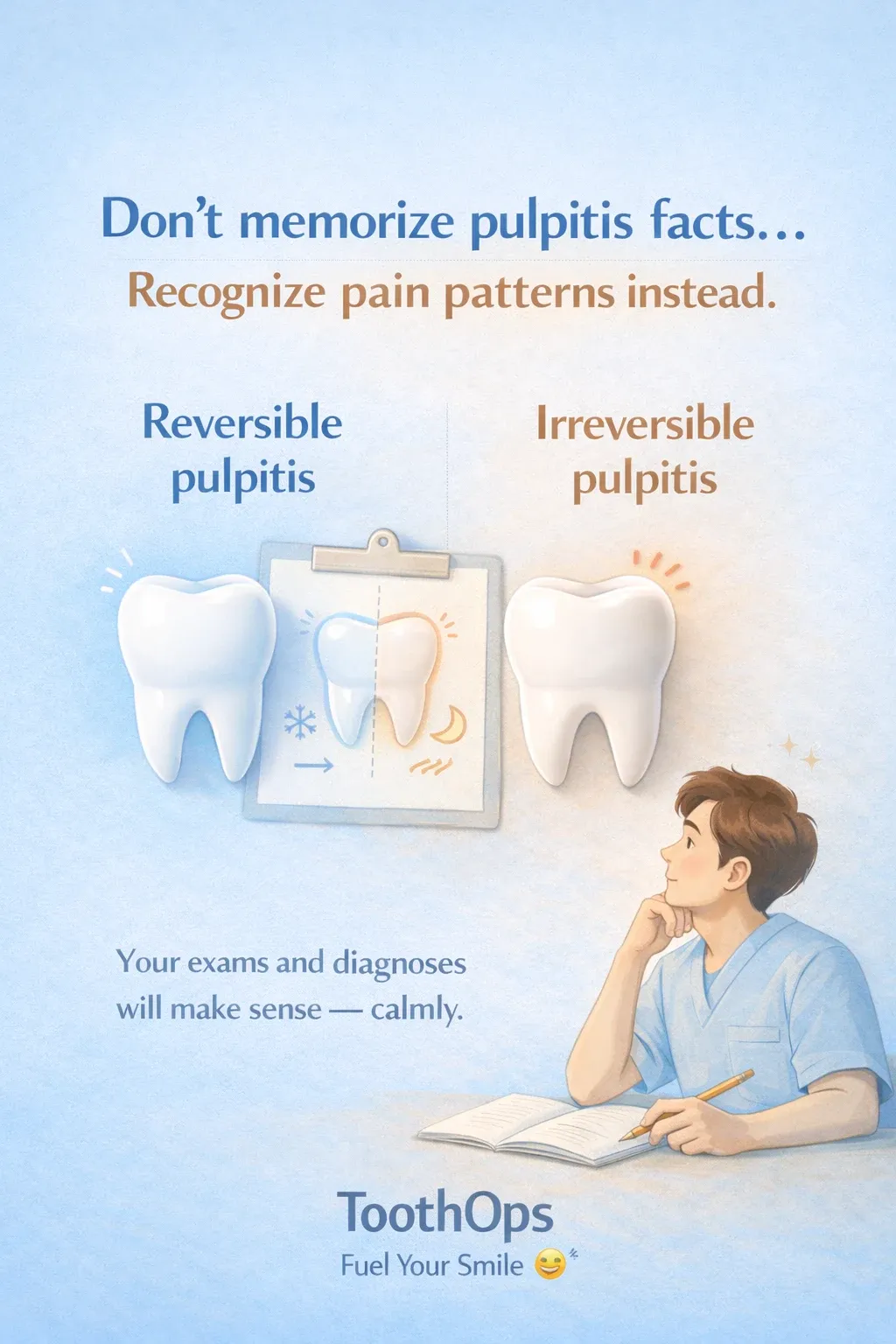
How to Read Tooth Pain Calmly — Without Guessing or Memorizing
By the end of this post, you’ll be able to:
✔ Tell when a tooth can heal vs when it can’t
✔ Answer pulpitis exam questions without panic
✔ Explain tooth pain clearly to patients or friends
Before we start — pause for a moment. You don’t need to memorize every definition to understand pulpitis. You just need to recognize patterns — calmly and clearly.
That’s what this post is for.
🧠 TL;DR — Pattern Card
- Reversible pulpitis → sharp, brief, stimulus-dependent pain
- Irreversible pulpitis → lingering, spontaneous, worsening pain
If you only remember one thing, remember this.
1️⃣ Big Picture: When Inflammation Can Heal vs When It Can’t
🧠 Analogy Box Think of the dental pulp like a bruise inside a locked room.
- Mild irritation → swelling settles → healing possible
- Severe inflammation → pressure builds → blood supply compromised
The difference between reversible and irreversible pulpitis is whether the pulp can recover.
2️⃣ What Is Pulpitis
Pulpitis is inflammation of the dental pulp caused by:
- Caries
- Trauma
- Cracks
- Deep restorations
Because the pulp is trapped inside rigid dentin, even small increases in inflammation can dramatically change pain patterns.
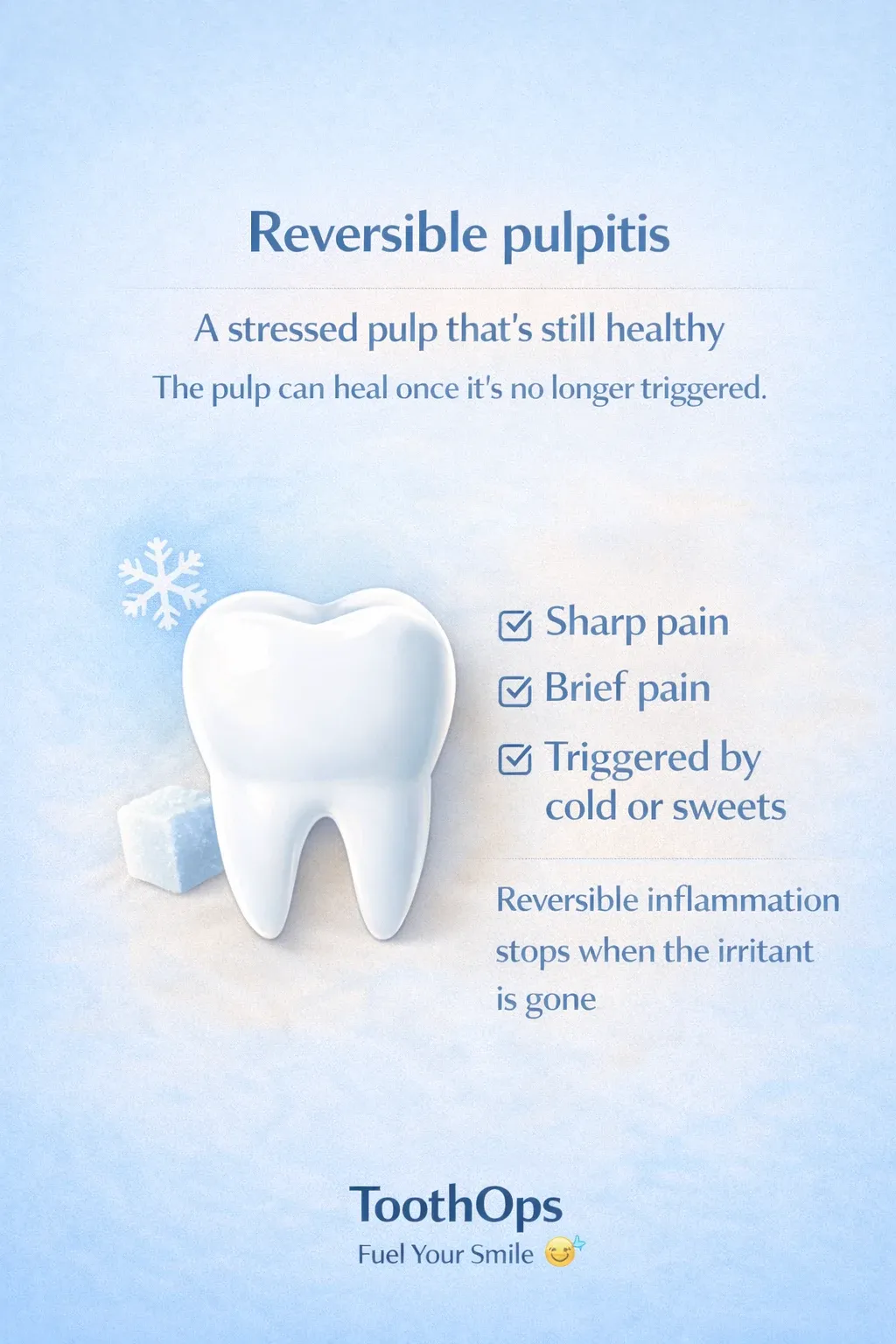
3️⃣ Pattern #1 — Reversible Pulpitis
(The “This Can Calm Down” Tooth)
What it feels like
- Sharp pain to cold or sweets
- Pain lasts seconds
- Stops once the stimulus is removed
What’s happening biologically
- Mild inflammation
- Blood flow intact
- Pulp can recover if the irritant is removed
🧠 Pattern clue:👉 Clear trigger. Quick relief.
4️⃣ Pattern #2 — Irreversible Pulpitis
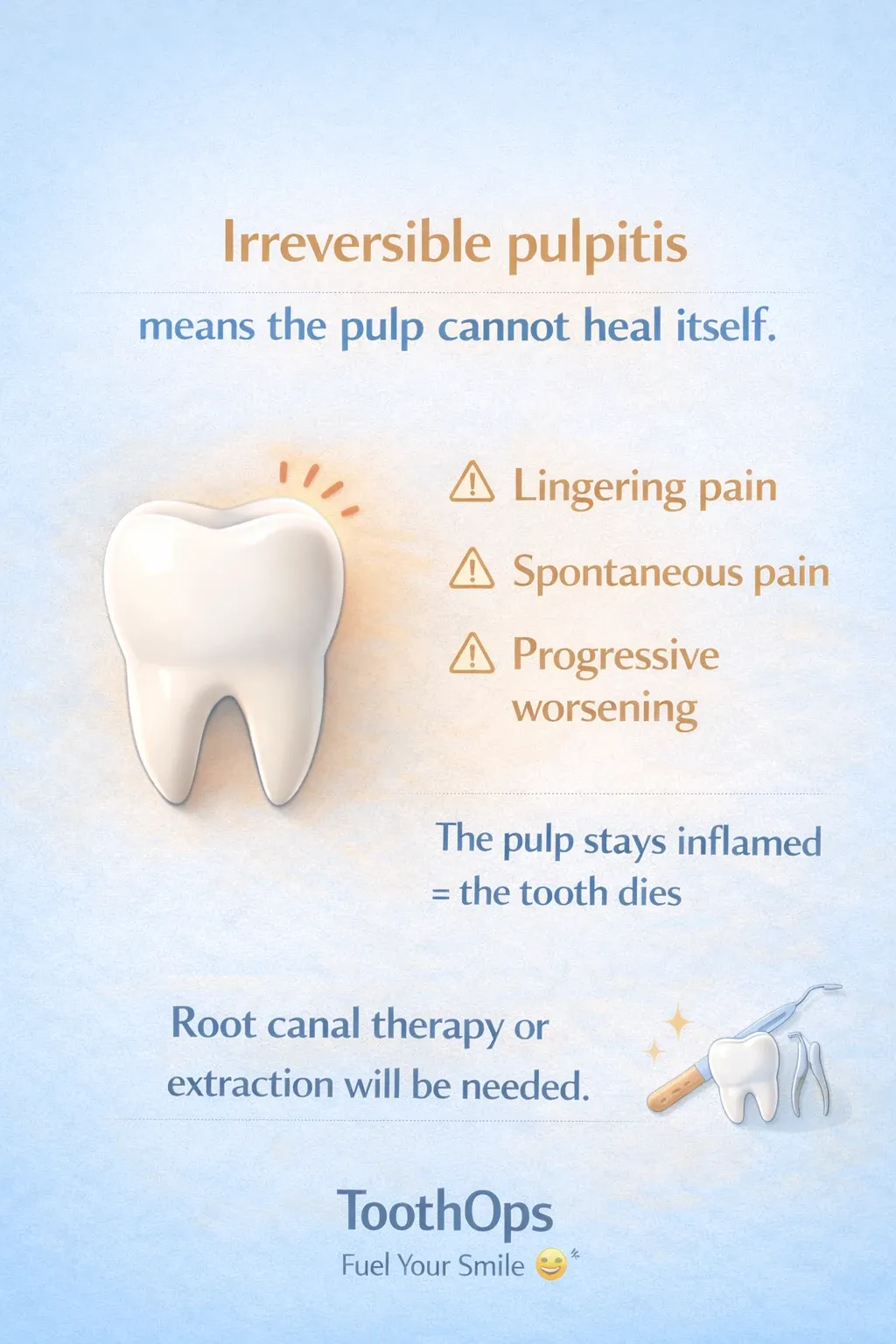
(The “This Can’t Bounce Back” Tooth)
What it feels like
- Cold pain that lingers
- Spontaneous or nighttime pain
- Heat often worsens symptoms
- Throbbing or radiating discomfort
What’s happening biologically
- Severe inflammation
- Rising intrapulpal pressure
- Compromised blood flow → necrosis risk
🧠 Pattern clue:👉 Pain lingers or appears without warning.
🧩 Quick Self-Check (Don’t Skip This)
Cold hurts for 3 seconds, then stops. No night pain.
👉 Which pattern fits?
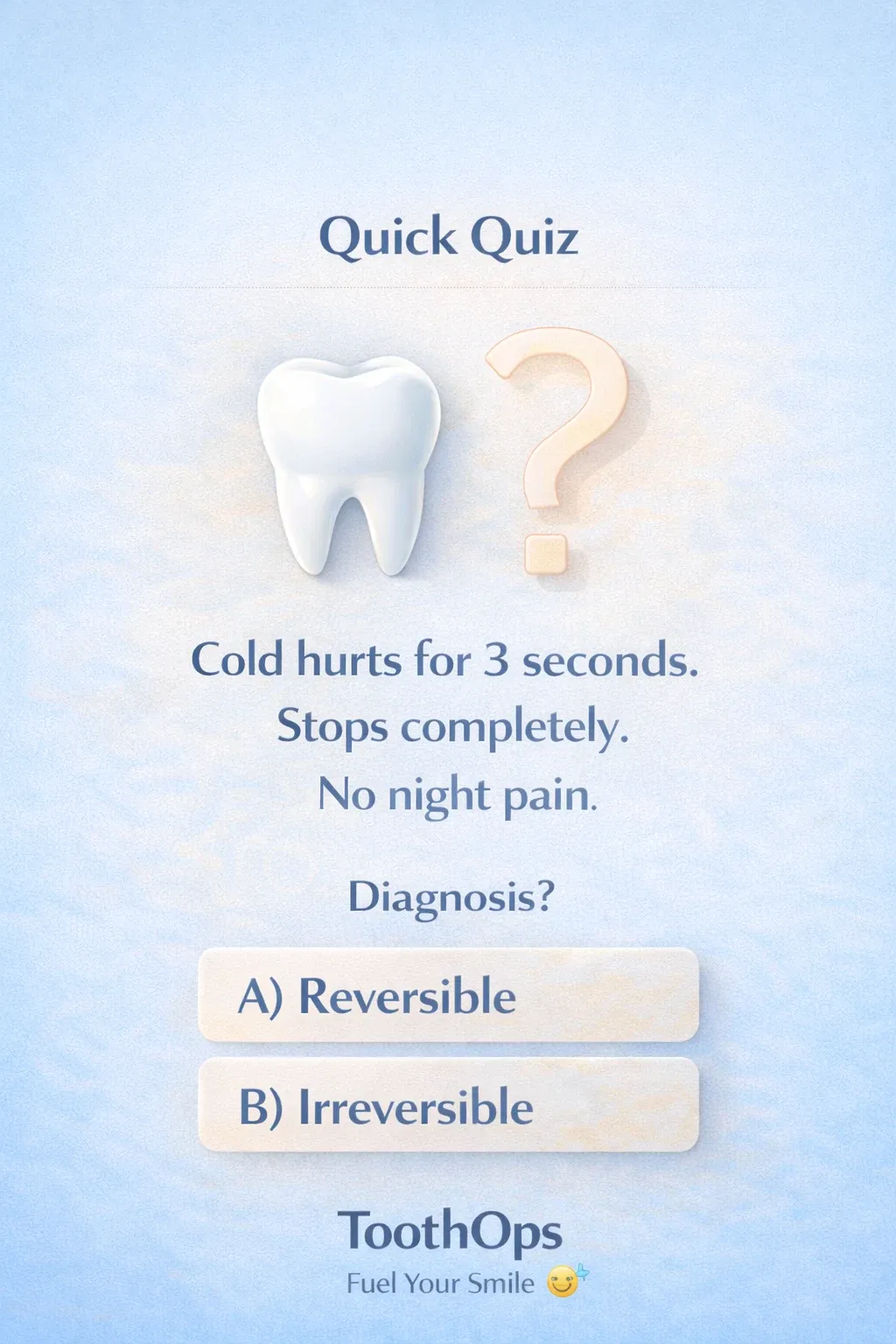
Answer: Reversible pulpitis.(You’re already thinking like a clinician.)
5️⃣ ToothOps 🧠 Mental Shortcut 🧠 (Save This! )
- Reversible = sharp • brief • stimulus-dependent
- Irreversible = lingering • spontaneous • progressive
This shortcut alone can eliminate wrong MCQ answers.
6️⃣ What This Looks Like Clinically
Think Reversible if:
- Cold test hurts briefly
- Tooth is otherwise asymptomatic
- Radiographs show shallow caries
Think Irreversible if:
- Cold pain lingers
- Heat worsens pain
- Patient reports night pain
- Deep caries near pulp
📝 Why this matters for exams: Boards test pain behavior, not buzzwords.
7️⃣ Common Myths This Clears Up
🚫 “Any tooth pain means a root canal.”
✔ Many pulps heal if treated early.
🚫 “If cold hurts, it must be irreversible.”
✔ Duration matters more than intensity.
🚫 “Radiographs decide pulp status.”
✔ Symptoms > images.
8️⃣ Mind–Body Lens (Why Pain Feels So Intense)
Stress doesn’t cause pulpitis —but it amplifies pain perception and urgency.
That’s why calm explanation matters just as much as diagnosis.
9️⃣ Why This Knowledge Actually Matters
This isn’t about memorizing pathology.
It’s about:
- Responding without panic
- Diagnosing earlier
- Explaining pain without fear or blame
- Feeling confident instead of overwhelmed
That’s modern dentistry.
🌱 Final Takeaway
Some teeth are asking for relief. Others are asking for rescue.
Learning the pattern helps you respond — calmly, clearly, and compassionately.
@ToothOps | Fuel Your Smile 😊
Stay tuned for more insights and educational content in our blog.
Disclaimer: Content is for educational purposes only and not a substitute for medical or dental care.
© 2025 ToothOps | All Rights Reserved