
🦠 Oral Candidiasis Explained: When Chill Candida Turns Chaotic
 ToothOps4 min read
Why a normally harmless mouth fungus suddenly acts like it pays no rent.
🧾 TL;DR (30-Second Summary)
- Candida normally lives in your mouth — harmless.
- It becomes pathogenic when immunity, saliva, or microbiome balance shifts.
- The yeast ↔ hyphae dimorphism switch is what makes it invasive.
- Biggest risk factors: dry mouth, dentures, antibiotics, immunosuppression.
- Treatment fails if the underlying risk factor isn’t fixed (xerostomia, poor denture hygiene, uncontrolled diabetes).
- Modern management = topical antifungals + environmental correction.
Candida lives in your mouth 99% of the time like a quiet roommate who minds its business. But the moment your immune system slips?
Boom — it’s free real estate.
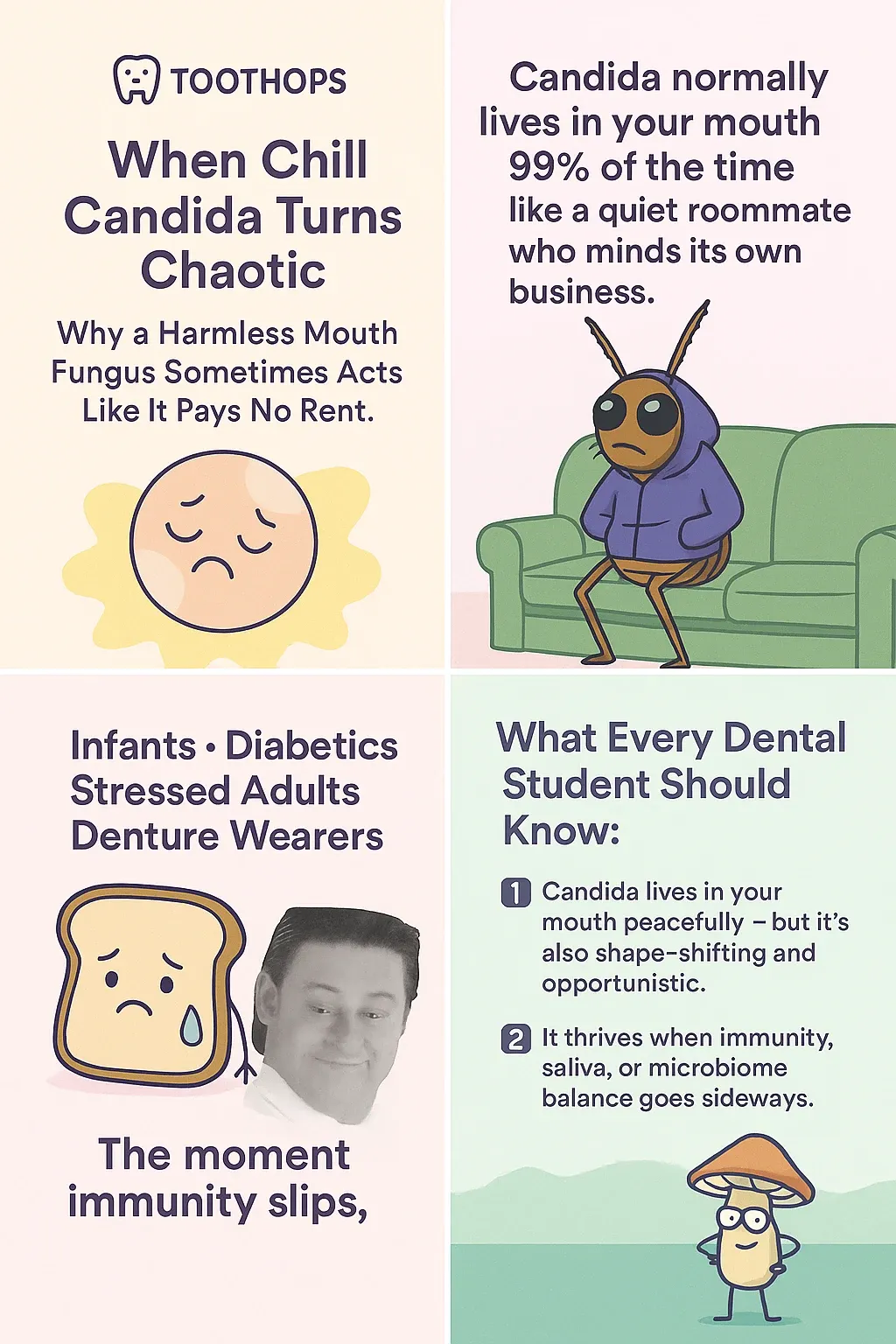
This is why you see thrush in infants, denture wearers, diabetics, stressed adults, and immunosuppressed patients. Candida isn’t new — but its behavior changes when the environment changes.
Let’s break down what every dental student, pre-dental, and curious reader should know about this shape-shifting fungus.
1️⃣ What Is Oral Candidiasis? (Simple + Evidence-Based)
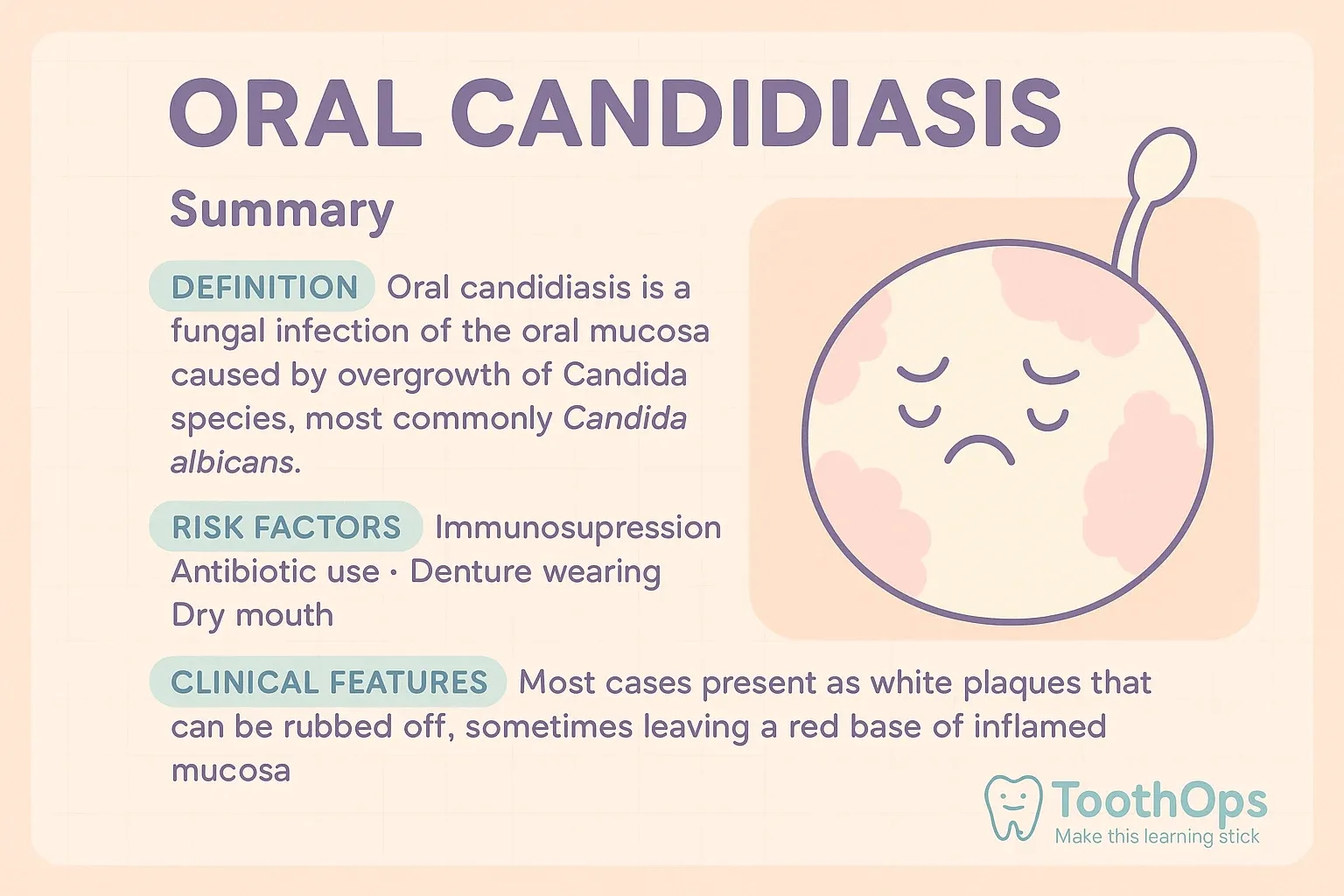
Oral candidiasis is a fungal infection of the oral mucosa caused by overgrowth of Candida species — most commonly Candida albicans.
According to StatPearls (2023) and Neville’s Oral Pathology, Candida is part of the normal oral flora in 30–60% of adults.It only becomes a problem when something disrupts:
- mucosal integrity
- the immune system,
- saliva quantity/quality,
- or the microbial balance.
Candida isn’t “new” — it’s opportunistic.
2️⃣ Why Candida Lives in the Mouth (And Usually Behaves)
Candida coexists peacefully with:
- saliva (antifungal proteins, IgA)
- normal commensal bacteria
- intact mucosa
- balanced immunity
Think of it like a pet that’s chill as long as the house rules are in place.
But take away saliva…
Introduce chronic stress…
Add a poorly cleaned denture…
Or throw in a course of broad-spectrum antibiotics…
Suddenly the house rules are gone — and Candida becomes feral.
3️⃣ Risk Factors: What Makes Candida Turn Rogue?
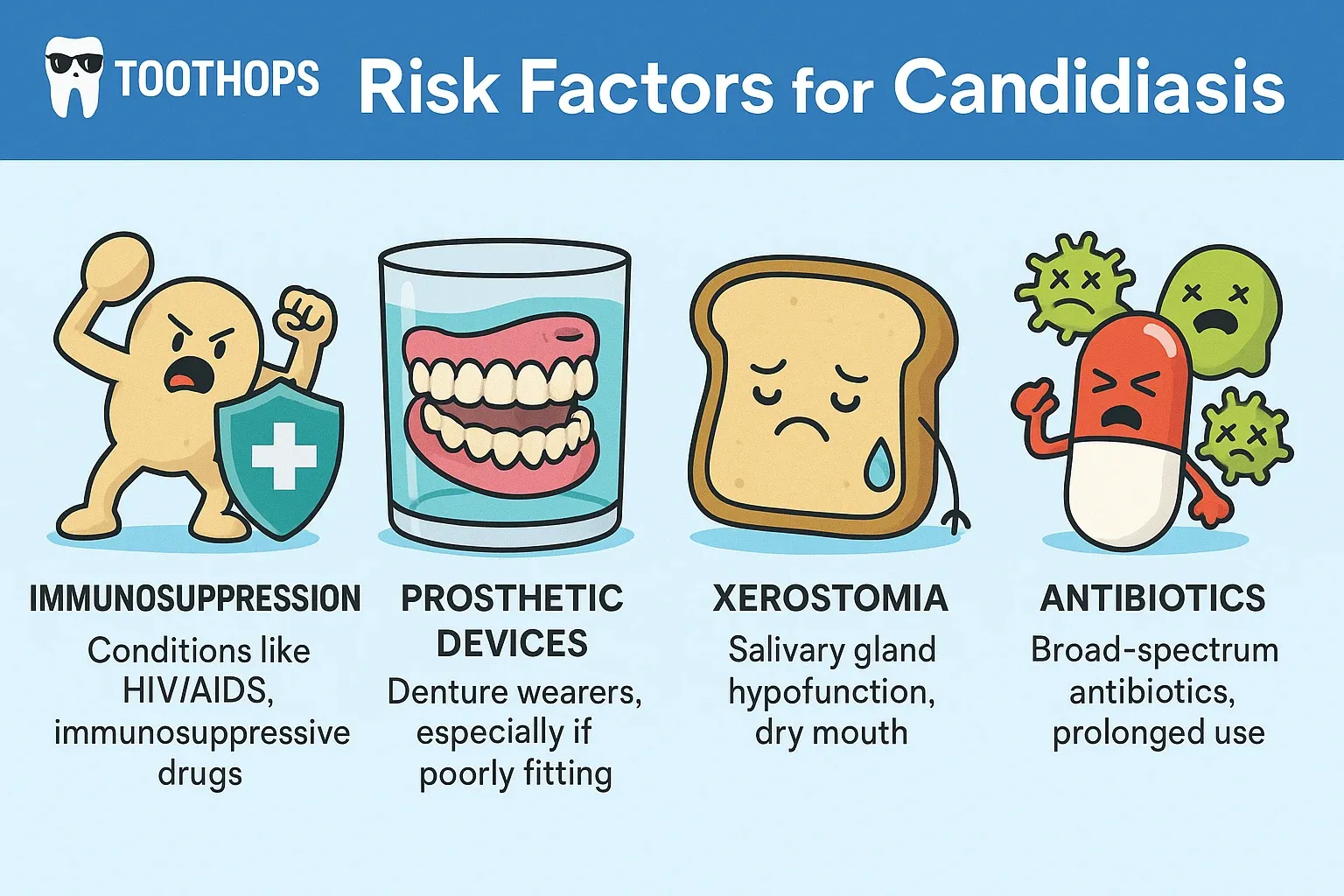
Major triggers supported by StatPearls, Burket’s, and Neville Chapter 6:
🔹 Immunosuppression
HIV/AIDS, chemotherapy, systemic steroids, uncontrolled diabetes.
🔹 Xerostomia (Dry Mouth)
Saliva is the mouth’s built-in antifungal system.Low saliva = Candida playground.
🔹 Antibiotic Use
Broad-spectrum antibiotics wipe out protective flora.
🔹 Dentures & Appliances
Biofilms cling tightly to acrylic surfaces — especially if worn overnight.
🔹 Nutritional Deficiencies
Iron, B-vitamins — common in older adults and medically compromised patients.
Your image clearly communicates these in a fun, digestible way.
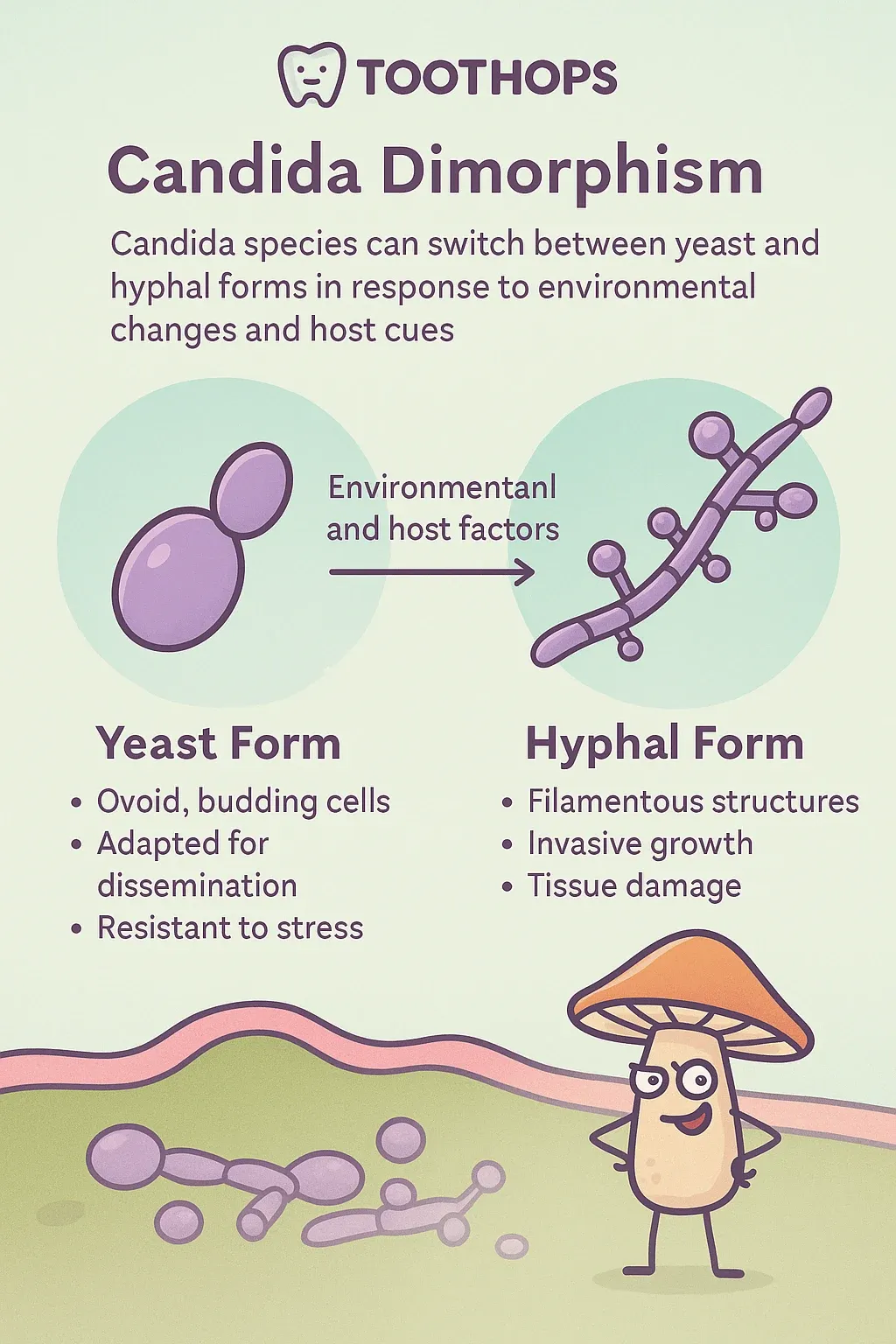
4️⃣ Candida Dimorphism: The REAL Villain Move
Candida is dimorphic, meaning it can switch forms:
🍇 Yeast Form (Chill Mode)
- Ovoid budding cells
- Non-invasive
- Adapted for survival
- Lives peacefully in your mouth
🪵 Hyphal Form (Attack Mode)
- Long filamentous structures
- Penetrate tissue
- Cause inflammation + pain
When immunity dips, Candida flips a biological switch —
and suddenly it isn’t chill anymore…
it’s invading.
Clinically, this explains the burning, ulceration, and bleeding patients feel.
5️⃣ Clinical Presentations (What We Actually See)
Based on StatPearls (2023):
1. Acute Pseudomembranous (Thrush)
White, cottage-cheese plaques → removable.Raw erythema underneath.
2. Erythematous Candidiasis
Red, painful, “burning mouth.”
3. Angular Cheilitis
Cracks and soreness at commissures (Candida + bacteria).
4. Denture Stomatitis
Redness under dentures worn 24/7.Very common.
5. Median Rhomboid Glossitis
Smooth, red, midline tongue patch.
6️⃣ Why Some Cases Don’t Respond to Treatment
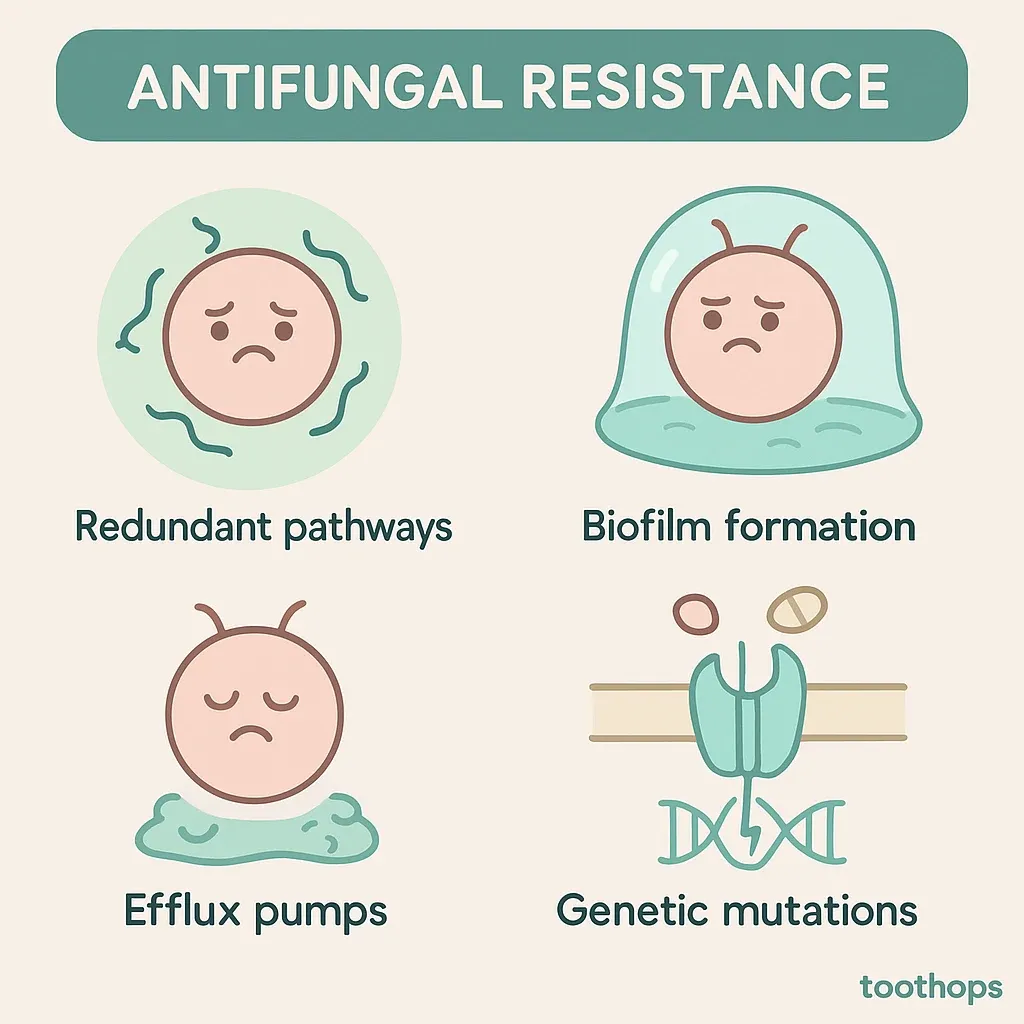
Quick preview to tie in your antifungal resistance:
- Denture biofilms acting as reservoirs
- Poor compliance
- Persistent xerostomia
- Uncontrolled diabetes
- Incorrect antifungal choice
- Azole-resistant species
- Using chlorhexidine + nystatin together (they inactivate each other!)
This is why antifungal therapy ALWAYS needs environmental correction.
7️⃣ Management: What Actually Works (Evidence-Based)
Supported by StatPearls, Burket’s Oral Medicine, and ADA guidance.
Topical First-Line
- Nystatin (swish & swallow)
- Clotrimazole troches
- Miconazole gel
Topicals work if the cause is also addressed.
Systemic Therapy
Used for severe or refractory cases:
- Fluconazole (most common)
- Itraconazole for resistant species
- Voriconazole in advanced disease
Fix the Environment (MOST IMPORTANT)
- Improve denture hygiene
- Remove dentures overnight
- Increase salivary flow
- Manage diabetes
- Reduce smoking
- Correct nutritional deficiencies
Fungal infections always return if the environment stays the same.
8️⃣ Mini Story
A patient once told me:“Doc, I thought only babies get thrush!”
Nope. Adults get it all the time — especially if they’re stressed, dry-mouthed, or wearing dentures.
The good news? Once you understand the why, treatment becomes much easier.
💬 Motivational Takeaway
Your mouth is a complex ecosystem — tiny shifts can create big changes. Understanding Candida helps you protect it, treat it early, and keep your smile resilient.
@ToothOps | Fuel Your Smile 😊
Stay tuned for more insights and educational content in our blog.
Disclaimer: Content is for educational purposes only and not a substitute for medical or dental care.
© 2025 ToothOps | All Rights Reserved