
Dental X-Rays: Safer Than a Flight (and Even a Banana 🍌)
 ToothOps4 min read
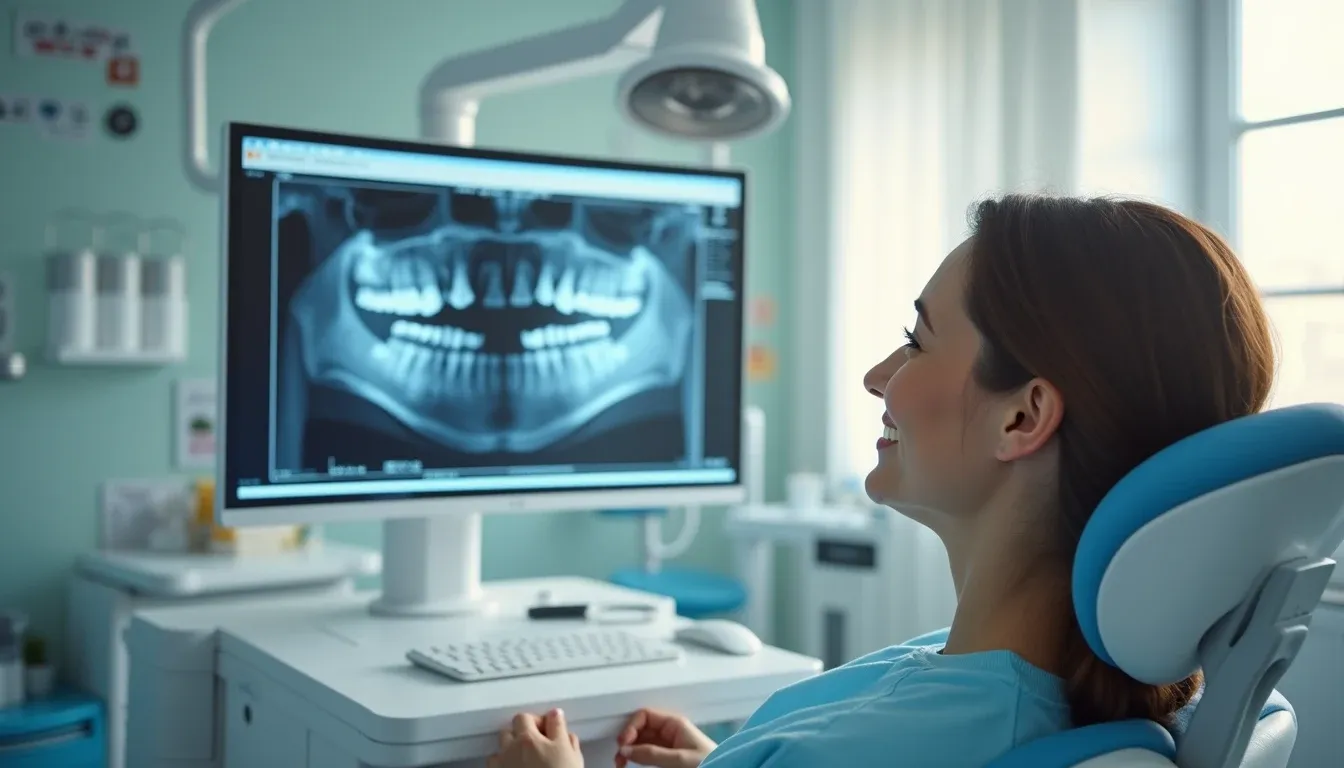
A dental X-ray machine in action with a happy patient
🤔 Should You Worry About Dental X-Rays?
If you’ve ever thought, “Wait, aren’t X-rays radiation?!” you’re not alone. Radiation sounds scary, but here’s the truth: dental X-rays are incredibly safe — in fact, they expose you to less radiation than a flight across the country… and even less than eating a banana! 🍌✈️
Let’s break it down in a way that’s easy to understand.
🦷 What Exactly Are Dental X-Rays?
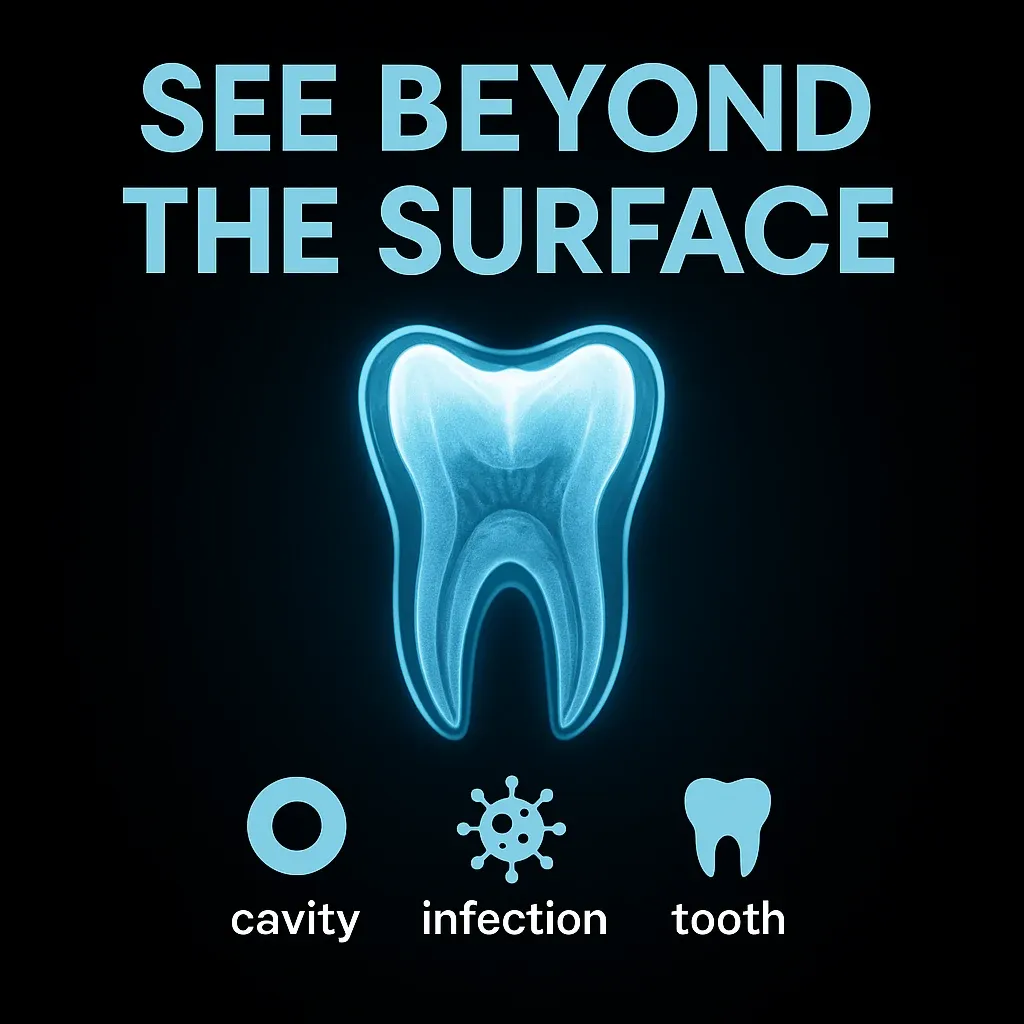
Dental X-rays are special images that let your dentist see what’s going on beneath the surface of your smile. They help spot things a mirror exam can’t:
- Tiny cavities hiding between teeth
- Infections or abscesses below the gumline
- Bone loss from gum disease
- Tooth and jaw development in kids
- Planning for braces, implants, or root canals
👉 Think of them as your dentist’s “superpower glasses” 🦸♂️ to see problems early and keep your smile healthy.
📸 Types of Dental X-Rays (and Why They Matter)
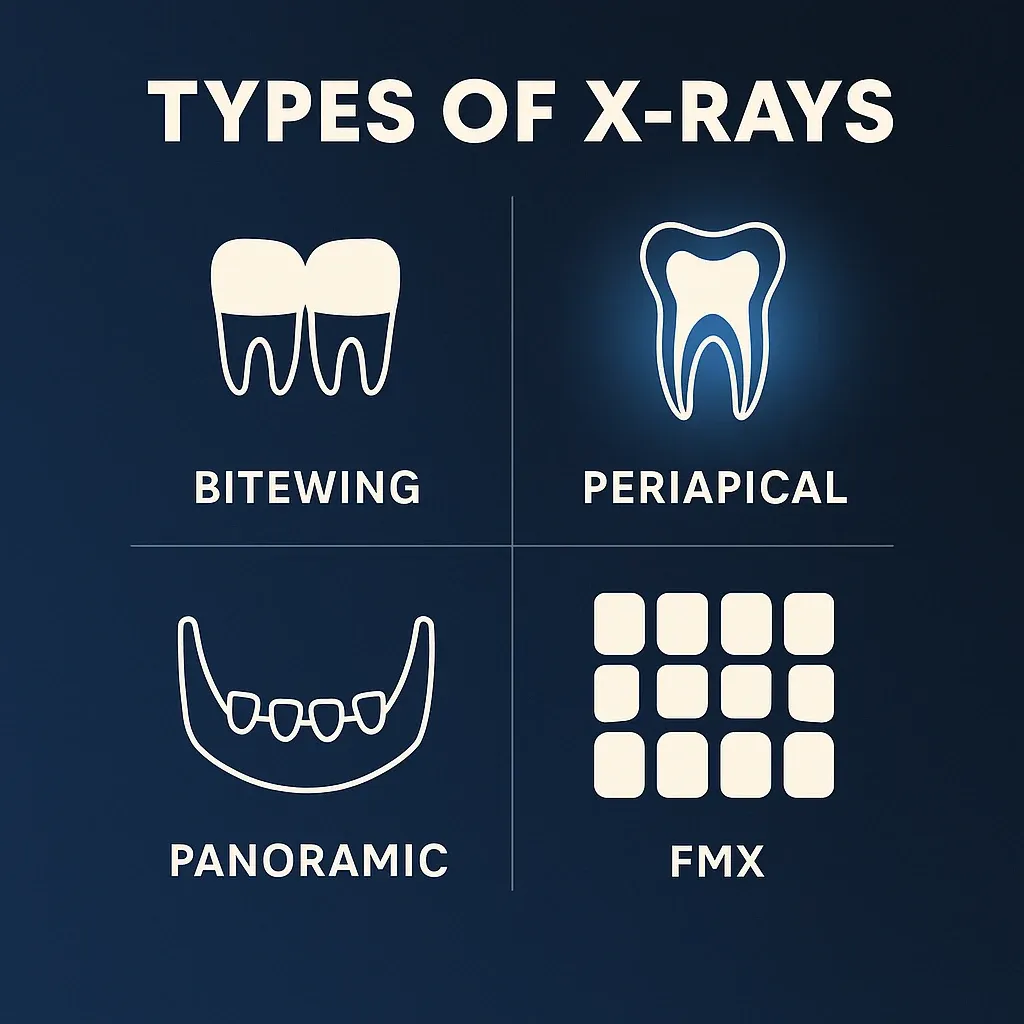
- Bitewing X-Rays
- Show the top parts of upper & lower teeth together.
- Best for spotting cavities between teeth and checking bone levels.
- Periapical X-Rays
- Capture the entire tooth — crown to root.
- Great for finding infections, abscesses, or fractures.
- Panoramic X-Rays
- Provide a wide view of your jaws, teeth, and surrounding bones.
- Useful for wisdom teeth, braces planning, or jaw issues.
- Full-Mouth Series (FMX)
- A set of images that covers all teeth and tissues.
- Typically done every few years for a complete health check.
☢️ Radiation in Perspective (This Will Surprise You)
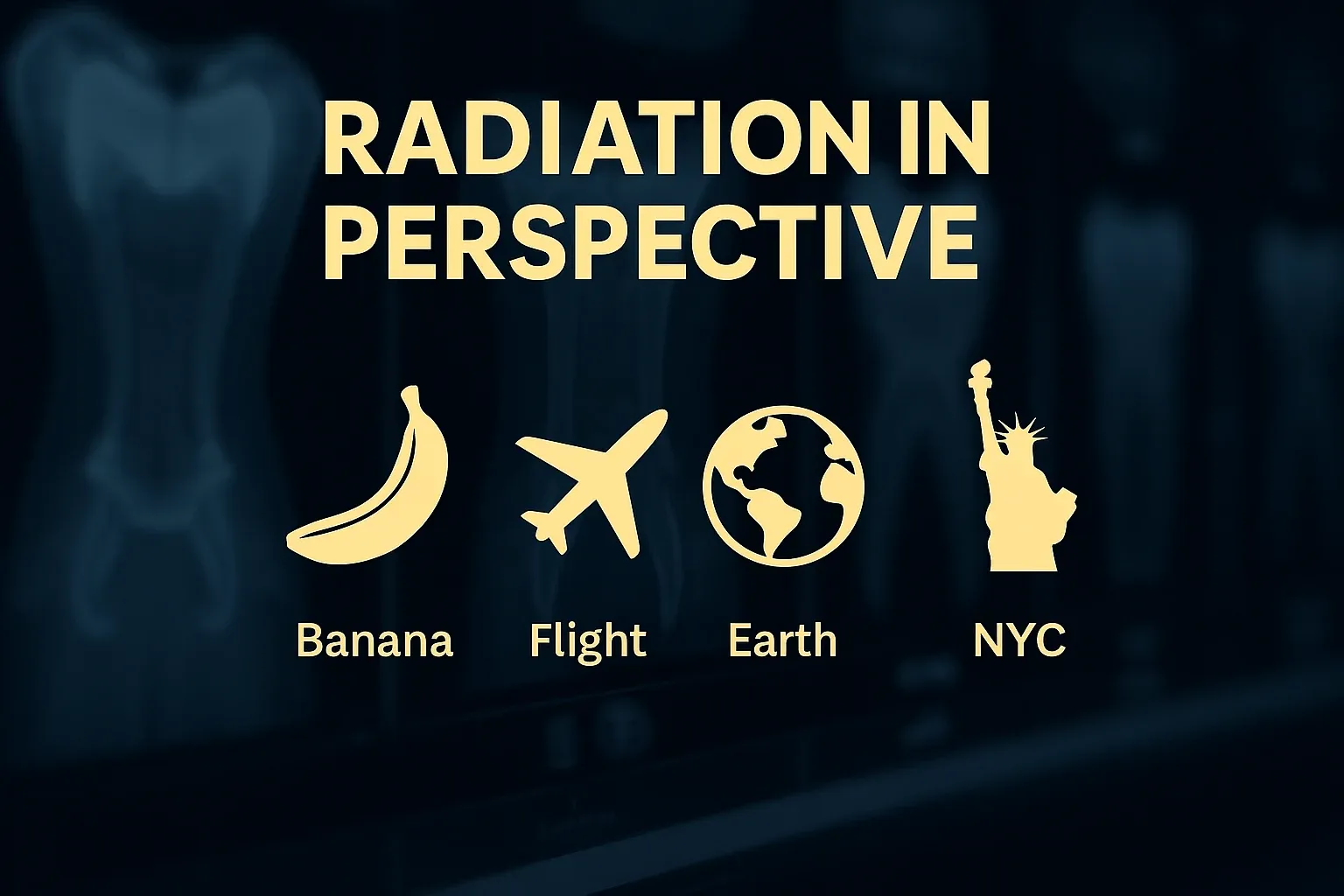
Radiation isn’t just in hospitals — it’s part of everyday life. Here’s how dental X-rays stack up:
- 4 Bitewing X-Rays = About the same as a 2-hour airplane flight ✈️
- Panoramic X-Ray = A few days of natural background radiation 🌍
- Full-Mouth Series (FMX) = Similar to flying LA → New York 🗽
- Eating a Banana = Tiny dose of natural radiation (thanks to potassium-40) 🍌
👉 In other words: if you travel, eat fruit, or simply exist on Earth, you’re already exposed to more radiation than what you get from your dental X-rays.
Safety Measures in Dental X-Rays
Dental professionals prioritize safety when performing X-rays and take numerous precautions.
🛡️ Lead Aprons (& thyroid collars): Patients usually wear a lead apron during the X-ray process. This apron helps shield the body from unnecessary radiation exposure, ensuring maximum safety during the procedure. → shield sensitive organs
💻Digital X-Rays: Many dental offices have upgraded to digital X-ray technology, which uses significantly less radiation compared to traditional film X-rays. This advancement not only reduces exposure but also enhances image quality. → up to 90% less radiation than old film
⚖️ ALARA Principle: Dentists adhere to the ALARA (As Low As Reasonably Achievable) principle, ensuring that radiation exposure is minimized while still acquiring the necessary diagnostic information.→ “As Low As Reasonably Achievable” (only when needed, never extra)
Who Needs Dental X-Rays? 👨👩👧
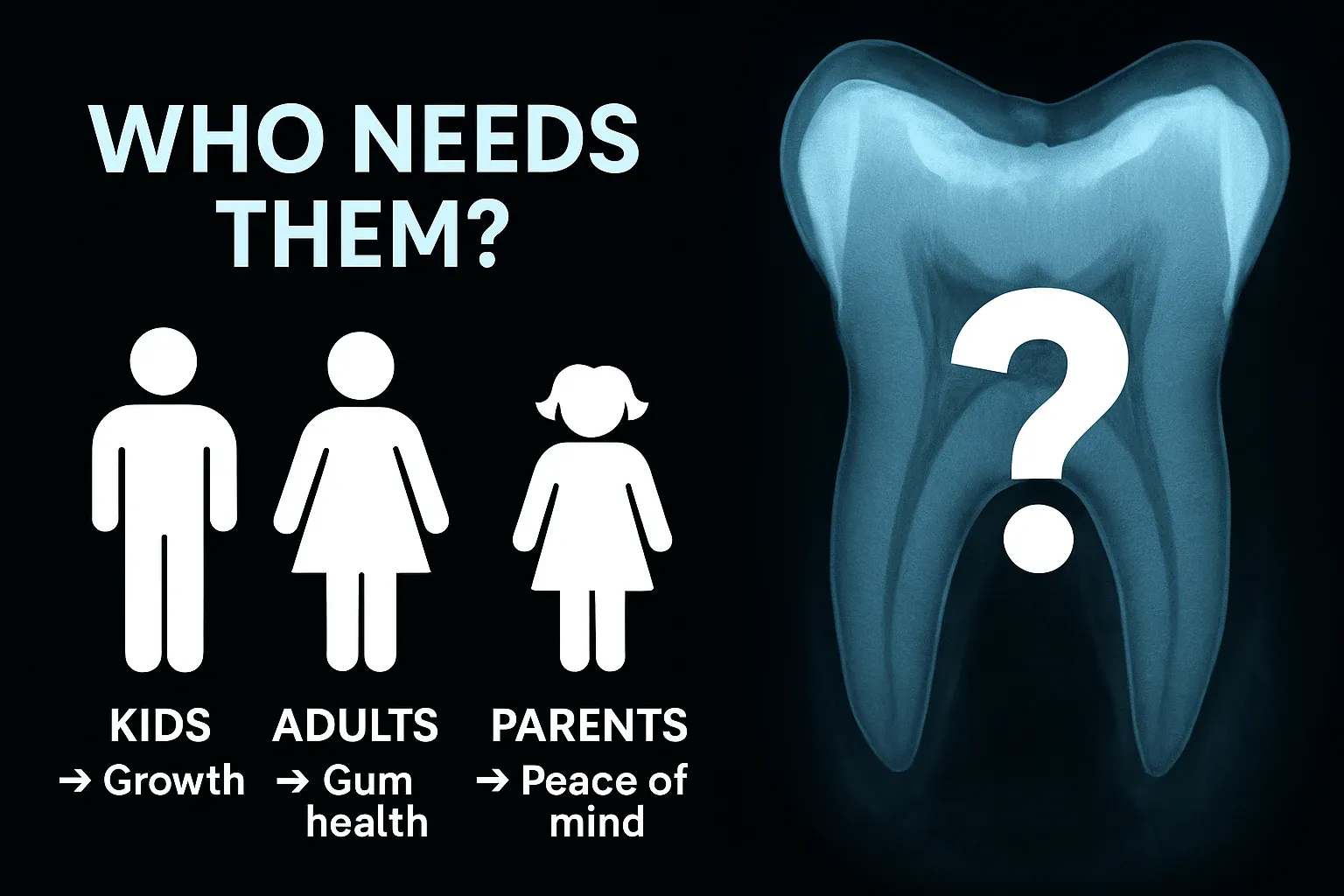
Dental X-rays are essential for everyone, not just adults!
For Kids → Their jaws are growing, teeth are erupting, and spacing issues are easier (and cheaper) to fix early.
Children often need X-rays more frequently than adults because their teeth and jaws are still developing. For example, dentists rely on X-rays to monitor the growth of permanent teeth and identify any misalignment issues early on, which can save time and money later.
For Parents → Peace of mind knowing X-rays are safe and essential for long-term dental health.
As a parent, it’s important to understand the safety of dental X-rays for your child. If you have concerns, discuss them with your dentist. They can provide reassurance and information about how X-rays can help maintain your child’s dental health.
For Adults → Catch hidden problems before they hurt
Dental X-rays are essential for spotting issues that often develop silently, such as gum disease, infections, or impacted teeth. These problems may not cause pain right away, but X-rays allow your dentist to detect them early, before they turn into painful (and costly) emergencies. By saying yes to routine X-rays, you’re investing in long-term oral health and peace of mind.

A family visiting a dental clinic for check-ups
📅 How Often Do You Really Need Them?
- Most patients: every 1–2 years
- Kids/teens: sometimes more often (growth & development)
- High-risk patients (lots of cavities, gum issues, or dental work): as needed
Your dentist will personalize the schedule to your mouth, not just the calendar.
🌟 Bottom Line
Dental X-rays are:
✅ Safe → radiation is minimal (less than flying or eating a banana).
✅ Essential → they catch problems before they hurt.
✅ Modern → digital technology = sharper images, less radiation.
So next time your dentist suggests an X-ray, smile knowing it’s one of the safest and smartest tools for your health.
Fuel Your Smile ✨ 🦷
Your health deserves clarity — and dental X-rays help deliver it.
Follow @ToothOps for more tips and information on maintaining your dental health!